


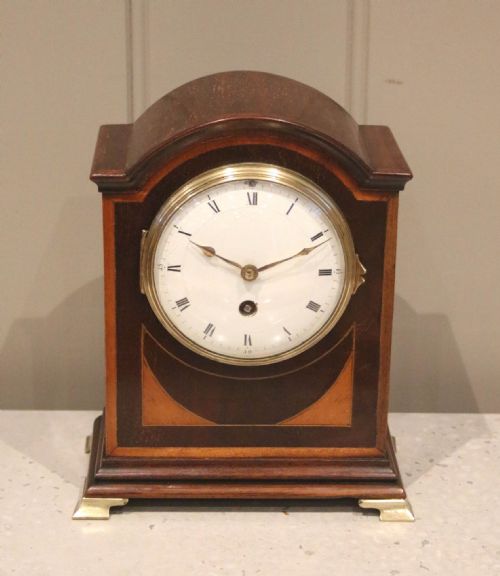


Satinwood Inlaid Mantel Clock
A satinwood inlaid mantel clock brings warmth and refined detail to a room, offering both decorative presence and reliable timekeeping.
Satinwood Inlaid Mantel Clock
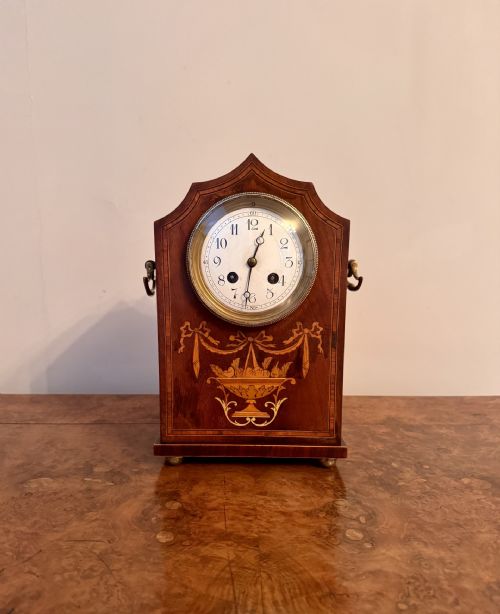
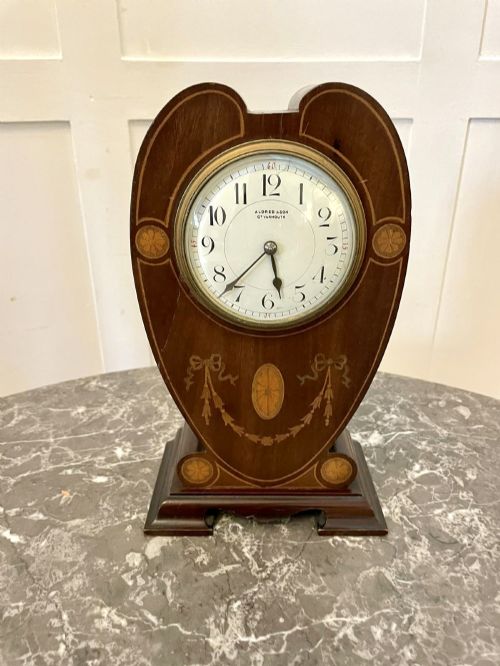
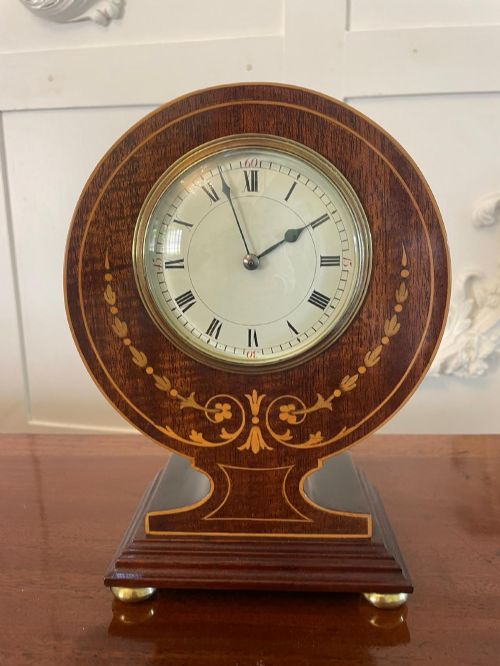
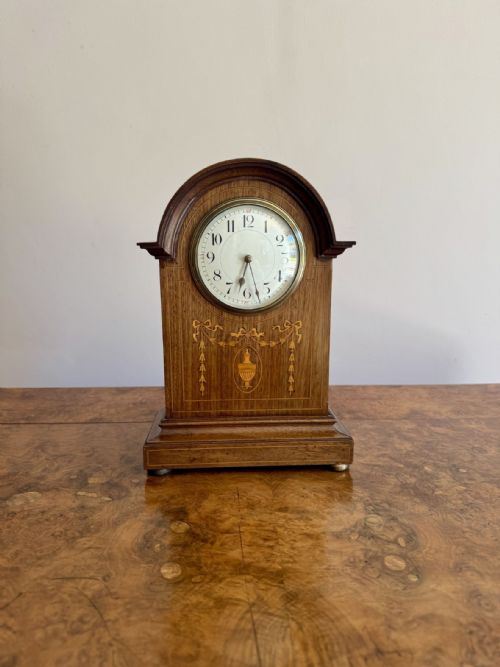
A satinwood inlaid mantel clock combines traditional timber construction with delicate contrasting woodwork, designed to sit prominently on a fireplace mantel or shelf. The pieces found here predominantly span the Victorian, Edwardian, and nineteen hundred periods, reflecting the shifting tastes of those eras.
Most examples on this page date from the Edwardian period or nineteen hundred, often taking the form of mantel clocks or bracket clocks. The selection includes mahogany and rosewood foundations enhanced with boxwood and satinwood inlay, alongside notable decorative motifs such as poppies and Dutch girl designs.
Origins stretch from British workshops to French influences, including portico styles and Art Nouveau bracket variations. Buyers encounter everything from understated geometric stringing to floral marquetry executed with distinct precision.
How they were made
Cabinetmakers built the foundations using dense timbers such as mahogany, rosewood, and satinwood, shaping the timber into architectural or curved mantel profiles. Enamel dials and glass bezels protected the mechanical movements, while brass feet and fittings added structural punctuation.
Decorative surfaces relied on precise boxwood and satinwood inlay, contrasting light and dark grains to create geometric borders, floral sprays, or figurative scenes. Artisans applied these veneers by hand, securing them to the primary wood body before polishing the exterior to a smooth finish.
Satinwood Inlaid Mantel Clock Retail Price Guide 2026
Typical asking prices for satinwood inlaid mantel clock among the pieces listed under this phrase on Sellingantiques today, from the lower quarter to the upper quarter. They describe what is for sale here now, not the wider market.
What varies in quality
Quality rests upon the crispness of the inlay work and the harmonious grain of the satinwood veneer. Finer examples display tightly fitted contrasting woods without gaps, whereas simpler versions rely on painted rather than inlaid decoration.
The choice of secondary timbers and the complexity of the clock case case influence the overall execution. Pieces featuring elaborate motifs like poppies or figurative subjects demonstrate a higher level of artisan skill than plain geometric borders.
The Satinwood Inlaid Mantel Clock Glossary
- Satinwood
- A durable, lustrous timber with a golden sheen, frequently used for fine veneering and contrasting inlay work. It catches the light differently depending on the angle of the grain.
- Inlay
- A decorative technique where pieces of contrasting wood, such as boxwood, are set into the surface of a primary timber. This creates flat, ornamental patterns and borders.
- Portico clock
- A clock style featuring architectural columns supporting the movement housing, often associated with French design. It creates a temple-like silhouette on the mantel.
- Bracket clock
- A portable clock originally designed to sit on a wall bracket, though later examples simply rested on a table or mantel. They often feature arched tops and carrying handles.
Satinwood Inlaid Mantel Clock: Frequently Asked Questions
What periods do these clocks come from?
The pieces span the Victorian and Edwardian eras, with many dating specifically around nineteen hundred. These periods favoured contrasting timber veneers and detailed inlay work.
Craftsmen of these times drew upon Sheraton and Art Nouveau design influences, resulting in both classical architectural cases and softer floral motifs.
Which woods are most common?
Mahogany and satinwood appear frequently, often paired together to create striking contrast between dark bodies and pale decorative elements. Rosewood and boxwood inlay also feature across the selection.
Cabinetmakers utilised these materials for their stability and grain variety, allowing for polished surfaces that highlighted the natural timber colours.
How do I care for a wooden clock case?
Keep the clock away from direct sunlight and sudden temperature changes to protect the wood and delicate veneer work. Dust gently with a dry, soft cloth.
Avoid liquid polishes or silicone sprays, which can seep into the grain and damage the antique finish over time.
What styles can I expect to find?
Styles range from Edwardian mantel clocks with floral inlays to French portico designs and Art Nouveau bracket clocks. Some feature specific pictorial themes like Dutch figures or poppy motifs.
Each style reflects the decorative preferences of its era, moving from structured geometric stringing to more organic, flowing patterns.