



Satinwood Clothes Press
These satinwood clothes press pieces offer exceptional storage and fine grain figuring, bringing traditional craftsmanship and elegance directly into your bedroom.
Satinwood Clothes Press
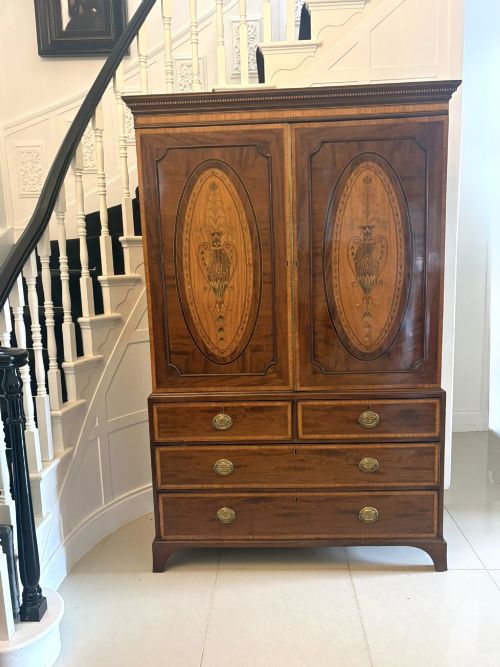
A satinwood clothes press combines the functionality of a large wardrobe with shelving and hanging space, often described historically as a linen press or housekeepers cupboard. These items appear primarily in Georgian, Victorian, and Edwardian designs, spanning periods such as 1800, 1880, 1900, and 1930.
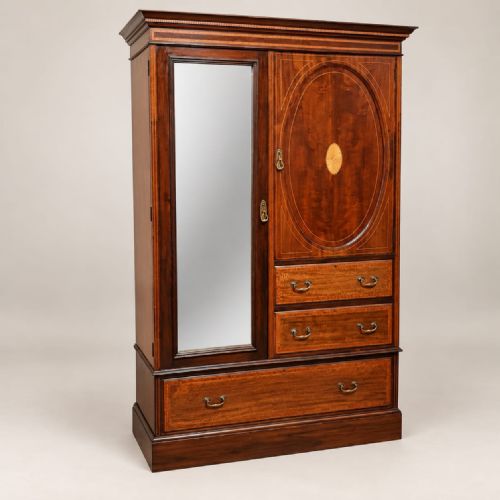
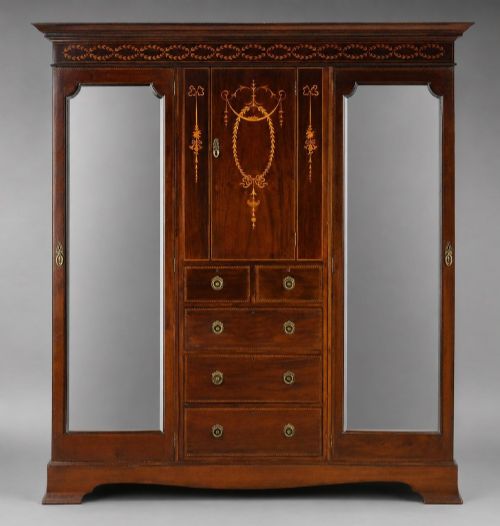
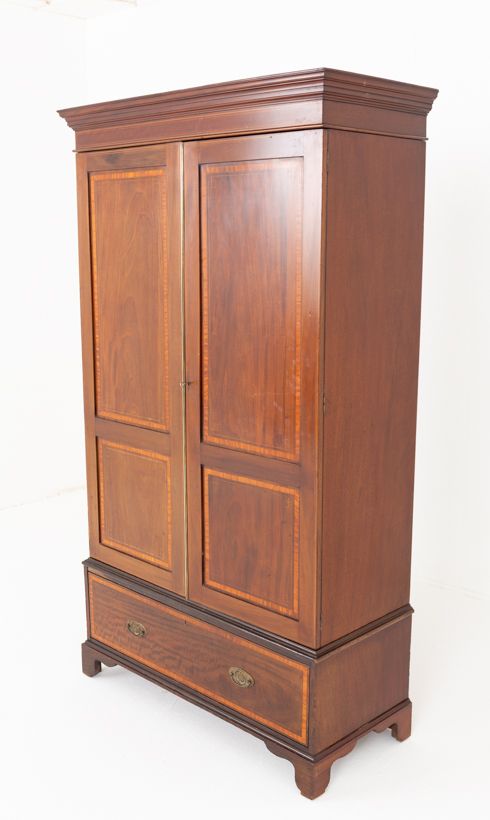
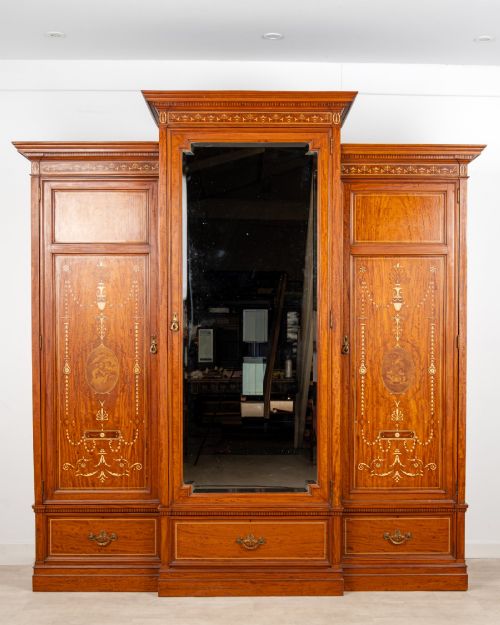
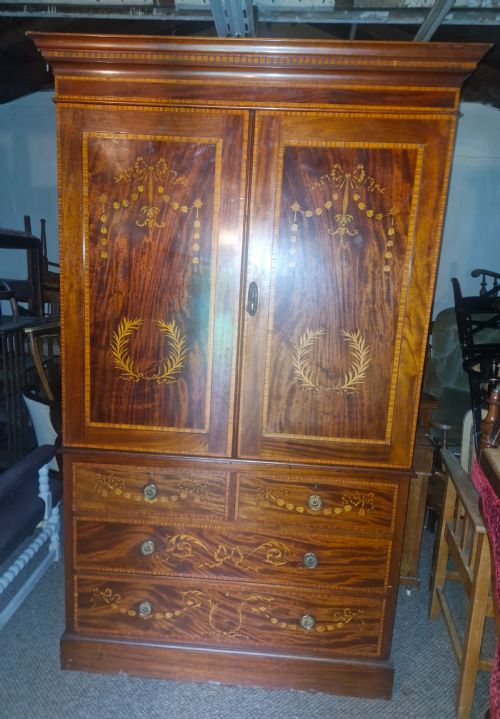
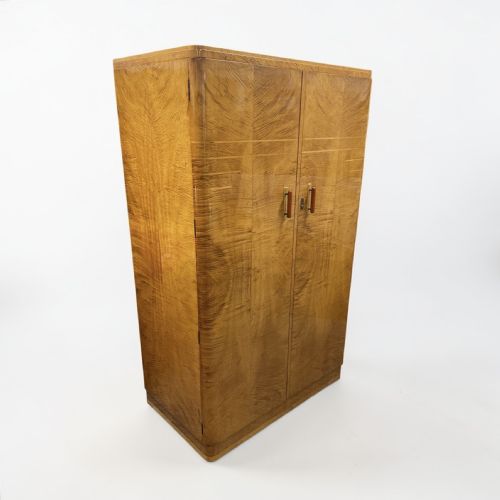
The pieces seen on this page range from grand triple wardrobes and breakfront fitted furniture to compactum wardrobes and two-door armoires. Buyers will frequently encounter Edwardian and Sheraton Revival interpretations, alongside robust George III examples featuring traditional pediments and panelled doors.
How They Were Made
Cabinet makers utilised solid timbers and figured wood veneers, applying satinwood alongside mahogany, rosewood, and satin birch to create striking contrasting panels. Artisans added decorative detail using boxwood stringing, marquetry, and painted motifs, often complemented by contrasting banding.
Structural integrity relied on traditional joinery, while brass hardware served for handles, hinges, and locking mechanisms. Larger pieces incorporate mirror glass into door panels, requiring precise rebate work and heavy framing to support the weight.
Several pieces include secret sliding linen trays designed for gentleman's shirts.
What Varies in Quality
The standard of a satinwood clothes press depends heavily on the choice and matching of wood veneers across large expanses like wardrobe doors. Superior examples display balanced grain figuring and meticulous inlay work, whereas simpler items rely on plain surfaces with minimal banding.
Construction depth also distinguishes the range, seen in whether internal sliding trays, linen slides, or hanging fittings remain intact and fully integrated. Maker attribution, such as work originating from established firms like Druce & Co, Waring & Gillow, or Edwards & Roberts, elevates the standing of a piece.
Druce & Co.·Waring & Gillow·Edwards & Roberts
The Satinwood Clothes Press Glossary
- Satinwood
- A lustrous timber known for its pale golden sheen and smooth grain. It is frequently used for high-status cabinet work and detailed veneer panels.
- Linen Press
- A tall storage piece traditionally designed with sliding shelves above drawers for storing folded textiles. It frequently doubles as a general wardrobe.
- Breakfront
- A cabinet design where the central section projects forward from the flanking wings. This architectural form creates depth and shadow on large wardrobes.
- Compactum
- A multi-functional wardrobe designed to maximise internal storage by combining hanging space, drawers, and shelving within a single unit.
- Boxwood Stringing
- A narrow line of pale contrasting wood inlaid into the primary timber. It outlines panels and doors to define the geometric proportions of the piece.
Satinwood Clothes Press: Frequently Asked Questions
What is a satinwood clothes press?
A satinwood clothes press is a tall storage cabinet designed for garments and linens, featuring light-toned exotic wood veneers. They combine internal shelving or sliding trays with hanging compartments.
Historically used in grand bedrooms, these pieces serve as both practical storage and decorative focal points. Their form ranges from Georgian gentleman's presses to Edwardian triple wardrobes.
How do I date an antique wardrobe?
Dating relies on architectural styles, construction methods, and the specific decorative motifs applied to the timber. Georgian pieces often display classical pediments and banded mahogany, while Edwardian examples favour lighter satinwood and painted details.
Hardware styles, interior drawer linings, and the presence of maker stamps or paper labels also help pinpoint the era of manufacture.
Where should I place a large armoire?
Large wardrobes and armoires require a wall with sufficient clearance and minimal exposure to direct sunlight to protect the wood veneers. Placing them in bedrooms or large dressing rooms provides both aesthetic balance and practical utility.
Because many breakfront and triple wardrobes are heavy and tall, measuring ceiling height and access stairways beforehand is essential.
Are these wardrobes easy to dismantle?
Many large period wardrobes and press cupboards were constructed to be taken apart for transport and installation. They often feature modular sections, cornices, and base plinths that detach from the main body.
Care must be taken with mirrored doors and delicate veneer work during any movement. Consulting professional antique movers ensures the structural joinery remains secure.