

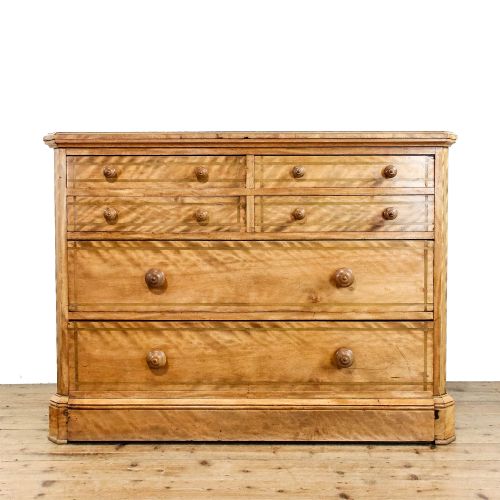
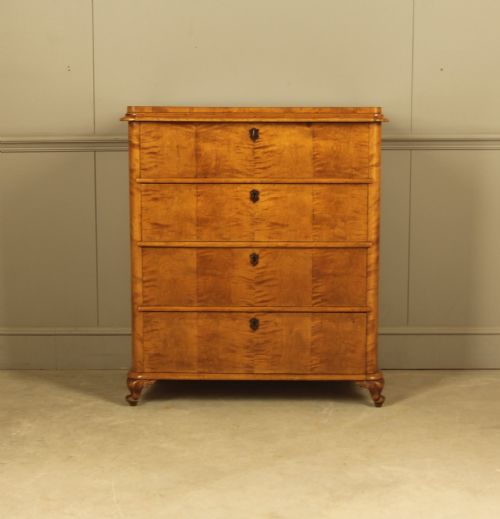
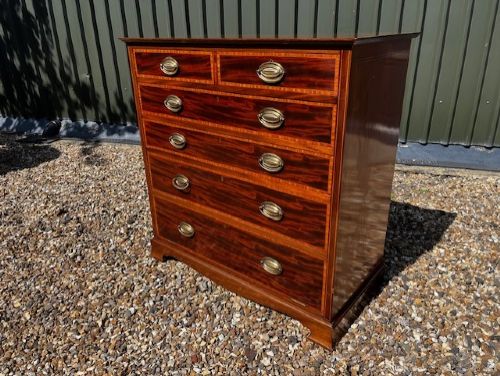


Satinwood Bedroom Dresser
A satinwood bedroom dresser offers smooth grain and warm blonde tones, bringing light and refined craftsmanship to any sleeping quarters.
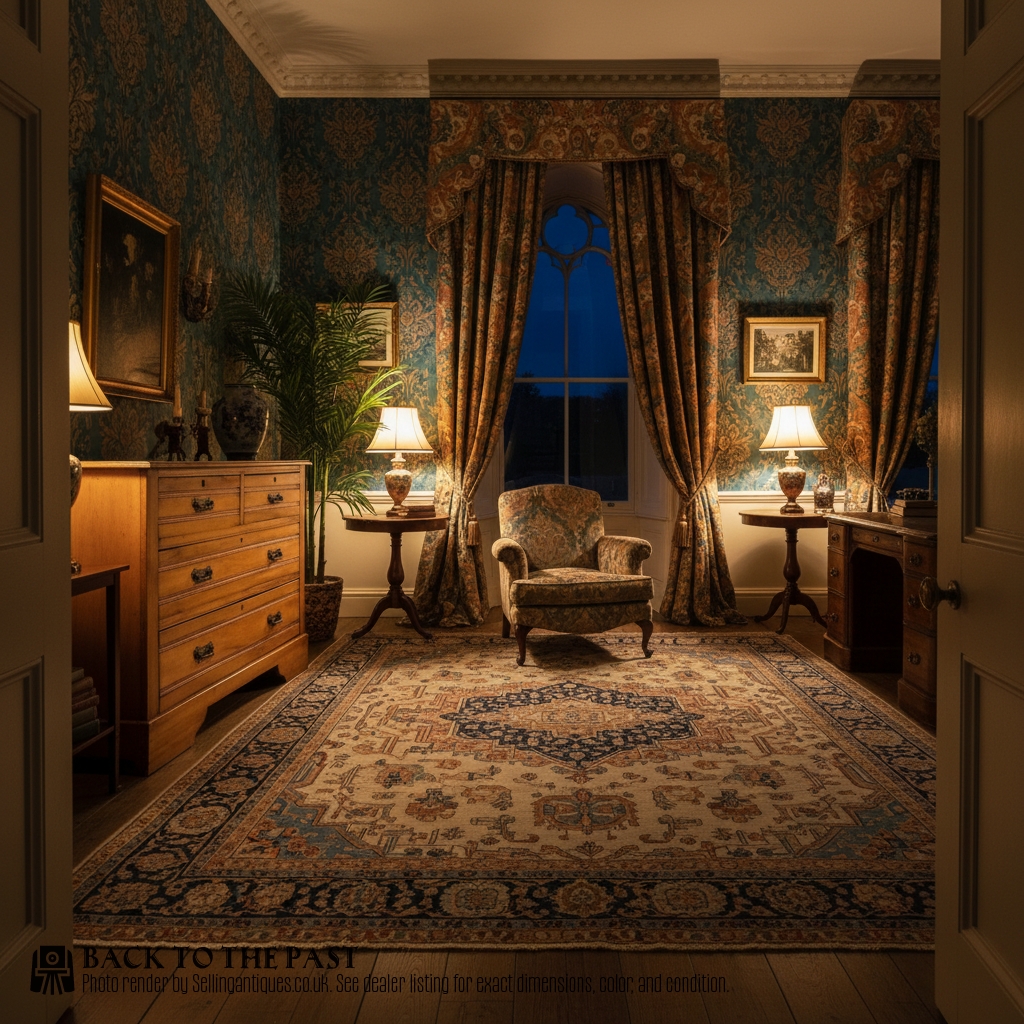
Satinwood Bedroom Dresser
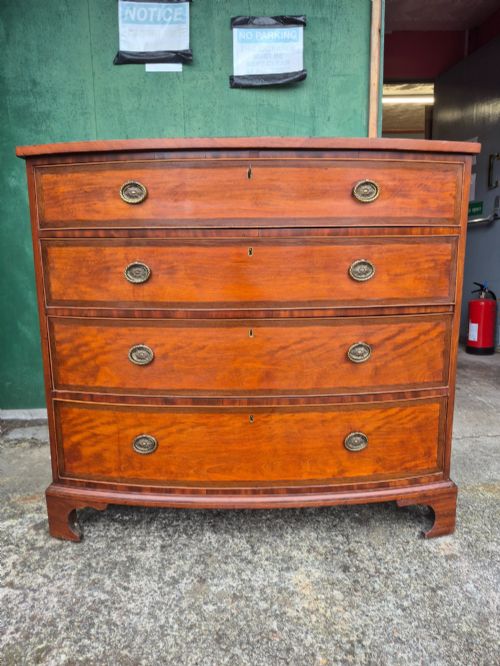
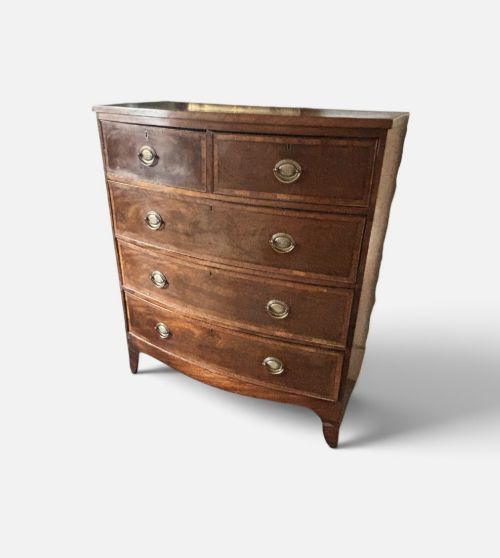
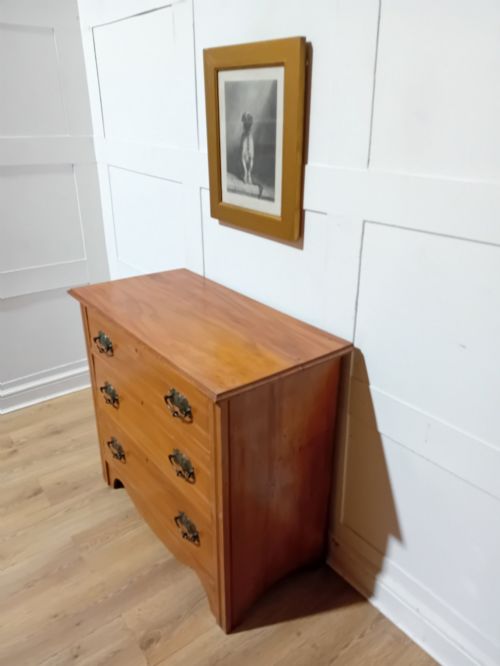
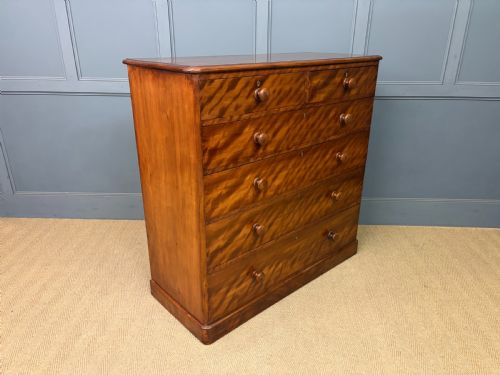
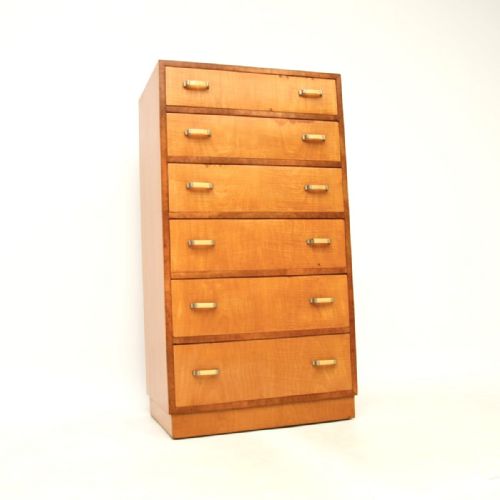
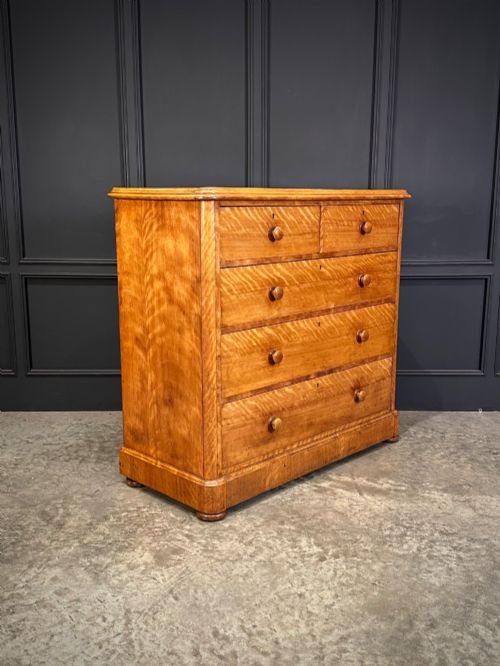
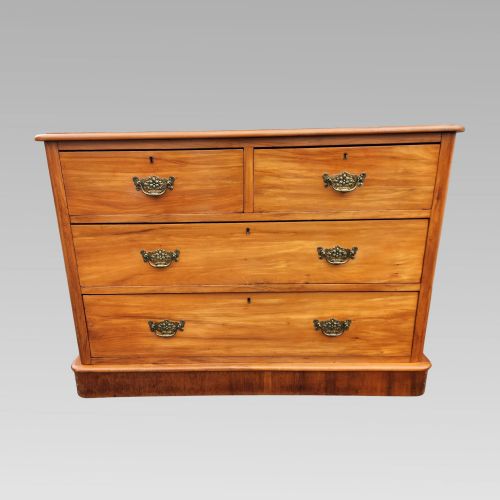
A satinwood bedroom dresser takes the form of chest of drawers, tallboy, or dressing table, designed for personal storage and grooming. These pieces span periods from the eighteenth century through the Edwardian era and Art Deco.
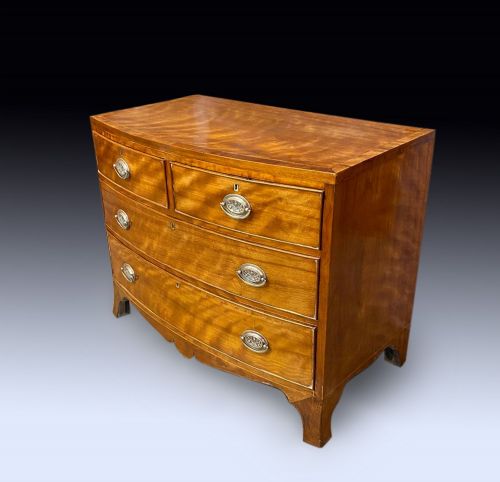
Edwardian and Victorian examples appear frequently, often featuring bow fronts or serpentine shapes alongside straightforward rectangular chests. Makers utilised satinwood alongside mahogany, walnut, and pine carcases.
Styles range from Georgian and Sheraton Revival to Arts and Crafts and Regency, reflecting the shifting tastes in bedroom furniture over two centuries.
How they were made
Cabinet makers built these dressers using solid timbers and decorative veneers applied to secondary woods such as pine and mahogany. Crossbanding and line inlay in contrasting woods define the surfaces of many pieces.
Brass handles and escutcheons punctuate the drawer fronts, while dovetail joinery secures the drawer construction. Skilled turners and marquetry specialists added decorative details like satinwood inlay and serpentine shaping.
Some gentleman's dressing chests managed to keep waistcoats pristine long before steam irons entered the domestic vocabulary.
What varies in quality
The choice of timber and veneer dictates much of the visual impact, with figured satinwood and flame birch commanding attention. The precision of the inlay work and the symmetry of the grain patterns show the maker's skill.
Proportions and structural integrity separate standard utility pieces from high-status items. Original brass hardware and well-fitted drawers operating smoothly in their housings indicate superior workshop standards.
Harris Lebus of Tottenham·Heal And Son·Gillows
The Satinwood Bedroom Dresser Glossary
- Crossbanding
- A narrow strip of veneer laid across the grain of the primary surface to form a border. It frames the drawer fronts on many chests.
- Serpentine front
- A furniture front curving outward in the centre and inward at the ends. This shape requires advanced cabinet-making skill.
- Tallboy
- A tall chest of drawers standing higher than a standard chest, often comprising a double chest configuration. These provide generous vertical storage.
- Marquetry
- Decorative patterns formed by fitting together thin veneers of various woods and materials. It creates pictorial or geometric designs on tabletops and drawer fronts.
Satinwood Bedroom Dresser: Frequently Asked Questions
What periods do these dressers cover?
The pieces span from the eighteenth century through the Victorian and Edwardian eras up to the Art Deco period of the nineteen thirties.
Most items seen belong to the nineteenth and early twentieth centuries, reflecting revival styles like Sheraton Revival and Arts and Crafts.
How do I identify a dressing table versus a chest?
Chests of drawers consist solely of stacked drawers intended for clothing and linen storage.
Dressing tables often incorporate mirrors, smaller trinket drawers, or kneehole spaces designed specifically for grooming.
What wood types besides satinwood appear?
Makers frequently combined satinwood with mahogany, walnut, pine, and satin birch.
Contrasting woods served for crossbanding, line inlay, and marquetry details across various stylistic periods.
Where should I place a satinwood dresser?
These pieces suit bedrooms and dressing rooms, functioning as storage units or vanity surfaces depending on the form.
Keep them away from direct sunlight and excessive heat sources to protect the delicate veneers.