

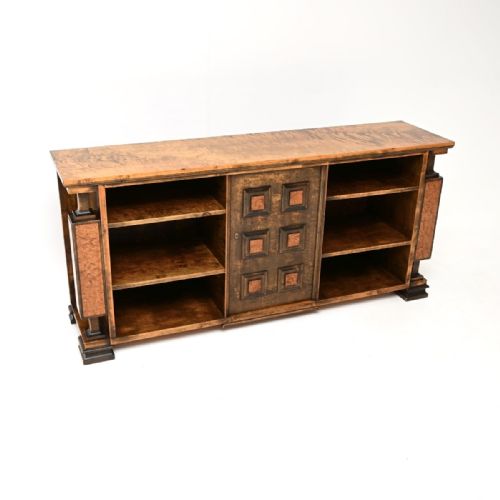
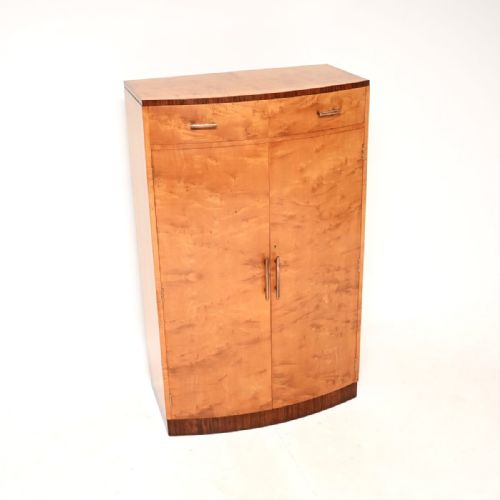


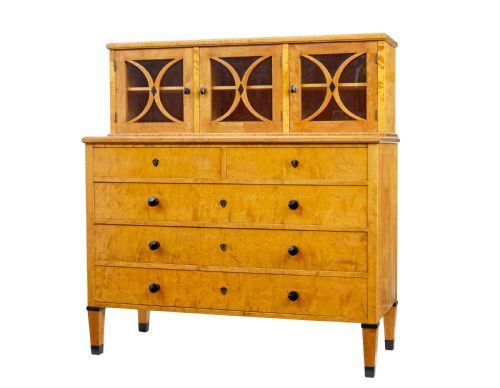

Satin Birch Storage Cupboard
A satin birch storage cupboard brings pale, figured timber and clean lines to a room, offering generous storage with a distinct Nordic character.
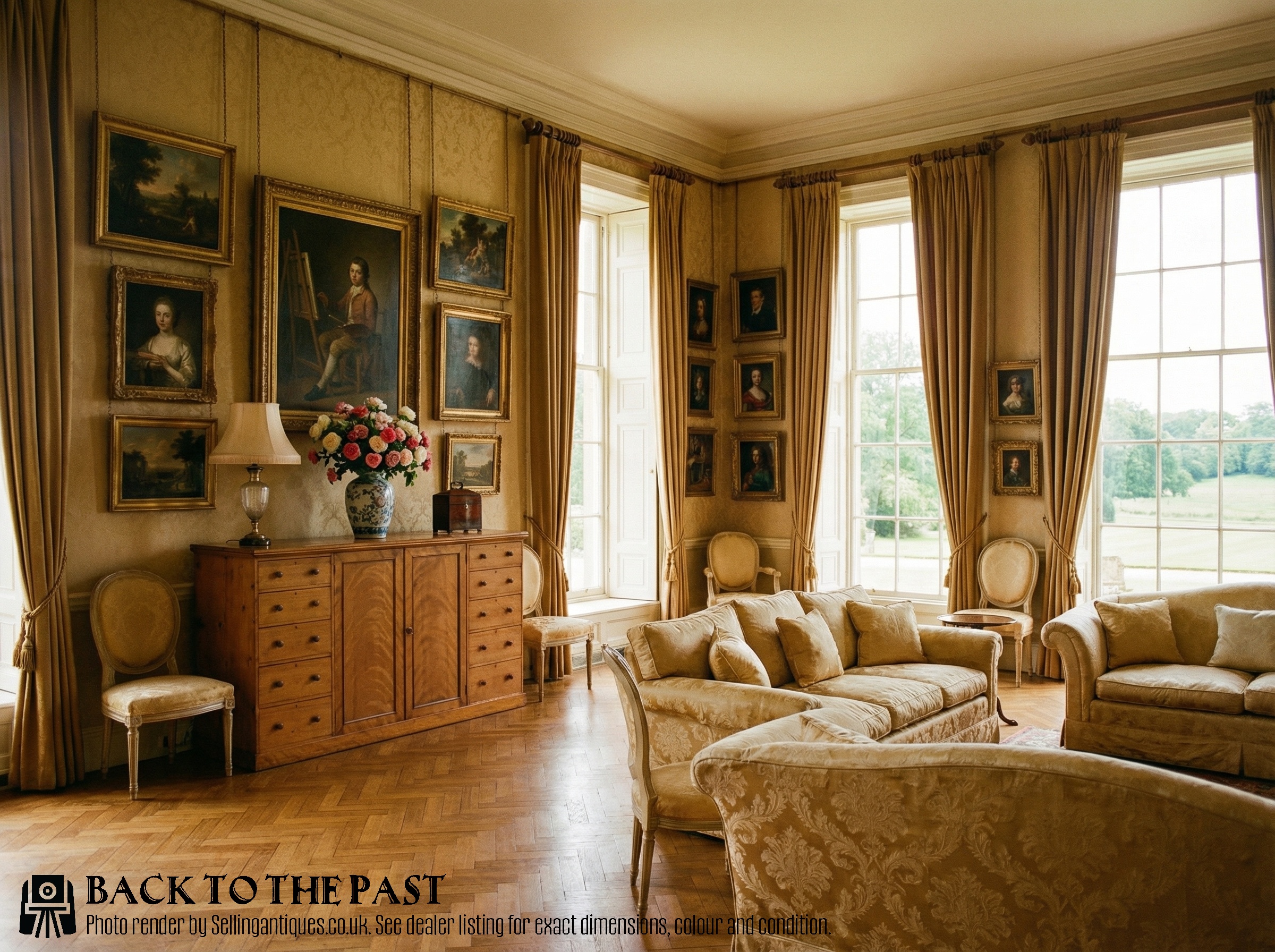
Satin Birch Storage Cupboard
A satin birch storage cupboard combines practical storage with the striking grain of pale birch timber, spanning forms from tall wardrobes to compact cabinets. Pieces on this page trace developments across the 19th century, Victorian era, and into 20th-century movements including Art Deco and Mid-Century Modern.
The selection ranges from traditional British linen presses and chests with upper cupboards to Swedish sideboards, fitted cupboards, and architectural bookcases. Buyers encounter both solid birch construction and contrasting veneers, often paired with secondary woods like walnut, pine, or elm.
Scandinavian workshops dominate the origins of these pieces, particularly through Swedish designs that transition from 19th-century styles through Swedish Grace and Art Deco. These items serve primarily as functional furniture where visual warmth meets substantial internal capacity.
Materials and construction methods
Cabinet makers utilised satin birch and birch, frequently applied as veneers over denser cores to display the wood's natural figure and shimmering grain. Selected pieces integrate contrasting elements of walnut, burr wood, and elm to accentuate panels, mouldings, and structural borders.
Traditional joinery underpins these cabinets, wardrobes, and chests, supporting both fitted internal compartments and large exterior doors. Metal hardware and hinges secure heavy doors on compactums and tall wardrobes, while internal shelving and drawer dividers provide modular utility.
Satin Birch Storage Cupboard Retail Price Guide 2026
Typical asking prices for satin birch storage cupboard among the pieces listed under this phrase on Sellingantiques today, from the lower quarter to the upper quarter. They describe what is for sale here now, not the wider market.
Some cupboards hide entire wardrobes inside compact frames, proving that historical tidiness was an art form long before modern modular furniture.
Distinctions in craftsmanship and design
Quality rests in the selection and bookmatching of the veneer, where dramatic grain patterns determine the visual impact of the cabinet facade. Superior examples display thoughtful integration of secondary timbers, ensuring harmonious contrast between the pale birch body and darker decorative accents.
The structural integrity of large proportions, such as grand compactum wardrobes and fitted cupboards, depends upon precise joinery and balanced door hanging. Maker attribution, evidenced by workshop stamps from firms like Holland & Sons or designers such as Otto Schulz and Oscar Nilsson, further distinguishes individual pieces.
Holland & Sons·Otto Schulz for Boet·Oscar Nilsson Nordiska Kompaniet
The Satin Birch Storage Cupboard Glossary
- Satin birch
- A timber derived from birch featuring a shimmering, chatoyant grain that catches the light. It offers a pale, warm alternative to heavier hardwoods.
- Compactum wardrobe
- A fitted multi-compartment wardrobe designed to hold diverse garments and accessories efficiently. These units often combine hanging space, drawers, and shelving within a single frame.
- Linen press
- A tall piece of furniture featuring upper cupboards for storing textiles and lower drawers for bulkier items. They evolved to keep household linens clean and organised.
- Veneer
- A thin layer of decorative wood applied over a structural base timber to display superior grain patterns. This technique prevents warping while maximising visual appeal.
- Swedish Grace
- A neoclassical design movement in Sweden during the 1920s that balanced classical restraint with modern simplicity. It bridges traditional Nordic craftsmanship and early modernism.
Satin Birch Storage Cupboard: Frequently Asked Questions
What is a satin birch storage cupboard used for?
These cupboards provide concealed storage for clothing, linens, or household items while introducing pale, figured timber to an interior. Their internal layouts vary from hanging space and shelving to specialised drawers and compartments.
Depending on the specific form, such as a compactum or a cabinet on chest, they function effectively in bedrooms, hallways, or living spaces.
How do I identify a 19th-century piece?
Nineteenth-century examples often exhibit traditional British or Swedish proportions, utilising solid birch or early veneer techniques. Look for hand-cut dovetails in the drawers and traditional hardware consistent with Victorian or mid-19th-century manufacturing.
Stylistic cues such as linen presses or fitted upright cupboards point clearly toward this earlier period of production.
Are these cupboards solid wood or veneer?
Construction varies between solid birch and satin birch veneer applied over secondary timbers like pine. Veneering was widely practiced to showcase the shimmering, chatoyant qualities of the grain across large flat surfaces.
Both solid and veneered constructions appear across the Victorian, Art Deco, and Mid-Century periods represented here.
How do I care for satin birch furniture?
Protect the timber from direct sunlight and excessive humidity to preserve the pale tone and prevent veneer separation. Regular dusting with a soft, dry cloth is usually sufficient for maintenance.
Avoid chemical polishes that can build up on the surface and dull the chatoyant quality of the wood.