
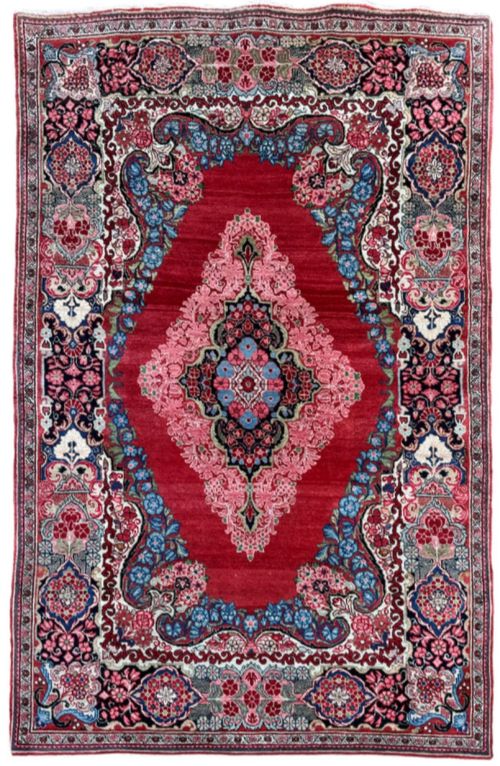

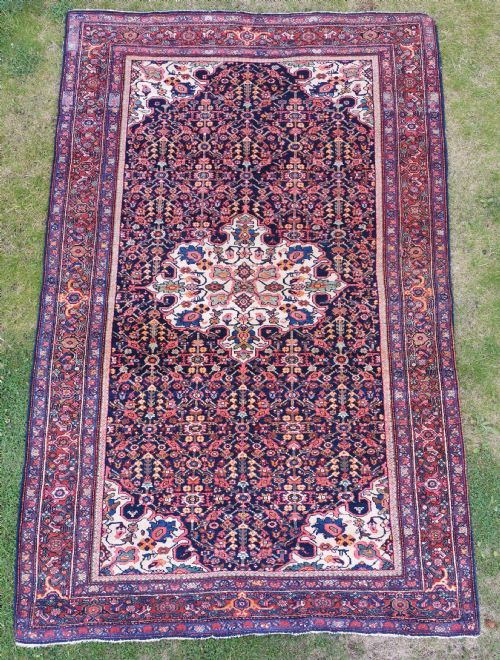
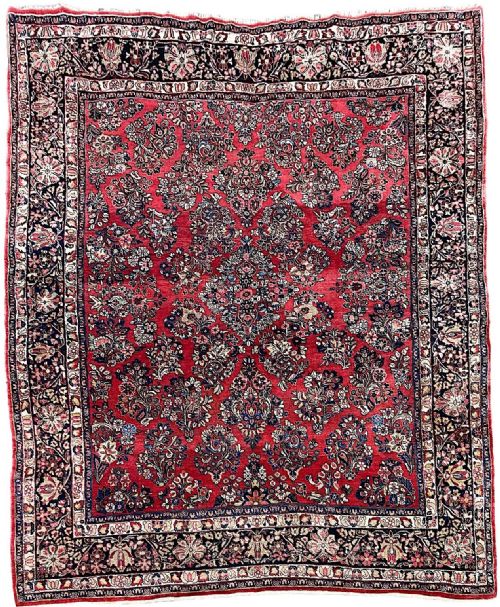


Sarouk Floral Carpet
A sarouk floral carpet brings dense Persian artistry and robust West Persian craftsmanship directly to your floor.
Sarouk Floral Carpet
A sarouk floral carpet represents traditional Persian weaving originating from West Persia and West Central Persia. These floor coverings span forms from small area rugs and village pieces to exceptionally long narrow runners and large scale carpets. When you examine this selection, you encounter pieces attributed to specific regional traditions including Jozan, Farahan, and Mohajeran.
The pieces listed on this page date primarily from the early twentieth century, specifically around nineteen twenty and nineteen thirty, alongside older examples reaching back through nineteen hundred to eighteen seventy. The forms vary from standard rectangular carpets to elongated runners designed for hallways and corridors. Each specimen displays the distinctive design language associated with Persian traditional carpet production.
Assessing the quality
Quality in these carpets rests upon the density of the weave and the precision of the traditional design execution. Finer knots and tighter foundation construction separate delicate workshop pieces from coarser village productions. The physical condition of the wool pile and the structural integrity of the cotton foundation dictate the longevity of each textile.
Proportions also influence the character of the piece, with unusually long narrow runners or large scale carpets demonstrating distinct spatial presence. The refinement of the Persian motifs and the harmony of the regional palette complete the measure of quality.
Listings span periods from eighteen seventy to nineteen thirty, constructed entirely from wool and cotton in Persian styles.
The Sarouk Floral Carpet Glossary
- Sarouk
- A style of Persian carpet originating from the West Persian region known for traditional floral designs and durable construction. Many examples hail from surrounding villages like Jozan and Farahan.
- Farahan
- A Persian carpet type associated with finer nineteenth century weaving from the West Persia region. These pieces often exhibit exceptional structural refinement.
- Jozan
- A village rug origin within West Central Persia linked to the broader Sarouk tradition. Pieces from this locale display distinct local interpretations of traditional patterns.
- Runner
- An elongated narrow carpet format suited for hallways and corridors. The evidence includes specimens measuring over seven metres in length.
- Pile
- The vertical tufts of wool that form the usable surface of the carpet. This soft upper layer sits upon a sturdy cotton foundation.
Sarouk Floral Carpet: Frequently Asked Questions
Where were these carpets made?
These carpets originate from West Persia and West Central Persia. Specific pieces connect to known weaving areas including Jozan, Farahan, and Mohajeran.
Production centres in these regions utilised local materials to create distinct regional variations within the broader Persian tradition.
How do I care for a wool carpet?
Vacuum the wool surface regularly using standard suction without aggressive rotating bristle brushes. Protect the cotton foundation by keeping the textile in dry conditions away from damp environments.
Rotate the carpet periodically to ensure even wear across high traffic areas and prevent localized fading from direct sunlight.
What sizes are available?
The selection includes compact area rugs measuring around one to two metres alongside room-sized carpets exceeding five metres in length. You will also find narrow runners designed for hallways.
Proportions range from standard rectangular formats to exceptionally long narrow runners stretching over seven metres.
How do I date these pieces?
Dating relies on structural characteristics, material analysis, and stylistic comparison with documented Persian workshop output. The examples here span from the late nineteenth century through the early twentieth century.
Most items date from the decades between eighteen seventy and nineteen thirty, reflecting traditional West Persian weaving periods.