





Sarcophagus Bottle Chest
A sarcophagus bottle chest is a substantial dining room container designed to chill wine, offering practical storage with classical architectural dignity.
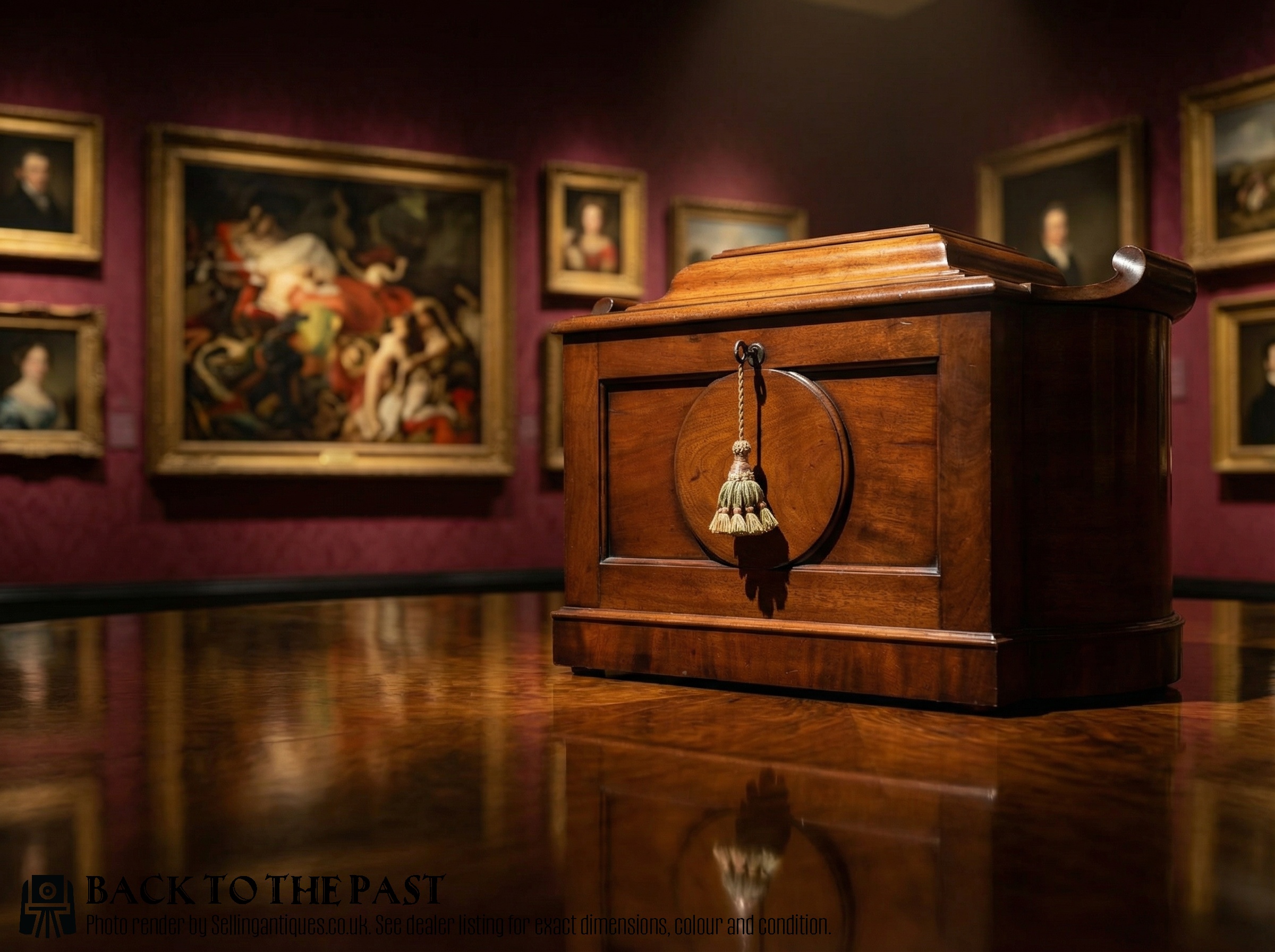
Sarcophagus Bottle Chest
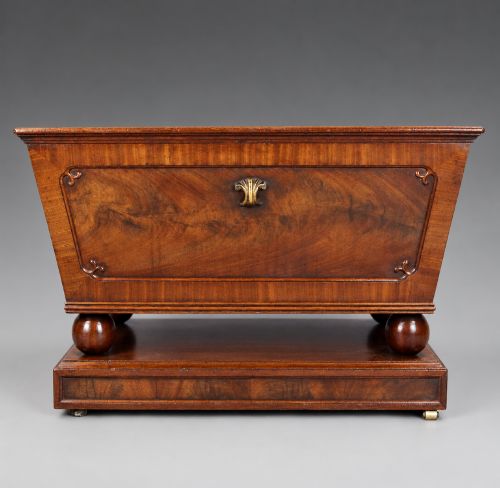
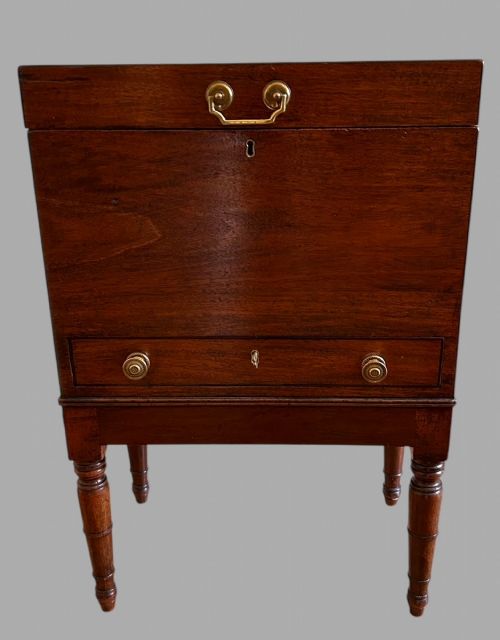
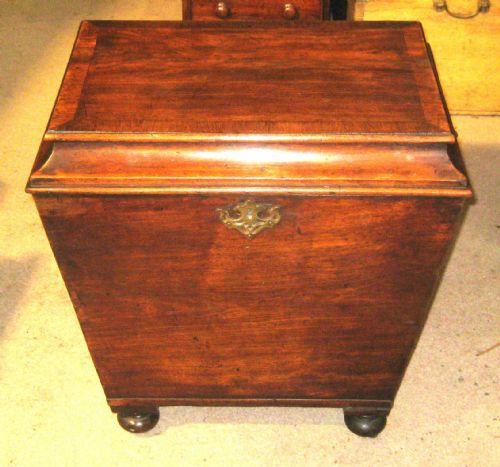
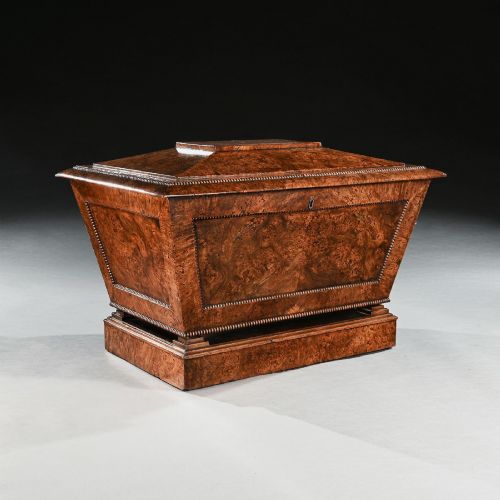
A sarcophagus bottle chest functions primarily as a cellarette or wine cooler, designed to keep bottles chilled during formal dining in the eighteenth and nineteenth centuries. These pieces take their name from ancient stone coffins, adopting a distinctive tapered, heavy-lidded form that sits low on the floor or upon short feet.
The most common examples on this page date from the Regency and Georgian periods, constructed predominantly in rich timbers with strong classical proportions. Makers translated architectural motifs into furniture, creating lidded boxes that held bottles upright in partitioned metal-lined interiors.
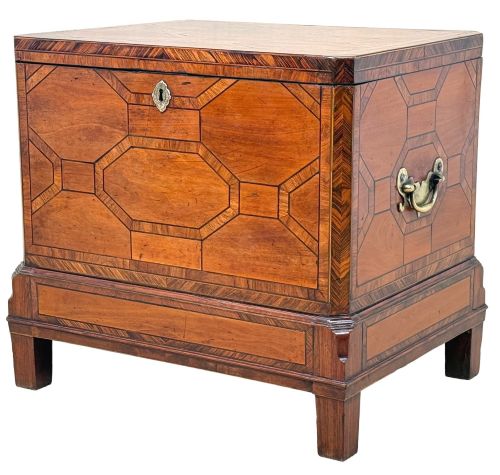
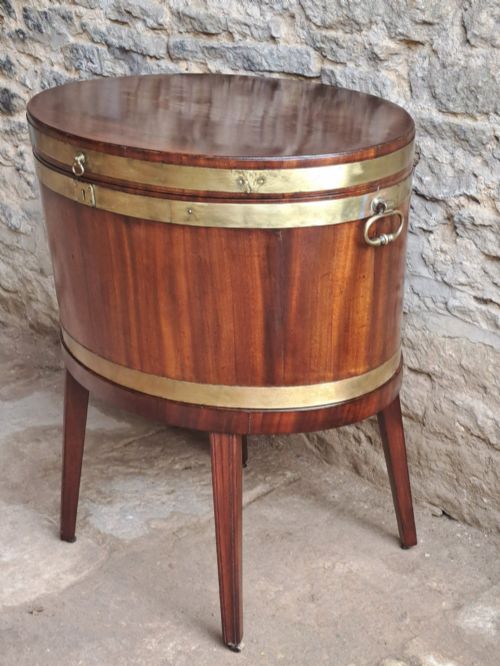
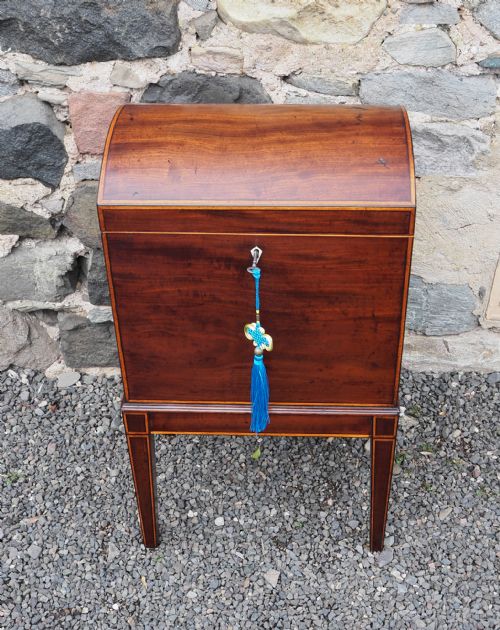
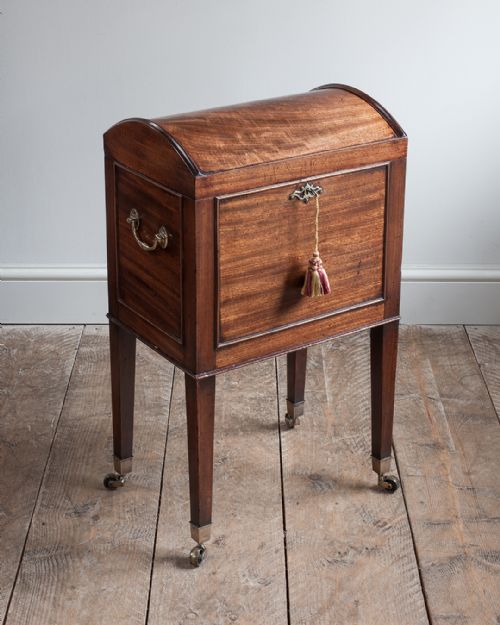
Buyers encounter variations ranging from simple mahogany boxes to grand flame mahogany designs with brass mounts, boxwood inlay, and carved details. Each piece reflects the shifting tastes of dining culture across the Georgian, Regency, and Victorian eras.
Distinctions in craftsmanship and design
Quality rests in the choice of timber veneer, the crispness of any carved ornament such as paw feet or lion mask handles, and the integrity of the internal lead lining. Superior examples display symmetrical flame mahogany figures matched across the lid and sides, alongside finely cast brass hardware that fits the proportions of the carcass.
Attribution to notable cabinetmakers or workshops elevates certain pieces, whilst standard vernacular workshop production forms the baseline of the surviving examples. The subtlety of boxwood inlay, the precision of mitred joints, and the retention of original interior divisions all separate ordinary cellar boxes from high-status dining furniture.
Several examples retain tiny brass taps near the base, designed to drain away the melted ice water after a long evening of dining.
Gillows·Maples and Co·Charles Heathcote Tatham
The Sarcophagus Bottle Chest Glossary
- Cellarette
- A lockable container used for storing and cooling wine bottles in the dining room. These boxes typically featured interior lead linings and wooden or metal partitions.
- Sarcophagus form
- A furniture shape modelled on ancient stone coffins, characterised by a high-domed lid, flared upper sides, and a narrow base often resting on paw feet.
- Flame mahogany
- A highly figured timber cut from the branch junction of the mahogany tree, displaying a characteristic swirling flame pattern highly prized in Regency cabinet work.
- Boxwood inlay
- A contrasting decorative technique using pale boxwood strips inserted into recesses within darker timbers to create geometric lines or banding.
- Lead lining
- A protective interior sheathing applied to wine coolers to contain melting ice and water without rotting the surrounding timber frame.
Sarcophagus Bottle Chest: Frequently Asked Questions
What was a sarcophagus bottle chest used for?
These chests functioned as portable cellars within the dining room, keeping wine bottles cool and secure during long meals before fitted sideboards became common. Servants filled the lead-lined interiors with ice and water to chill the bottles before serving them to guests.
Beyond cooling wine, the lockable lids kept valuable vintages safe from domestic staff. The heavy containers sat on the floor beneath side tables or within easy reach of the host.
How do I date a sarcophagus bottle chest?
Dating relies upon stylistic details such as the presence of Regency Neoclassical motifs, Georgian bracket feet, or Victorian proportions. Timber choices also help, as early pieces favour plain mahogany whilst Regency examples showcase vibrant flame veneers.
Hardware offers another clue, as cast brass handles and brass bandings changed in weight and fixing style across the decades. Cabinetmaking techniques inside the carcass shift from eighteenth-century dovetailed joints to later nineteenth-century assembly methods.
Where should I place one in a modern home?
These substantial chests work well as freestanding statement pieces in a dining room, hallway, or living space. Their flat tops provide a sturdy surface for lamps, books, or decorative objects while retaining their architectural presence.
Many owners utilise the deep interior space to store blankets, board games, or collections out of sight. Placing them away from direct heat sources protects the antique timber and delicate veneers from drying out.
Are the interiors original?
Many surviving examples have lost their original lead linings or internal wooden bottle dividers due to centuries of moisture and heavy use. Replacements are common and often necessary to stabilise the wooden carcass against historical dampness.
Buyers should examine whether the base and interior partitions show signs of adaptation or complete renewal. Even with altered interiors, the exterior craftsmanship and timber patination remain the primary focus.