


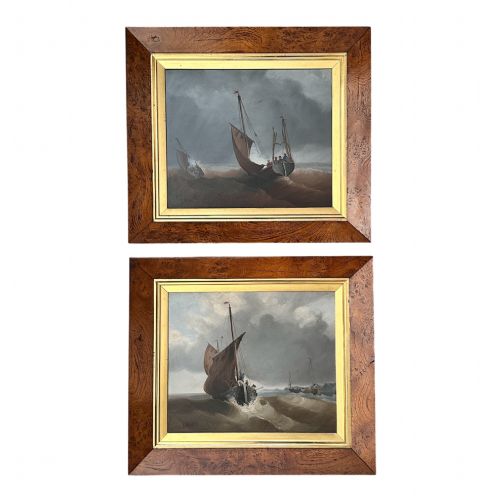
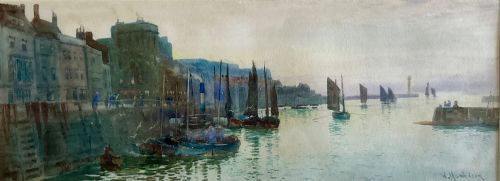
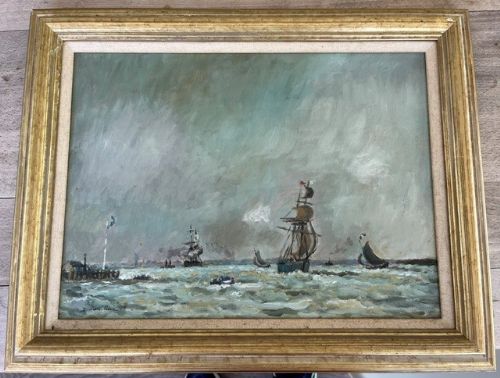
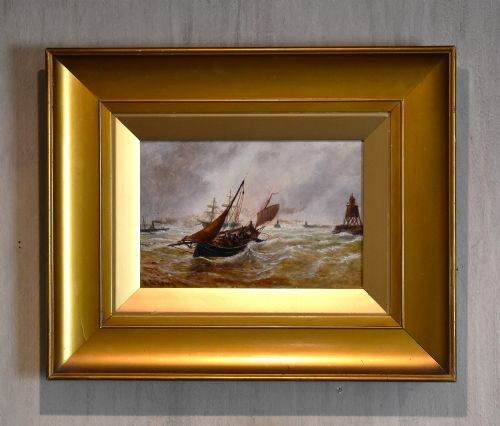
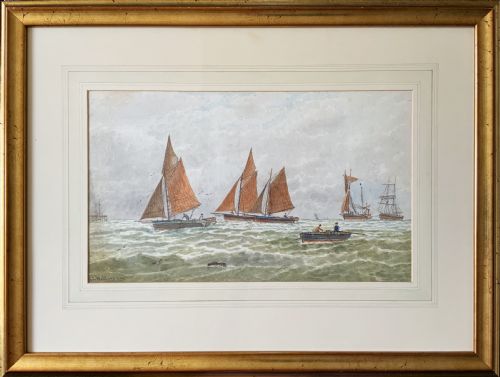
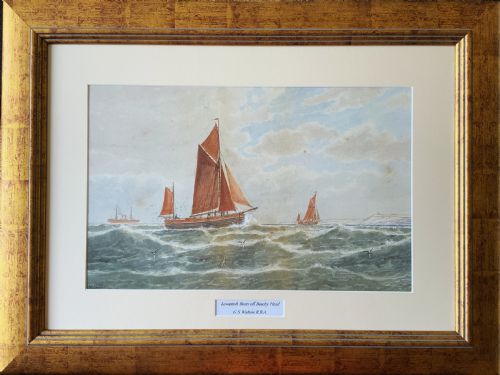
Sailing Boat Seascape
A sailing boat seascape captures the movement of vessels across open water, bringing coastal light and maritime history directly into an interior.
Sailing Boat Seascape
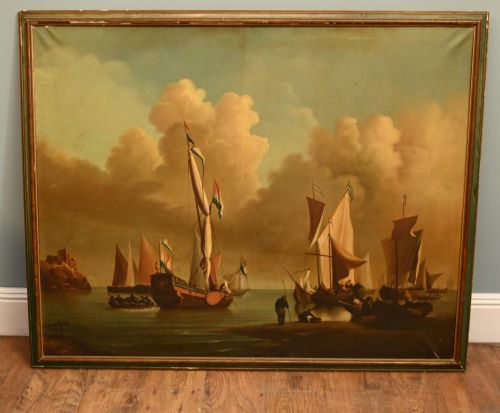
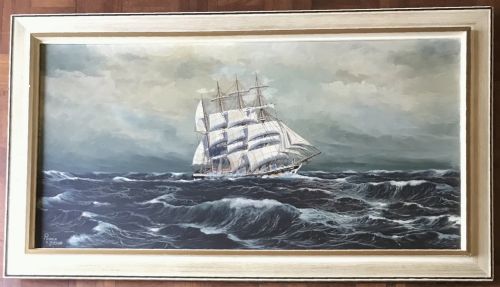
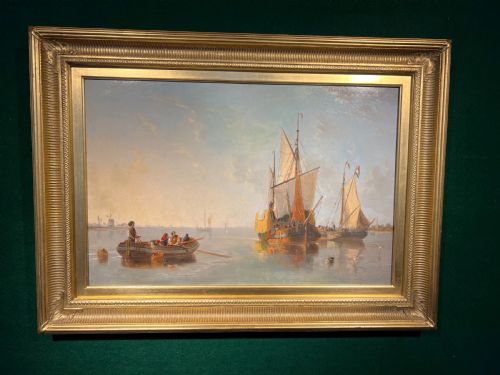
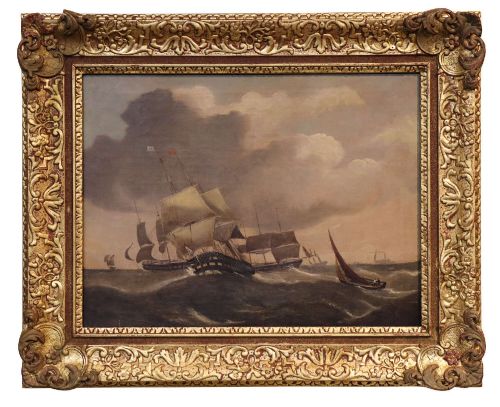
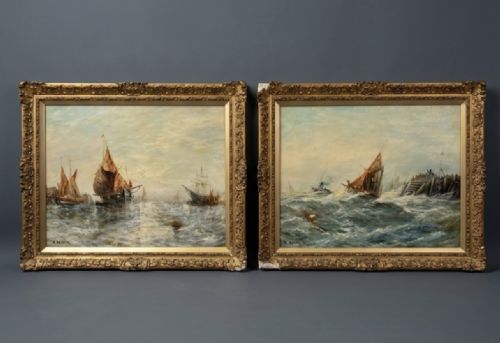
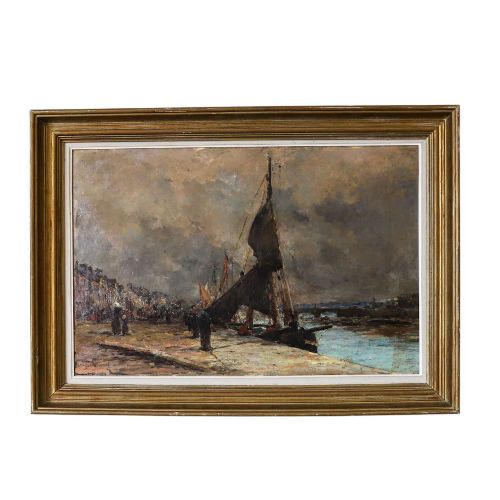
A sailing boat seascape represents ships, coastal waters, and harbours through painted media, ranging from calm coastal waters to turbulent open seas. These works span multiple centuries, recording the changing moods of the sea and the vessels that traversed it.
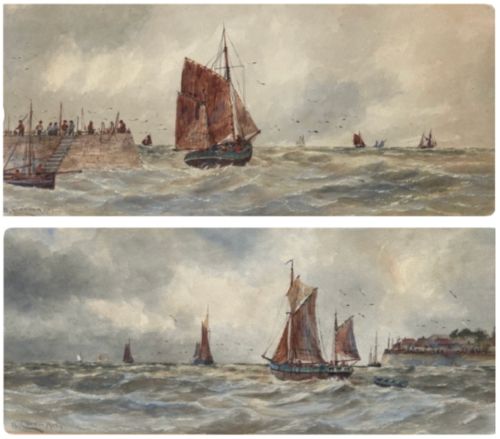
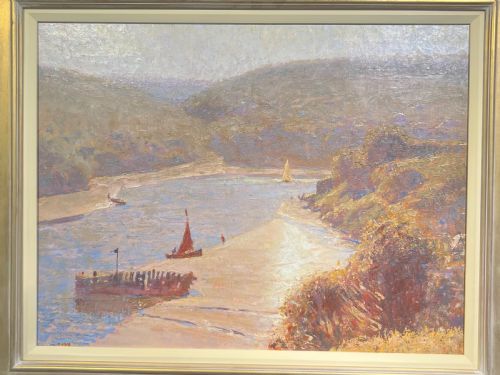
The pieces available on this page include framed oil paintings on canvas and board alongside delicate watercolour paintings on paper. Nineteenth-century Victorian examples and early twentieth-century British works appear frequently alongside French and Dutch coastal compositions.
Subjects range from solitary fishing boats near the shore to large fleets in heavy weather, capturing specific locations from Whitby to the Dutch coast. Collectors encounter both signed pieces by established marine artists and accomplished works by anonymous contemporary schools.
Materials and Techniques
Artists deployed oil paint on canvas or wooden boards to build rich textures of water, sky, and vessel hulls. Watercolours on paper offered a lighter medium for capturing translucent coastal atmospheres and luminous sea mists.
Gilt wood frames often enclose these works, providing a decorative border that complements the maritime palette of deep blues, greys, and whites. Impasto techniques appear in later works, applying thick paint to suggest crashing waves and wind-filled sails.
Several artists spent their lives painting the exact same stretch of stormy Yorkshire coast without ever losing their sea legs.
Differentiating Quality
Quality rests upon the artist's command of maritime atmosphere, light, and nautical accuracy. Superior works successfully convey the weight of water, the play of light on canvas, and the correct rigging of vessels under wind pressure.
The strength of the composition and the preservation of the original painted surface dictate the standing of a piece. Finer examples maintain the integrity of delicate brushwork in the sky and rigging without excessive overpainting or restoration.
Bonaventura Peeters·John Wilson Carmichael·John Moore of Ipswich·William Matthison·Bernard Benedict Hemy·George Stanfield Walters·Abraham Hulk I·Charles Napier Hemy·Thomas Bush Hardy·Edward Henry Eugene Fletcher·Fred Waugh·Edward Seago·Stephen J. Renard·Frank H. Mason·Alfred Henry Vickers
The Sailing Boat Seascape Glossary
- Seascape
- A painting depicting the sea, ships, or coastal views. These works focus primarily on marine subjects and open water.
- Impasto
- Paint applied thickly to a canvas or board, standing out from the surface. This technique creates a textured effect that renders churning waves and clouds with physical depth.
- Watercolour
- A paint consisting of pigment suspended in a water-based solution, typically applied to paper. It produces transparent washes of colour ideal for atmospheric sky and water effects.
- Gilt wood
- Wood carved and covered with a thin layer of gold leaf or gold-coloured finish. These frames frequently house nineteenth-century paintings to enhance the artwork.
- Provenance
- The documented history of ownership surrounding an artwork. A clear record helps establish the authenticity and origin of a marine painting.
Sailing Boat Seascape: Frequently Asked Questions
What periods do these paintings cover?
The works span from the seventeenth century through the Victorian era and into the mid-twentieth century. Nineteenth-century and Edwardian pieces appear most frequently across the collection.
Examples range from early Dutch maritime oils to mid-twentieth-century British impressionist coastal scenes.
How do I care for an antique oil painting?
Keep paintings away from direct sunlight and extreme temperature fluctuations to prevent the canvas or board from warping. Avoid using moisture or chemical cleaners on the painted surface.
Dust the gilt frame gently with a dry, soft brush to preserve the finish over time.
What is the difference between oil and watercolour?
Oil paintings utilise pigment bound in drying oils applied to canvas or board, offering rich colour depth and textured brushwork. Watercolours use water-soluble pigments on paper, creating lighter, translucent effects.
Oils are traditionally framed behind glass much less often than watercolours, which require paper protection.
How can I identify a coastal scene's location?
Many titles and signatures reference specific harbours, towns, or coastal landmarks such as Whitby, St Ives, or Lowestoft. The style of the vessels and the architectural details of distant shorelines also offer clues.
Researching the artist's recorded sketching locations often reveals the exact waters depicted.