



Sailboat Watercolour Art
Sailboat watercolour art captures maritime subjects on paper through fluid pigments, offering a direct view into coastal history.
Sailboat Watercolour Art
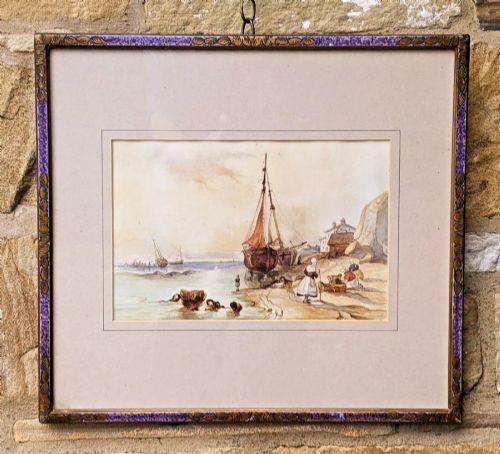
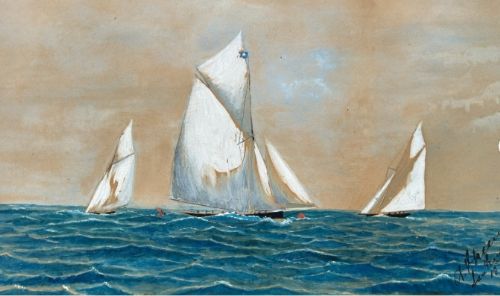
Sailboat watercolour art encompasses maritime paintings executed on paper, documenting fishing vessels, racing yachts, and coastal harbours from the nineteenth and twentieth centuries. These works range from detailed Victorian harbour scenes to impressionistic depictions of the French Riviera and British coastlines.
The pieces available on this page lean heavily toward nineteenth-century and early twentieth-century maritime subjects, framed under glass in wood or gilt wood surrounds. Buyers encounter framed paintings and wall art representing regional harbours, Venetian canals, and open sea racing.
Originating from British, American, and Belgian schools, the works reflect the periods spanning the Victorian era through the mid-twentieth century. Works frequently record specific locations such as Scarborough, Whitby, Venice, and the Cornish coast.
Quality and execution
The distinction between standard works and superior examples lies in the artist's handling of light, atmosphere, and maritime architecture. Master watercolourists achieve remarkable luminosity and depth through controlled washes, whereas lesser pieces rely on rigid outlines and flat colour application.
Condition of the paper and the integrity of the pigment remain central to quality, as exposure to light diminishes the vibrancy of early watercolours. Framed works retaining their original or period-appropriate gilt wood mounts generally exhibit higher preservation standards.
Sailboat Watercolour Art Retail Price Guide 2026
Typical asking prices for sailboat watercolour art among the pieces listed under this phrase on Sellingantiques today, from the lower quarter to the upper quarter. They describe what is for sale here now, not the wider market.
Listings feature works from the nineteenth century, the Edwardian period, and the 1920s to 1940s.
Henry Barlow Carter·Paul Delvaux·Richard Harry Carter·F J Aldridge·Samuel Owen·Charles Harmony Harrison·Ernest F Hill·Stanley Orchart·John McDougal·Frank Wasley·Harry Wanless·Thomas Bush Hardy·Henry Scott Tuke·Henry Bright
The Sailboat Watercolour Art Glossary
- Watercolour pigment
- Ground colour mixed with a water-soluble binder, applied in translucent layers on paper. This medium allows light to reflect from the white paper beneath the paint.
- Gilt wood
- Wood framing treated with a thin layer of gold leaf or metallic gilt paint. Such frames often complement the maritime subjects of the Victorian and Edwardian periods.
- Gouache
- An opaque watercolour medium containing a binding agent and white filler. Artists utilise this to introduce solid highlights into otherwise transparent watercolour compositions.
- Maritime art
- Works depicting ships, harbours, coastal views, and naval engagements. This genre encompasses the majority of the sailboat and coastal scenes found in these listings.
Sailboat Watercolour Art: Frequently Asked Questions
What periods do these paintings date from?
The pieces span from the nineteenth century through the mid-twentieth century, encompassing Victorian, Edwardian, and mid-century aesthetics.
Most works originate between the 1880s and the 1940s, reflecting changing approaches to maritime painting across those decades.
How should I display watercolour art safely?
Watercolour paintings require protection from direct sunlight to prevent the fading of delicate pigments on paper. Hanging them away from moisture-prone areas ensures the paper and framing materials remain stable.
Utilising glass and proper mounting prevents the paper from touching the glazing directly, preserving the integrity of the artwork.
What subjects appear in these coastal scenes?
The works depict fishing boats, racing yachts, tall ships, and harbour views from British and international locations. Scenes range from local Cornish ports like Mousehole to international destinations such as Venice and Cannes.
Artists frequently recorded working vessels, lighthouses, and coastal craft engaged in daily maritime labour.
Are these works signed by the artists?
Many pieces bear signatures, initials, or attribution to known maritime painters of the nineteenth and twentieth centuries. Some works remain attributed based on style or documentation from the period.
Signatures often appear in the lower corners of the paper, executed in ink or watercolour pigment alongside dates or location notes.