


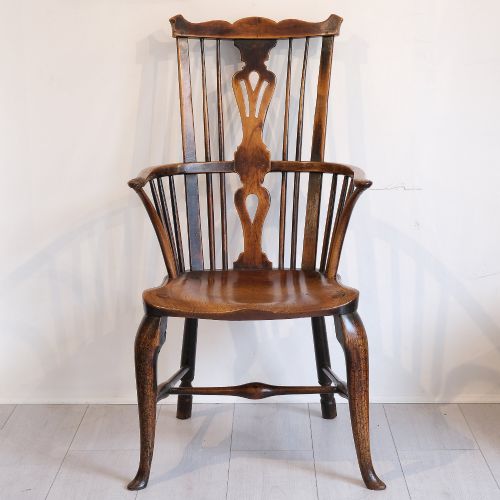
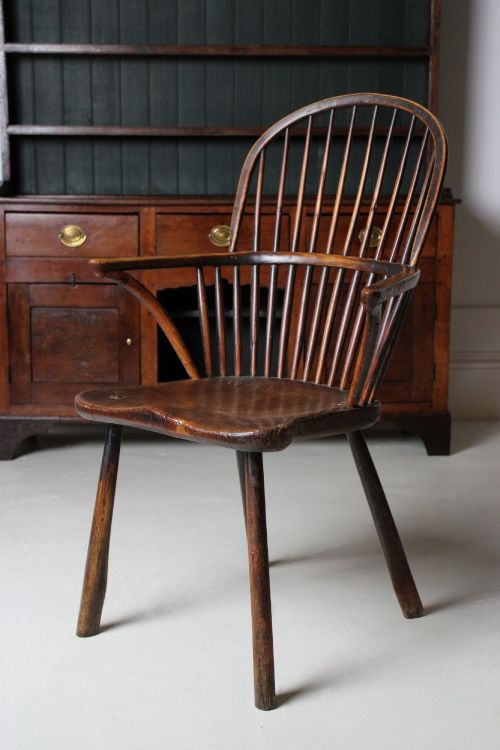
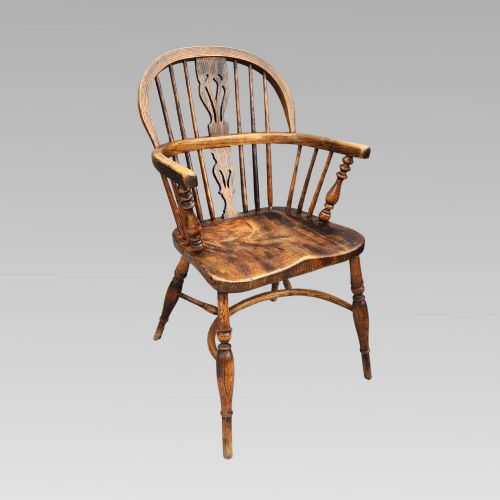


Saddle Seat Windsor Armchair
A saddle seat windsor armchair brings vernacular craftsmanship into a room, offering robust seating shaped from native timbers during the Georgian and Victorian periods.
Saddle Seat Windsor Armchair
A saddle seat windsor armchair is a traditional wooden seating form characterised by a solid timber seat sculpted into a saddle shape, supported by legs wedged directly into the base. These chairs emerge primarily from 18th century, Georgian, Regency, and 19th century or Victorian workshops across English country regions.
The most common examples on this page pair an elm saddle seat with ash spindles, backs, or legs, often framed by regional variations such as stick back, comb back, high back, low back, or hoop back designs. Desk chairs, smokers bows, and large farmhouse armchairs also appear within these vernacular traditions.
Materials and construction methods
Maker construction relies on combining native hardwoods, predominantly utilising elm for the heavy saddle seats alongside ash, yew, beech, oak, fruitwood, and other hardwoods for bentwood hoops, arms, and slender spindles. Yew wood appears frequently in high-status country examples, valued for its rich grain and natural figuring.
Green woodworking techniques allow craftsmen to steam-bend ash or yew into curved backrests and armbows while socketing turned legs and spindles securely into drilled holes within the thick, adzed elm seat base.
Saddle Seat Windsor Armchair Retail Price Guide 2026
Typical asking prices for saddle seat windsor armchair among the pieces listed under this phrase on Sellingantiques today, from the lower quarter to the upper quarter. They describe what is for sale here now, not the wider market.
Some yew wood armchairs retain stubborn bits of bark tucked deep beneath the seat where the maker's drawknife missed.
Distinctions in quality and execution
Quality rests in the depth and comfort of the sculpted elm saddle seat, where deeply dished contours and well-defined carves demonstrate superior regional craftsmanship. Finer examples display balanced proportions in the steam-bent hoops, crisp turning on the legs and stretchers, and thoughtful timber selection.
Subtle differences in wood choice, such as figured yew grain or substantial ash frameworks, separate standard vernacular seating from exceptional cabinet-maker standards found in Thames Valley or West Country workshops.
The Saddle Seat Windsor Armchair Glossary
- Saddle seat
- A wooden seat base carved with hollowed contours resembling a riding saddle for ergonomic comfort.
- Spindle back
- A chair back constructed from multiple vertical turned wooden rods connecting the seat to the armbow or top rail.
- Hoop back
- A continuous steam-bent wooden bow forming the upper backrest and arm supports in a single fluid arc.
- Smokers bow
- A low-backed Windsor variant with a rounded, continuous armrail, often utilised as a desk or office chair.
- Stretcher
- A horizontal wooden rod connecting the legs of a chair to provide structural rigidity and stability.
Saddle Seat Windsor Armchair: Frequently Asked Questions
How do I identify a genuine period windsor chair?
Examine the construction joints beneath the seat where the legs emerge through the top surface, noting traditional wedged tenons and hand-sculpted tool marks on the elm base.
Period pieces display natural timber shrinkage, patination from decades of use, and minor variations in handmade spindle turnings rather than uniform machine-made components.
What is the difference between a high back and low back windsor?
High back windsors incorporate extended vertical spindles or comb backs designed to support the upper back and head of the sitter.
Low back versions feature truncated armbows and shorter backs, making them suitable for desk work or placing beneath standard tables.
Can I use a windsor armchair at a modern desk?
Many examples listed as desk chairs or smokers bows offer comfortable proportions and sturdy arm heights suited for daily seating use.
Ensure you check the seat height and clearance beneath your desk surface, as vernacular chair dimensions vary considerably by region and period.
Where were most english windsor chairs made?
Production centred in rural English regions, particularly the Thames Valley, West Country, and various provincial rural workshops with access to abundant hardwood stocks.
Local timber availability dictated whether a maker utilised elm, ash, yew, or beech for specific structural components.