

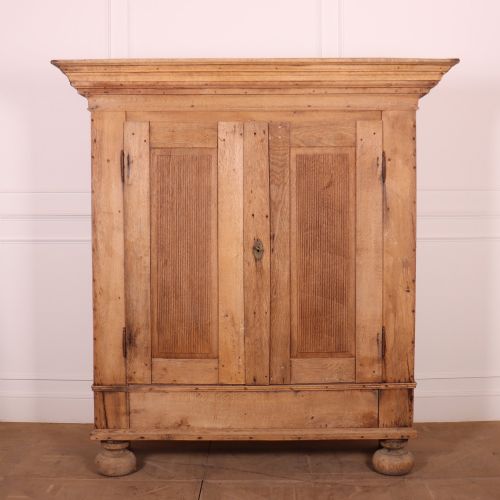
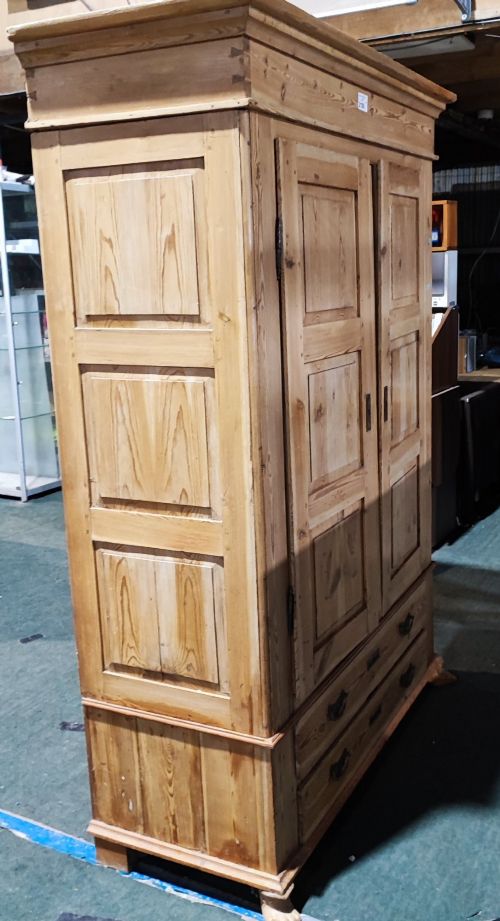
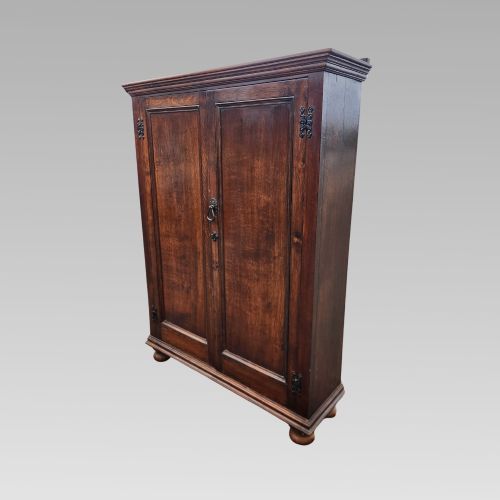
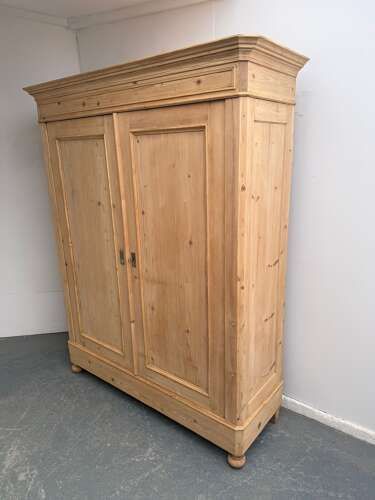
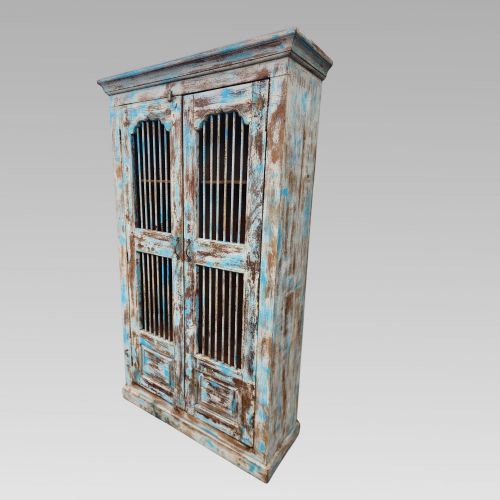
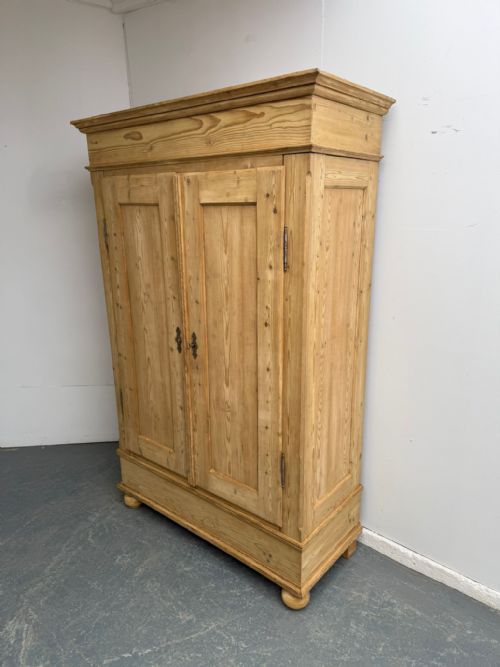
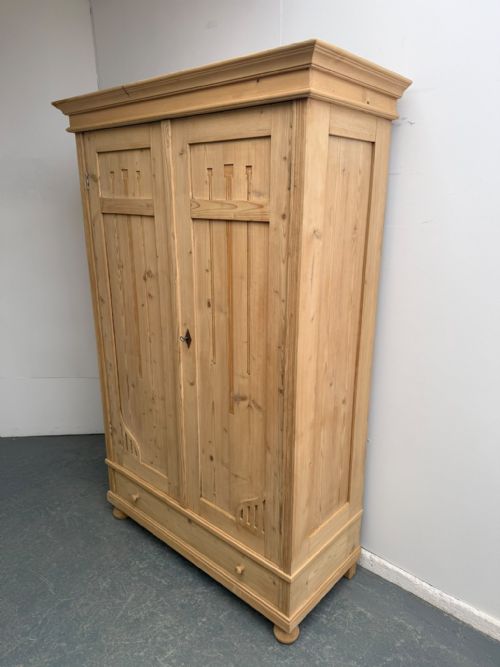
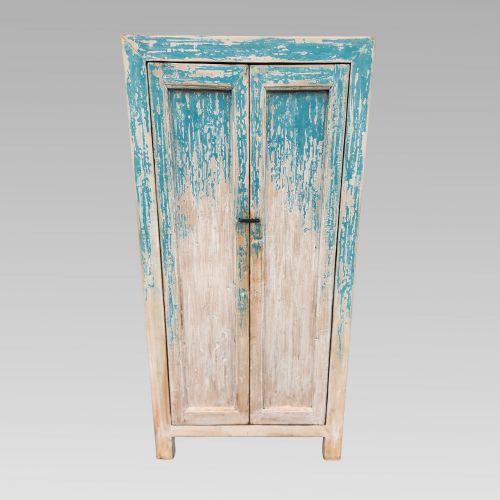
Rustic Wooden Linen Press
A rustic wooden linen press provides substantial storage while bringing tactile warmth and history into a room through aged timber and simple lines.
Rustic Wooden Linen Press
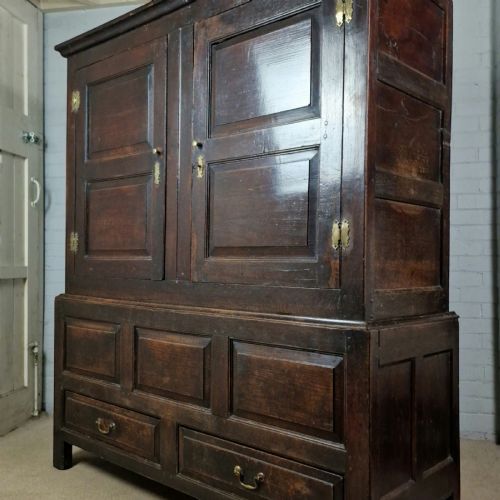
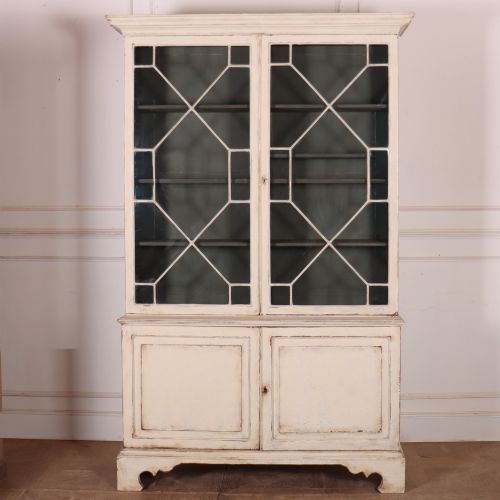
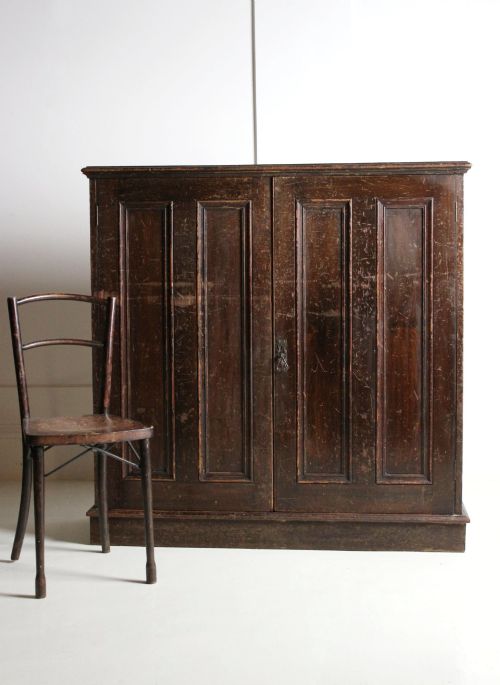
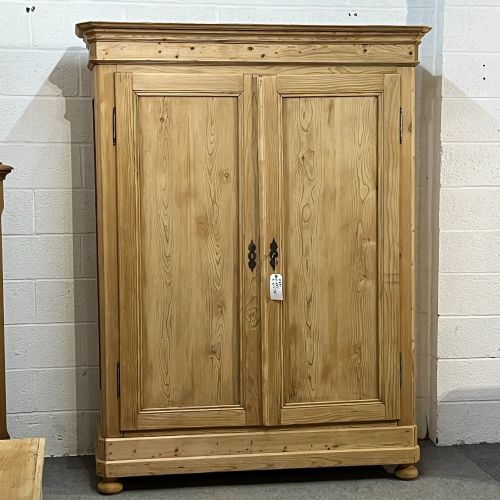
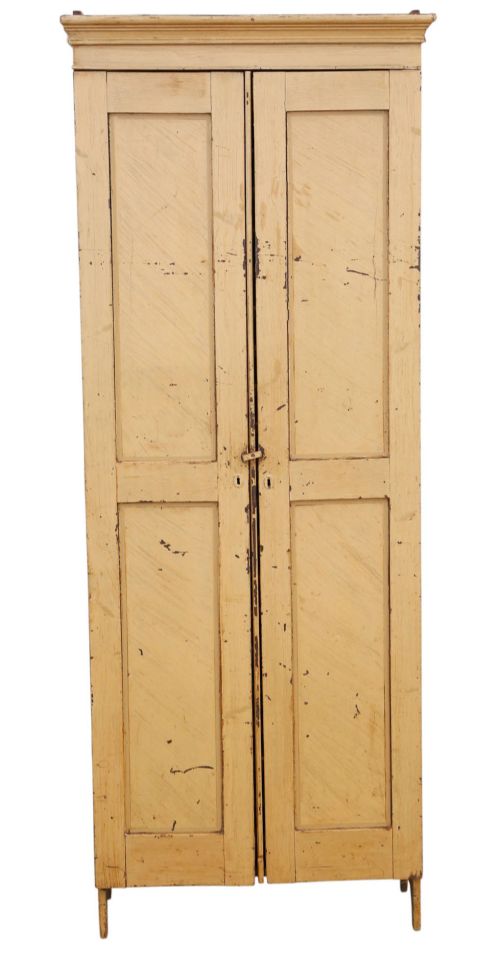
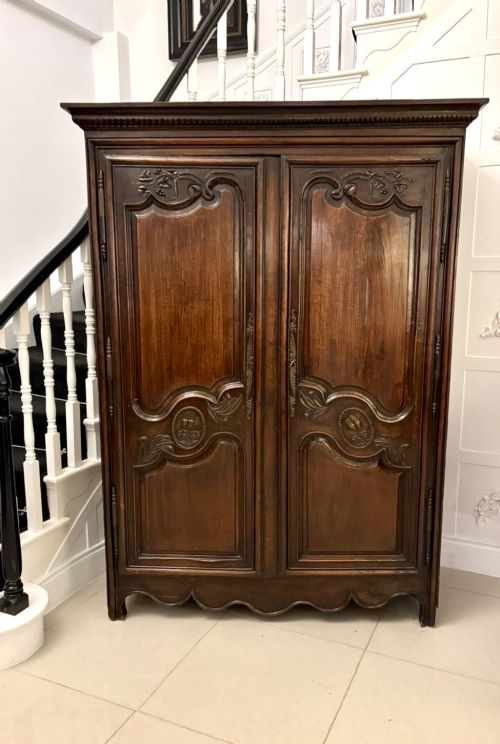
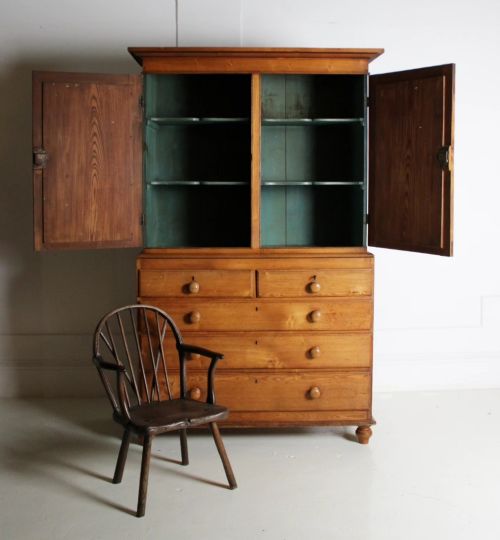
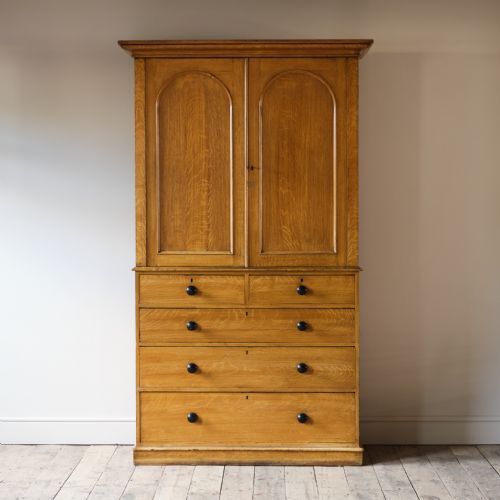
A rustic wooden linen press is a large storage piece designed to hold textiles, combining cupboard doors with internal shelving or hanging space. When searching for a rustic wooden linen press, buyers encounter various forms including tall wardrobes, housekeeper's cupboards, and livery cupboards originating from country workshops.
The pieces available span multiple centuries and regions, ranging from 17th-century oak armoires to 19th-century pine presses and painted Scandinavian or Hungarian cupboards. Georgian examples frequently use pine or oak, while continental European pieces introduce regional variations in proportion and panel construction.
Many examples arrive with original paint finishes, historical wax coats, or stripped timber surfaces ready for finishing. Their primary function remains domestic storage, offering deep shelves and enclosed compartments suited to bulky linens and garments.
Materials and construction methods
Makers relied primarily on native timbers such as pine, oak, ash, and chestnut, selecting softwoods for painted rural pieces and hardwoods for sturdier structural framing. Boards were joined using traditional pegged mortise and tenon joints, panelled doors, and handmade backboards.
Surface treatments varied from plain waxed finishes to layered traditional paintwork in cream, grey, blue, or black. Hardware elements typically include iron strap hinges, brass escutcheons, and internal wooden peg rails or early screw mechanisms.
Rustic Wooden Linen Press Retail Price Guide 2026
Typical asking prices for rustic wooden linen press among the pieces listed under this phrase on Sellingantiques today, from the lower quarter to the upper quarter. They describe what is for sale here now, not the wider market.
Listings feature pine, oak, ash, and chestnut timber alongside painted finishes in cream, blue, grey, and black.
Factors determining quality
Quality rests upon the integrity of the timber framing, the preservation of original surfaces, and the survival of period hardware. Superior pieces retain their original backboards, untrimmed cornices, and functioning doors that close true within their frames.
The presence of untouched period paint finishes or patinated wax surfaces distinguishes finer examples from later alterations. Construction depth and the subtlety of hand-carved details or fielded panels further separate standard utility furniture from exceptional provincial cabinetwork.
The Rustic Wooden Linen Press Glossary
- Linen press
- A tall storage cabinet traditionally used for storing folded linen and bedding, often incorporating sliding trays or internal shelves behind double doors.
- Knockdown wardrobe
- A large piece constructed with modular panels and wedges to allow easy dismantling and transport between rooms.
- Livery cupboard
- An early enclosed storage cabinet used for food or household goods, pre-dating specialised wardrobe furniture.
- Escutcheon
- A protective plate surrounding a keyhole, frequently made of brass or iron on period cabinet doors.
Rustic Wooden Linen Press: Frequently Asked Questions
How do I clean a painted pine cupboard?
Dust the surface regularly with a soft, dry cloth to prevent dirt accumulation. Avoid harsh chemical cleaners that can damage historical paint layers.
For stubborn marks, wipe gently with a barely damp cloth using mild soap, drying the timber immediately afterwards.
Can these presses be disassembled for moving?
Many period cupboards, particularly knockdown variants, use pegged frames or wedge systems designed for dismantling. This allows easier transport through narrow doorways and up staircases.
Check the internal construction method before attempting to take apart any historical cabinet.
What is the difference between an armoire and a linen press?
Armoires generally function as full-height wardrobes intended for hanging garments behind large doors. Linen presses traditionally incorporate internal shelving or sliding trays specifically sized for folded textiles.
Over time, many presses have had internal shelves removed to accommodate modern clothes hangers.
How do I tell original paint from modern finishes?
Original historical paint exhibits natural wear patterns, craquelure, and multiple underlying layers visible around edges and handles. Modern emulsion or synthetic paints sit uniformly without the depth and gradual fading acquired through age.
Examine the fastener holes and hinge beds to see if the paint layers extend beneath the ironwork.