

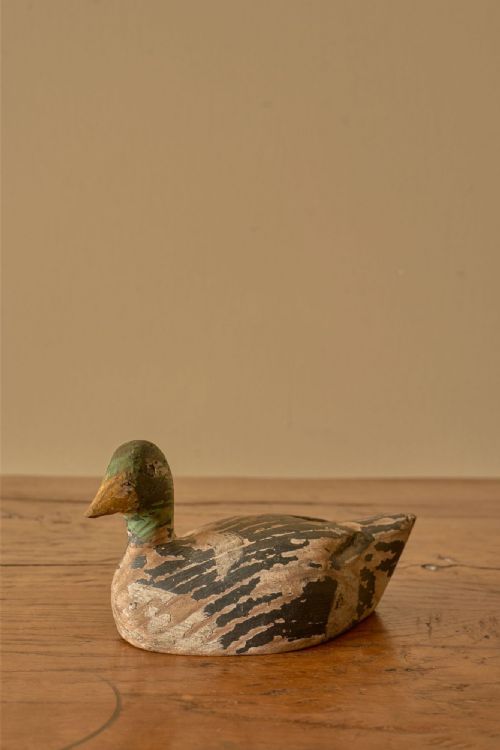
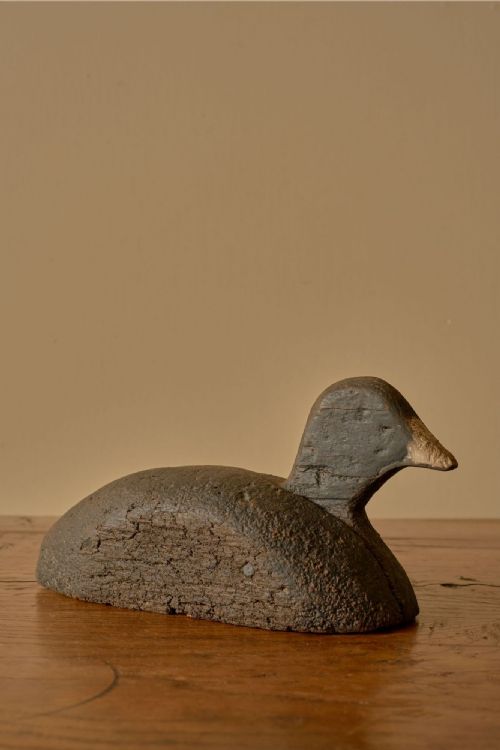
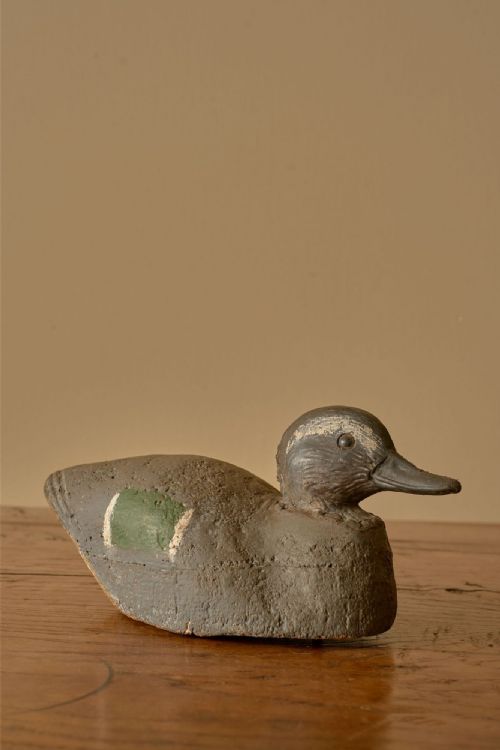
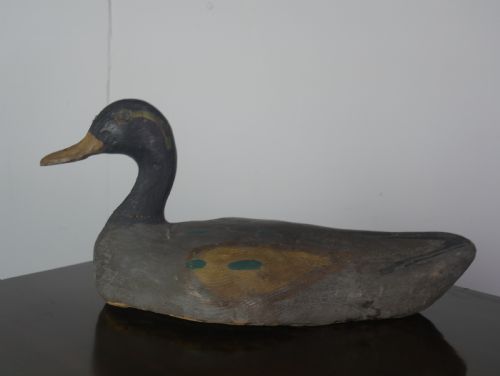


Rustic Wooden Duck
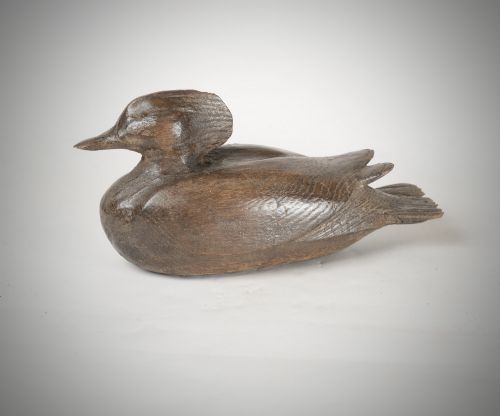
A rustic wooden duck brings tactile, vernacular charm to a room, rooted in centuries of working decoy tradition and simple country craftsmanship.
Rustic Wooden Duck
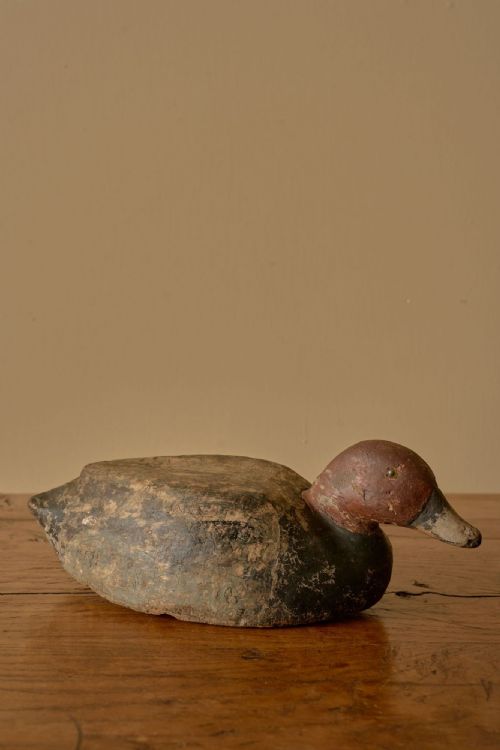
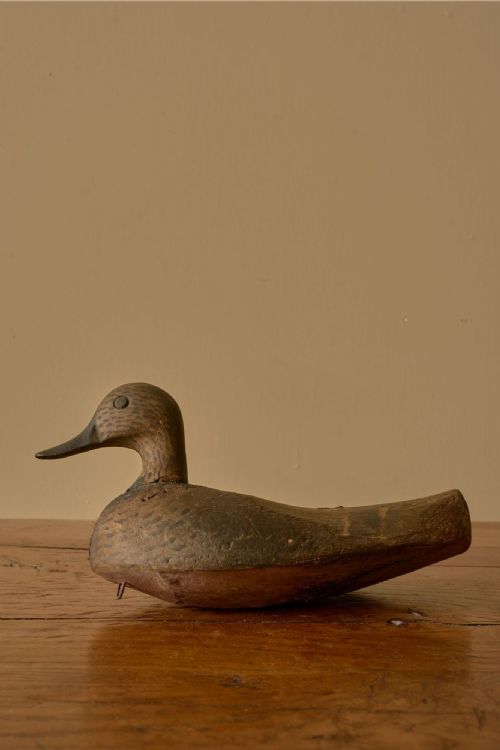
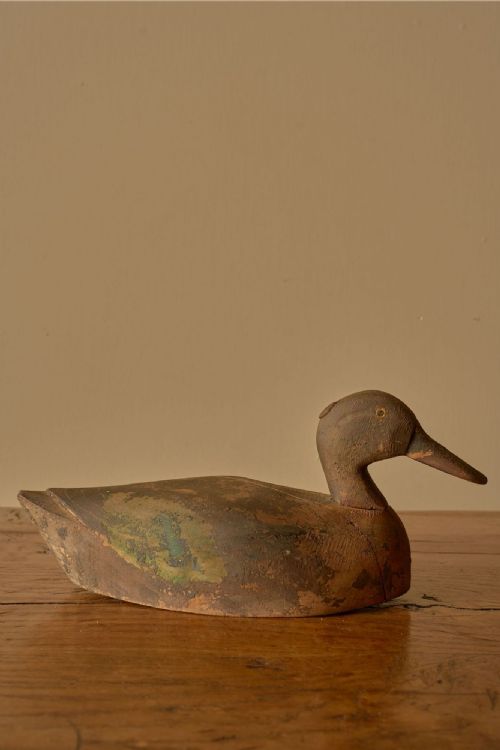
The versions most commonly met on this page span the nineteenth century through the early twentieth century, including Edwardian examples and pieces from the 1900s, 1920s, and 1930s. They often appear as single decorative objects, sets of three, or individual decoy ducks.
Originating primarily within English country and folk art traditions, these objects demonstrate functional forms shaped by hand. Some pieces also cross into broader folk art studies involving papier-mâché and straw alongside timber.
How they were made
These figures rely on solid wood and timber, shaped through traditional carving techniques to capture the natural posture of water birds. Makers used available local woods, sometimes pairing carved wooden bodies with painted finishes.
Surface treatment defines many of these pieces, utilising hand-painted layers that have weathered over decades. Iron hardware or structural elements occasionally appear in construction, whilst alternative folk art studies incorporate papier-mâché and straw.
Rustic Wooden Duck Retail Price Guide 2026
Typical asking prices for rustic wooden duck among the pieces listed under this phrase on Sellingantiques today, from the lower quarter to the upper quarter. They describe what is for sale here now, not the wider market.
One duckling study breaks from tradition by using papier-mâché and straw to capture the fluffy texture of a very young bird.
What varies in quality
The distinction between ordinary and exceptional pieces rests upon the confidence of the carving and the character of the original paint surface. Stronger examples display sculptural presence and balanced proportions that reflect the maker's eye.
Natural patination accumulated through age separates a compelling decorative object from a lesser specimen. The handling of the surface pigment, whether worn uniformly or retaining distinct layers, dictates the visual depth of the piece.
The Rustic Wooden Duck Glossary
- Decoy
- A carved bird figure traditionally placed on water to attract wildfowl. These working objects form the foundation of most rustic duck sculptures.
- Folk art
- Utilitarian or decorative items made by self-trained makers using regional traditions. This style embraces unpretentious materials and direct craftsmanship.
- Patina
- The surface sheen and colour acquired by wood and paint through age and handling. It indicates genuine historical use.
- Edwardian
- Pertaining to the reign of King Edward VII, spanning the early years of the twentieth century. Pieces from this era often balance utility with decorative intent.
Rustic Wooden Duck: Frequently Asked Questions
What is a rustic wooden duck?
A rustic wooden duck is a hand-carved waterfowl sculpture, often originating as a working decoy or vernacular folk art piece from the nineteenth or early twentieth century.
These objects were shaped from timber and finished with paint, valued today for their tactile presence and connection to traditional country craftsmanship.
How were decoy ducks used?
Decoy ducks were historically placed on lakes or marshes by hunters to attract real waterfowl within range of the shore. Their simple forms and painted surfaces were designed to mimic resting birds from a distance.
Over time, many surviving decoys transitioned from practical sporting equipment into decorative objects collected for interiors.
How do I date a wooden duck?
Dating these pieces involves examining the tool marks left by the maker, the type of wood utilised, and the composition of the paint layers. Wear patterns and construction methods help place an object within periods like the Edwardian era or the early twentieth century.
Comparing the form to documented folk art traditions also clarifies the likely era of manufacture.
Where do these ducks fit in a room?
These carved birds suit rustic, traditional, or eclectic interiors where natural materials provide textural contrast. They sit comfortably on shelves, mantelpieces, or tables alongside books and ceramics.
Their restrained forms allow them to anchor a display without dominating the space.