

Rustic Wooden Display
A rustic wooden display brings grounded utility and honest grain to an interior through practical forms made for holding everyday goods.
Rustic Wooden Display
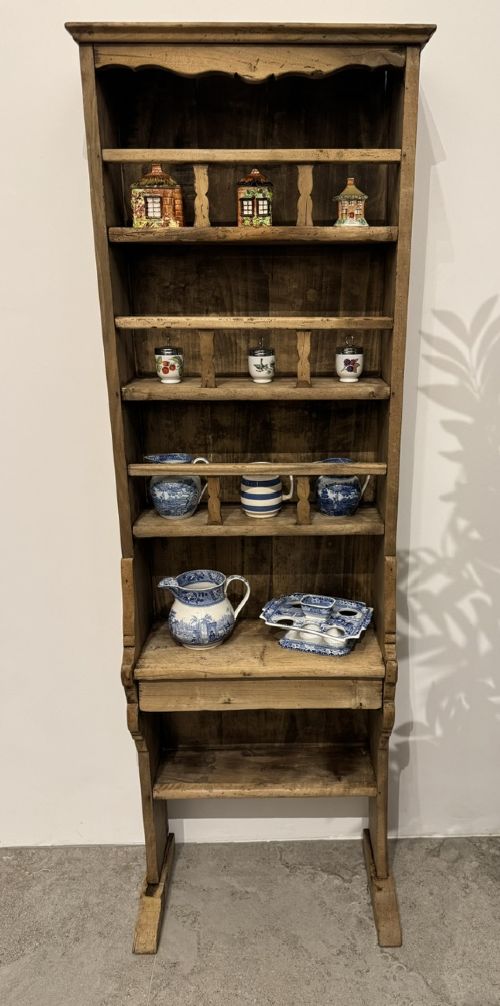
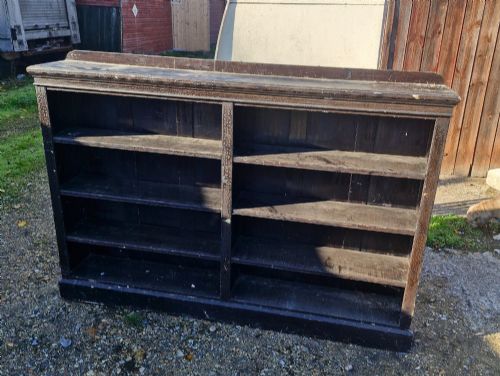
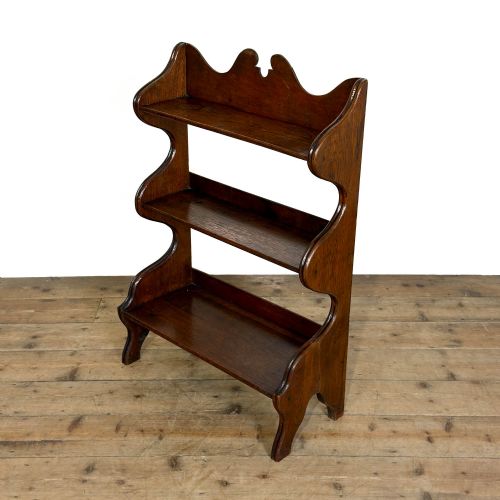
A rustic wooden display encompasses utilitarian furniture built to hold and exhibit domestic objects, books, and provisions across centuries of practical daily life. Buyers seeking these items will frequently encounter pine kitchen dressers, oak plate racks, and open bookcases originating from provincial workshops in the eighteenth, nineteenth, and early twentieth centuries.
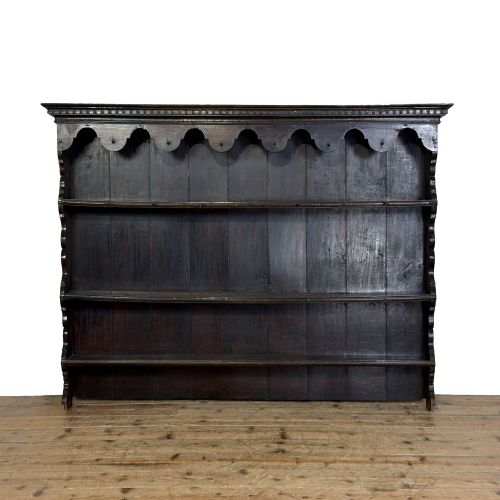
The category spans diverse regional forms including Welsh dressers, French drapers' tables, and corner cupboards, each designed to organise household wares within simple domestic settings. These pieces rely on straightforward architectural lines rather than elaborate ornamentation, prioritising functional surface area and accessible shelving.
Surviving examples reflect the working environments that produced them, showing the honest wear of farmhouse kitchens, country shops, and provincial pantries. The selection on this page demonstrates how everyday storage furniture evolved to serve both functional utility and simple visual presentation.
Judging quality in domestic timber
Quality rests in the integrity of the timber selection and the restraint of the joinery, where thick boards and pegged joints ensure enduring structural stability. Pieces retaining their original unstripped painted surfaces or deep wax patinas command greater interest among those who value untouched historical character.
Proportion and utility dictate the distinction between standard workshop output and finer provincial cabinet work, with well-balanced dimensions enhancing the functional presence of a dresser or bookcase. The absence of excessive modern restoration preserves the authentic integrity of the original construction.
Rustic Wooden Display Retail Price Guide 2026
Typical asking prices for rustic wooden display among the pieces listed under this phrase on Sellingantiques today, from the lower quarter to the upper quarter. They describe what is for sale here now, not the wider market.
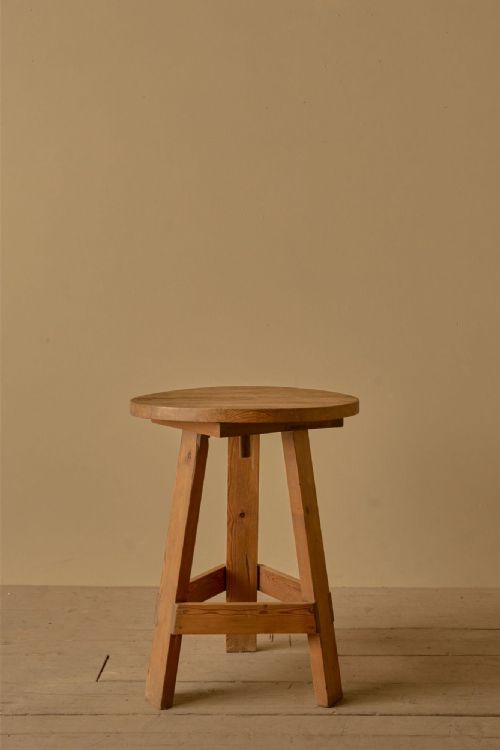
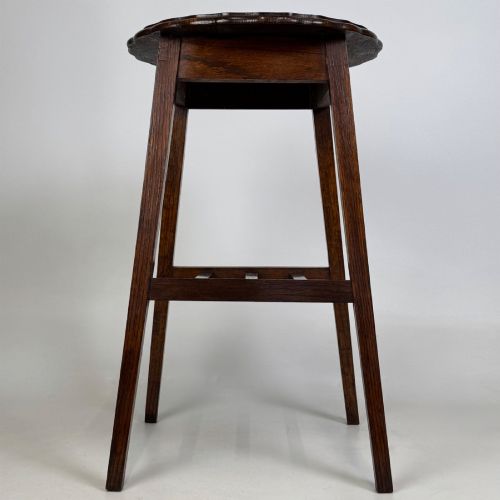
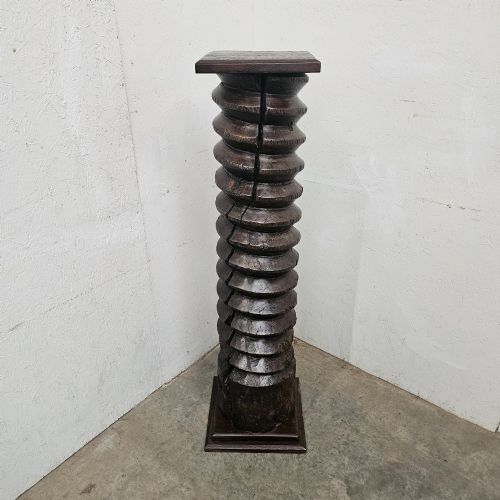
Object forms on this page span bookcases, kitchen dressers, plate racks, corner cabinets, pedestals, and specialised shop display furniture.
The Rustic Wooden Display Glossary
- Patina
- The surface sheen and colour acquired by wood and paint through decades of use, handling, and exposure to light. This deep layer of wear distinguishes authentic historical surfaces from modern finishes.
- Delft rack
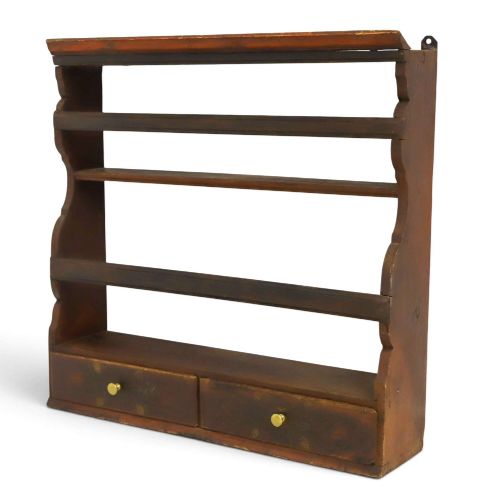
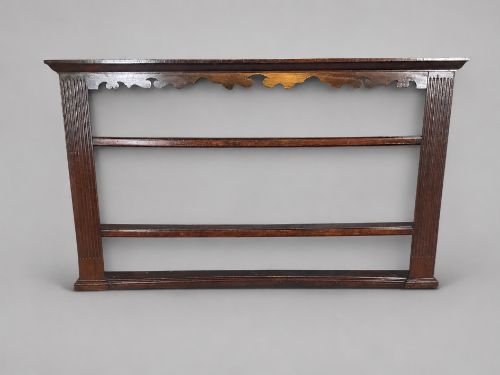
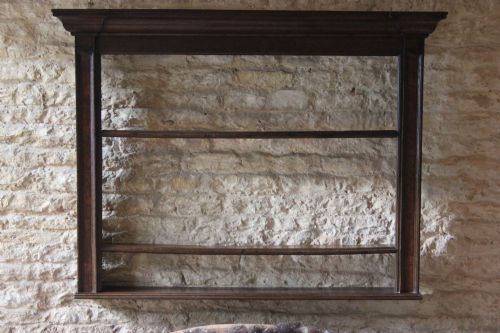
- A wall-mounted or dresser-integrated set of narrow shelves designed specifically to display plates upright. These fixtures kept ceramic tableware visible and accessible in traditional kitchens.
- Drapers table
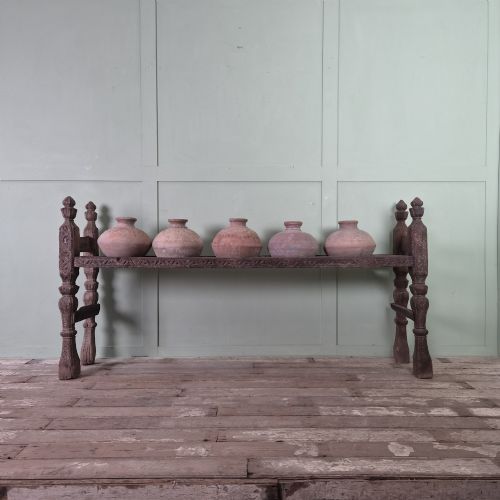
- A long, sturdy counter utilised in textile shops for folding and displaying cloth. Their generous proportions and simple lower shelving make them adaptable for modern storage.
- Epicerie steps
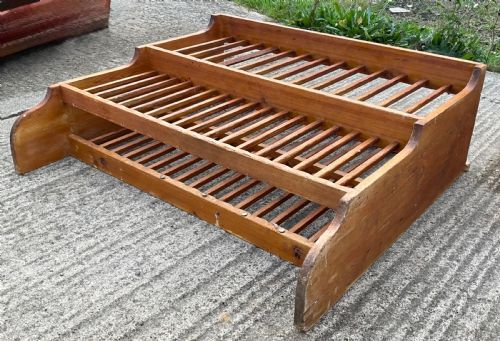
- Tiered wooden shelving units originally built for French grocery shops to display provisions. The stepped design allows multiple rows of goods to be viewed clearly.
- Corner cupboard
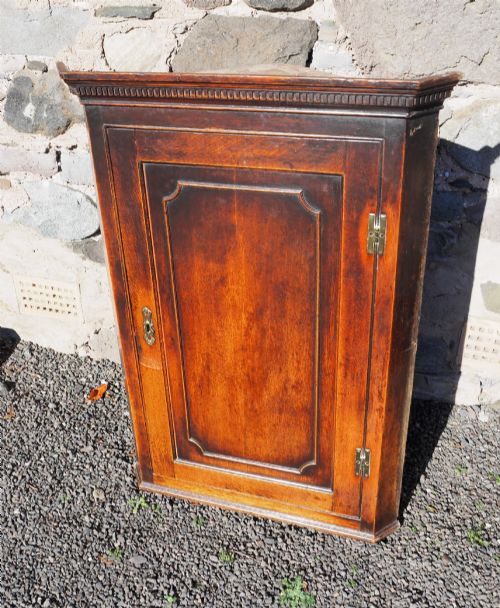
- A cabinet specifically constructed to fit into the ninety-degree junction of a room. These space-saving pieces utilise otherwise neglected architectural angles for storage.
Rustic Wooden Display: Frequently Asked Questions
What is a rustic wooden display?
A rustic wooden display is a piece of utilitarian furniture built to store and exhibit household items using solid timbers like oak and pine.
These functional forms include dressers, wall racks, bookcases, and shop counters originating from provincial workshops.
How were these cabinets used?
They served practical roles in domestic kitchens, country shops, and pantries to hold ceramics, provisions, and dry goods.
Open shelving allowed everyday items to remain visible and within easy reach for working households.
How do I clean a waxed finish?
Maintain waxed pine or oak surfaces by dusting with a soft, dry cloth and applying natural beeswax sparingly when the timber appears dry.
Avoid using water, modern silicones, or harsh chemical sprays that can strip the historic patina.
How do I date an oak dresser?
Examine the construction methods, tool marks, timber thickness, and drawer joints to establish the period of manufacture.
Earlier pieces often feature hand-sawn boards and pegged joinery, while later examples incorporate machine-cut elements.