
Rustic Wooden Console
A rustic wooden console brings honest utility and time-worn grain to a hallway or living space.
Rustic Wooden Console
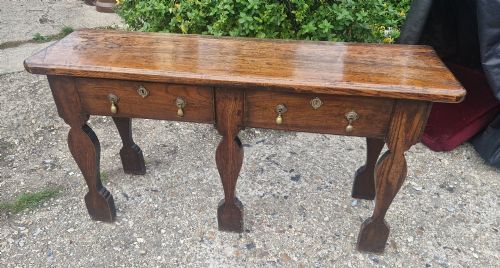
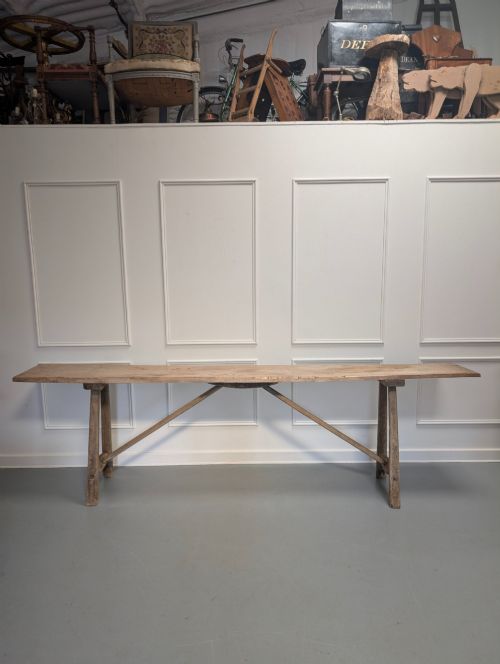
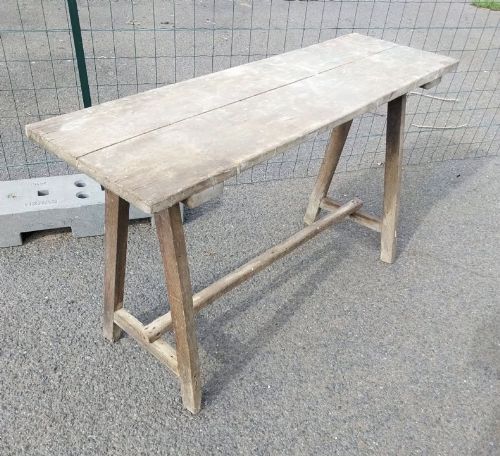
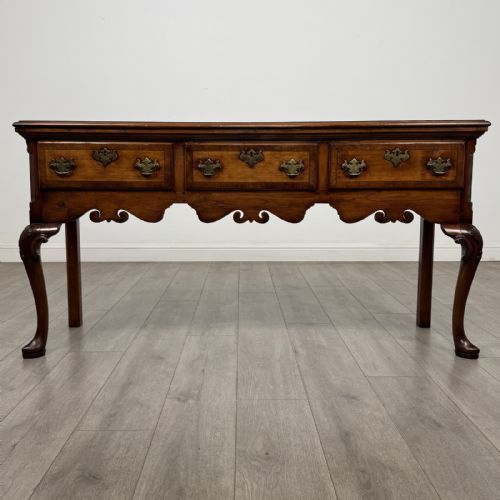
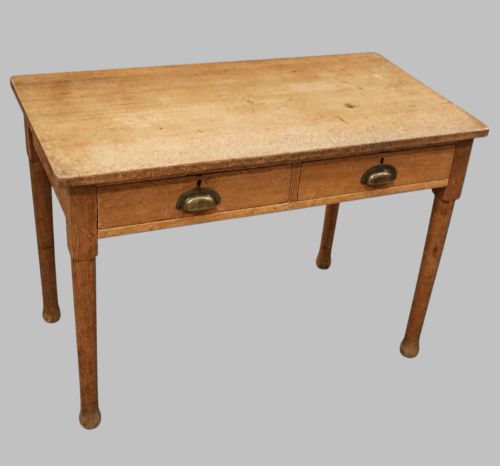
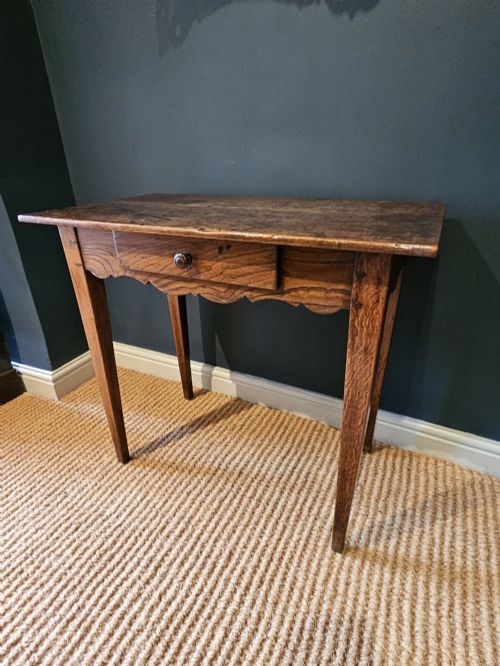
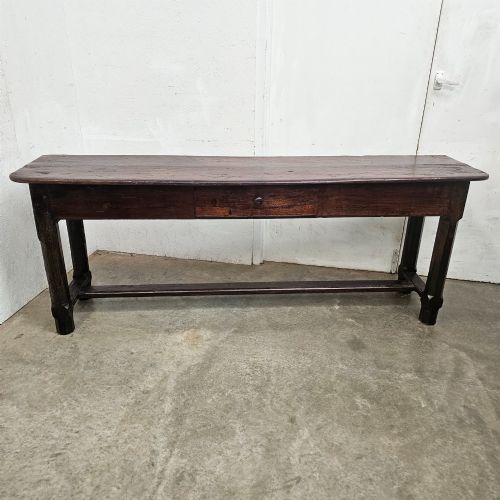
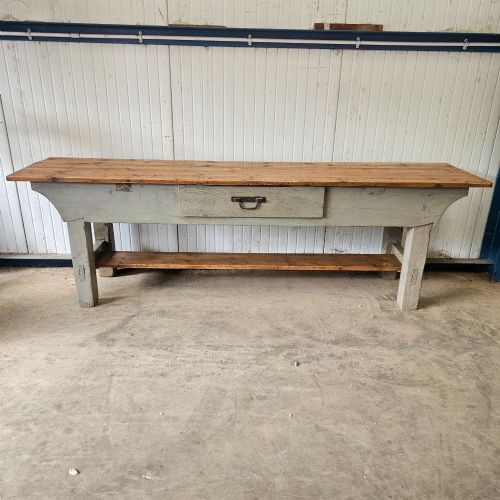
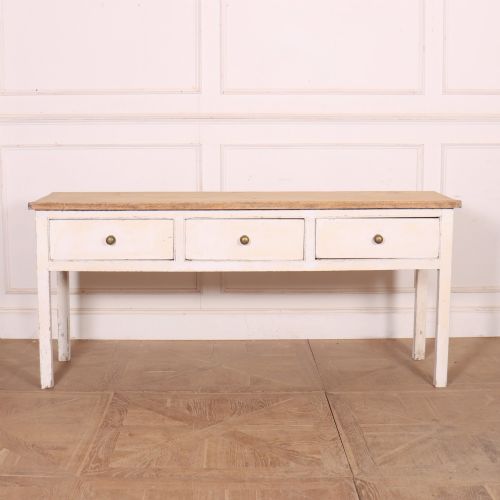
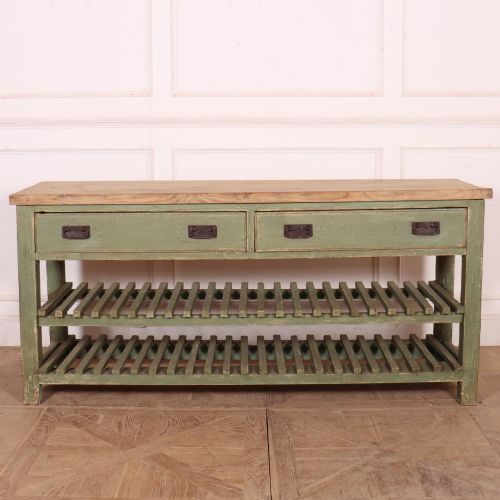
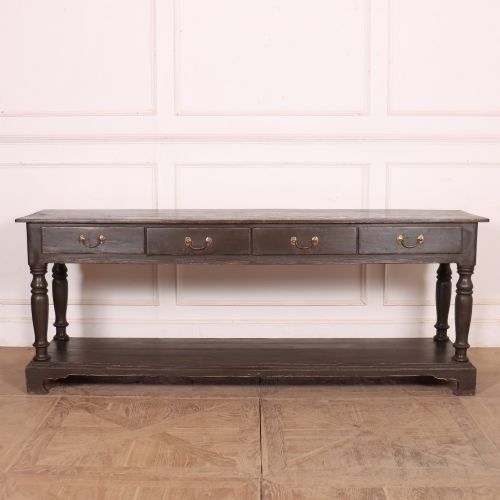
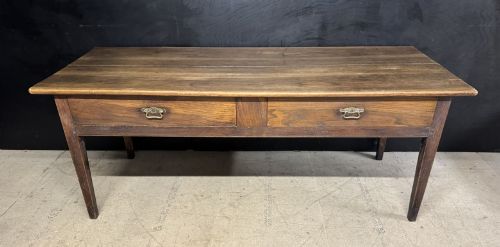
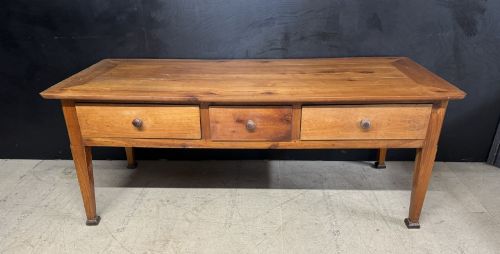
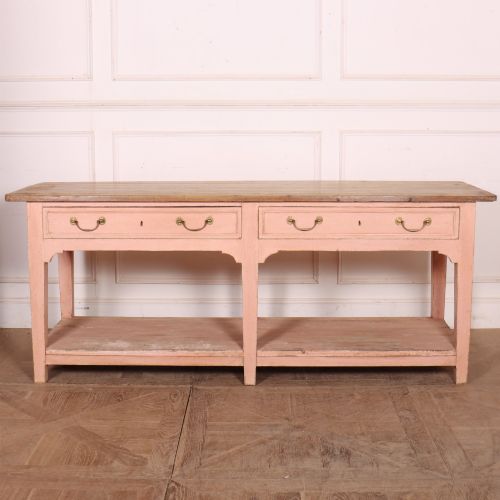
When you search for a rustic wooden console, you encounter tables built for hard work in kitchens, sculleries, and workshops that now find a place in domestic reception spaces. These range from French laundry and drapers tables to English and Scottish potboard dresser bases and compact side tables.
The examples on this page span the eighteenth, nineteenth, and early twentieth centuries, drawing on English, French, Scottish, Italian, and Welsh vernacular traditions. Forms include console tables, serving tables, worktables, and tavern tables with single or multiple drawers.
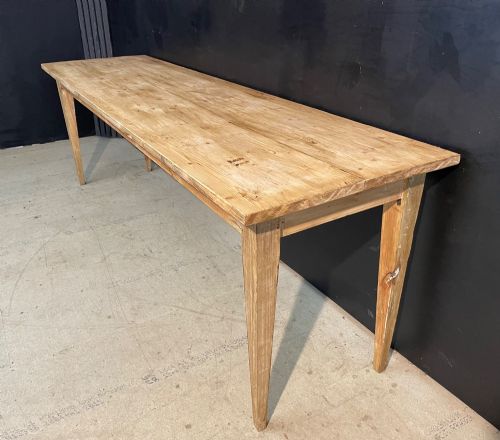
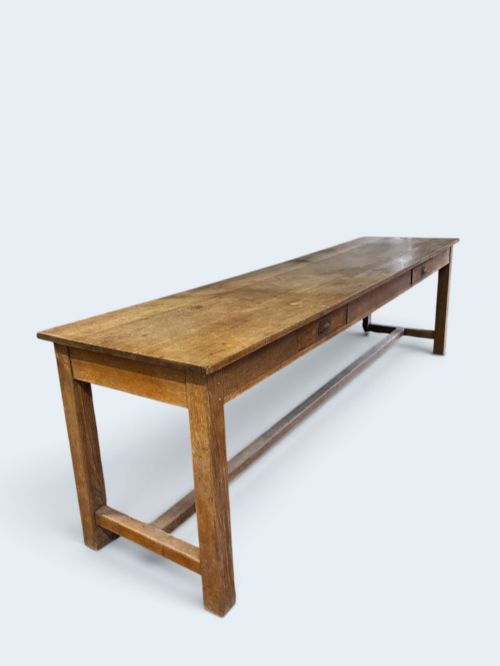
You are most likely to meet pine, oak, and elm pieces from the nineteenth century, often retaining traces of original paint or scumble finishes. Their proportions tend to be long and narrow, making them suited for narrow passages and behind seating.
How they were made
Carpenters constructed these tables from solid timbers such as pine, oak, elm, chestnut, fruitwood, and sycamore, selecting woods for local availability and strength. Joinery is straightforward and robust, utilising pegged mortise and tenon joints designed to withstand heavy daily use.
Surfaces often show the marks of hand-planes and saw blades, finished simply with scrubbed timber, wax, or layers of paint and iron hardware. Iron brackets, brass pulls, and occasional iron bases provide structural support and functional operation for drawers.
Geographic origins span English, French, Scottish, Italian, and Welsh vernacular traditions, including worktables and potboard dresser bases.
What varies in quality
The distinction between ordinary utility tables and superior pieces rests in the integrity of the original surfaces and timber figure. Tables retaining untouched scrubbed patinas or authentic old paint finishes command greater interest than those stripped down to bare wood in recent decades.
Proportion and structural honesty also define the upper tier, where original drawers, potboards, and untouched stretcher bases remain intact. Fine grain patination achieved through generations of scrubbing and polishing separates utilitarian items from truly exceptional examples.
The Rustic Wooden Console Glossary
- Potboard dresser base
- A low sideboard featuring an open lower shelf traditionally used for storing pots and heavy crockery. This lower tier provides structural stability and display space.
- Scumble
- A translucent layer of darker pigment applied over a lighter painted base coat to simulate the grain of more expensive hardwoods. It was widely used in Victorian country houses.
- Drapers table
- A long, deep table originally designed for measuring and cutting rolls of cloth in a shop. Their generous proportions and multiple drawers make them practical for modern hallway use.
- Tavern table
- A heavy, sturdy table built for commercial public houses with stout legs and stretcher rails. They often exhibit exceptional patination from continuous daily handling.
- Patina
- The surface sheen and softening of edges developed by wood and paint over decades of use and cleaning. This quality indicates genuine age and tactile history.
Rustic Wooden Console: Frequently Asked Questions
What is a rustic wooden console used for?
These tables function well in hallways, living rooms, and kitchens as narrow surface furniture for lamps, books, and everyday items. Their shallow depth allows them to sit against walls without obstructing walkways.
Historically built for food preparation, laundry, or shop work, their sturdy construction and lower shelves or drawers provide practical storage options for modern homes.
How do I identify a nineteenth-century console?
Examine the timber for hand-cut tool marks, pegged joinery, and the distinct soft wear patterns found on pine, oak, and elm surfaces. Nineteenth-century examples often display deep patination built up through generations of use.
Hardware such as forged iron handles or brass pulls, alongside traces of original paint or scumble finishes, help confirm the period of manufacture.
Are these tables suitable for daily kitchen use?
Many of these pieces began as worktables, scullery tables, or drapers tables designed specifically for heavy domestic labour. Solid timber construction makes them resilient for modern culinary prep or dining.
Care should be taken to protect antique waxed or painted surfaces from excessive moisture and heat by using appropriate mats and trivets.
What is the difference between oak and pine consoles?
Oak tables generally offer a heavier, denser structure with prominent grain patterns, frequently seen in eighteenth and nineteenth-century dresser bases and serving tables. They withstand rigorous daily demands.
Pine and fruitwood tables tend to be lighter in tone, often carrying layers of original paint or scrubbed surfaces that reflect vernacular country traditions across England and France.