
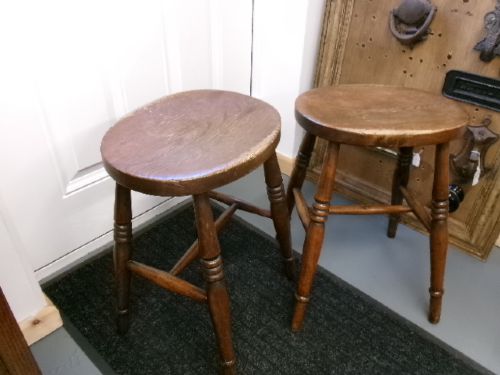


Rustic Wooden Bar Stools
Rustic wooden bar stools bring genuine utility and timeworn character to a kitchen island or home bar.
Rustic Wooden Bar Stools
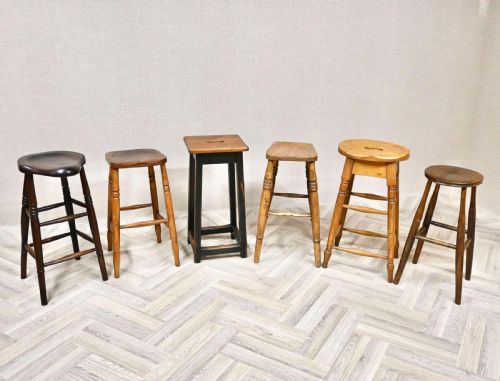
Rustic wooden bar stools are tall seating forms built for practical use in domestic and public spaces like pubs, taverns, and kitchens. When searching for rustic wooden bar stools, a buyer encounters pieces originating from the nineteenth century up through the nineteen-forties, including Edwardian examples.
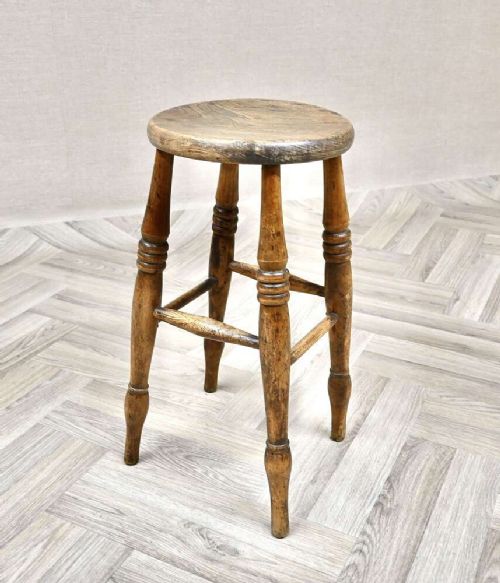
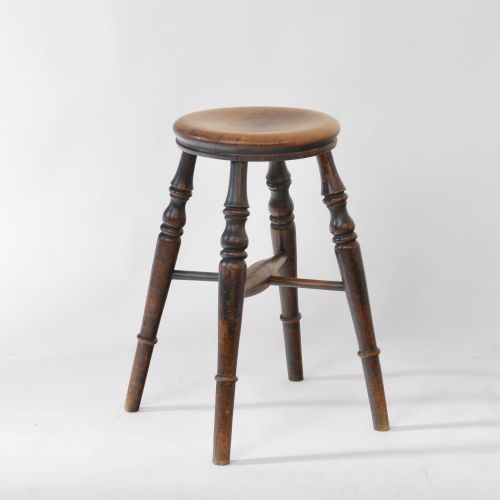
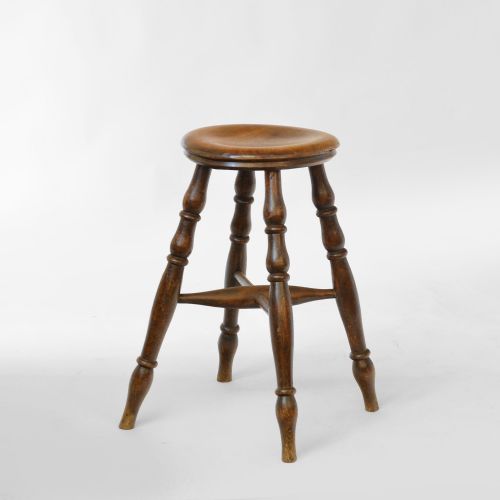
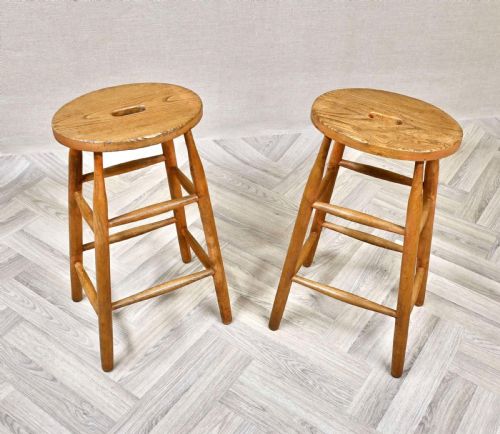
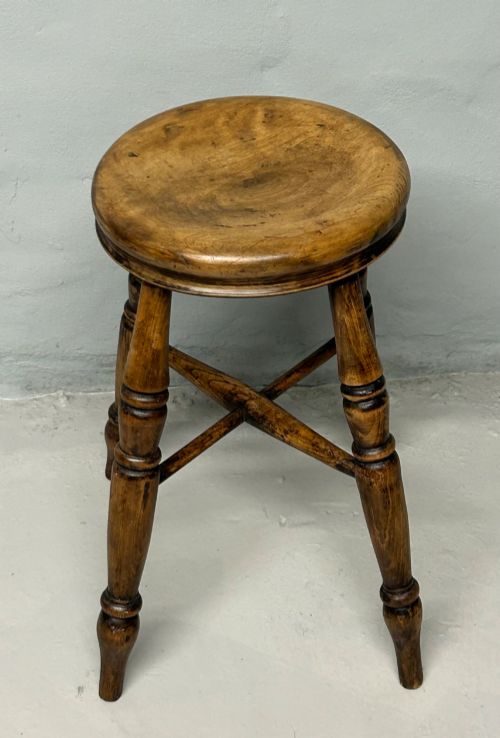
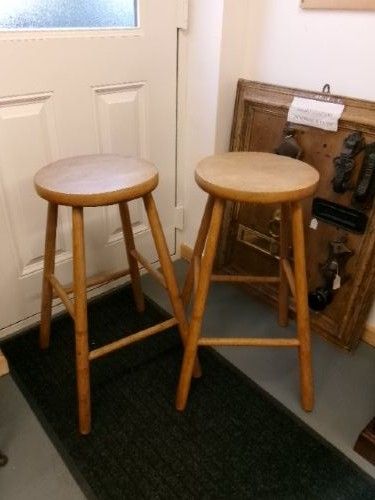
The most common forms on this page include clerk's stools, tavern stools, and kitchen stools with high legs. These items often feature shaped wooden seats, such as oval dished tops, paired with sturdy turned or straight legs.
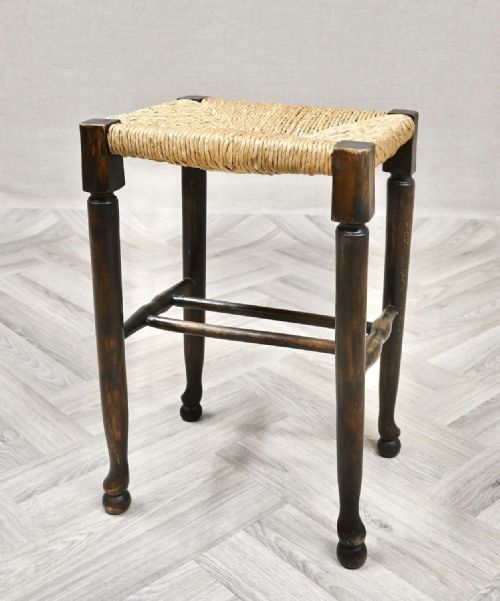
Origins range across English, French, and general country house aesthetics, drawing on vernacular traditions. A buyer is most likely to meet pieces finished in plain wood, sometimes with rush seats or adjustable heights.
Materials and construction
Makers utilised solid timbers like elm, beech, oak, pine, sycamore, and birch to construct these tall seats. Elm and sycamore frequently appear in the solid timber tops, selected for durability and distinctive grain patterns.
Turned beech and other hardwoods form the underframes and legs, often joined securely to withstand heavy daily use in taverns and public houses. Some variations incorporate leather or rush for the seat pad alongside the standard wooden construction.
Several items retain ink stains from their previous lives serving clerks at high desks.
Assessing quality and proportion
Structural stability at tall heights dictates overall desirability, as well as the survival of original joinery without excessive replacement parts. The visual harmony between the seat top and the stretcher base separates standard workshop output from finer vernacular pieces.
The Rustic Wooden Bar Stools Glossary
- Dished top
- A seat carved with a shallow concave depression for comfort. This shaping is typical of nineteenth-century elm stool seats.
- Vernacular
- Everyday objects built by local craftspeople using regional traditions rather than high-style academic designs. These pieces often lack formal maker attribution.
- Stretcher
- The horizontal wooden rod connecting the legs of a stool to provide structural rigidity. They frequently double as footrests on high bar seating.
- Turned
- Wood shaped on a lathe to create decorative or structural cylinders and spindles. Beech underframes commonly exhibit this technique.
Rustic Wooden Bar Stools: Frequently Asked Questions
Where were high wooden stools originally used?
These tall seats served practical functions in nineteenth-century public houses, taverns, and wine bars where patrons sat at raised counters. They also appeared in offices and workshops as clerk's stools for elevated desks.
Over time, domestic environments adopted them for farmhouse tables and kitchen spaces. Their robust construction was designed to endure heavy daily traffic in commercial settings.
How do I care for antique wood stools?
Maintain the dry timber surfaces by applying natural beeswax sparingly to preserve the aged patination. Avoid placing them near direct heat sources to prevent the solid wood from splitting.
Routine dusting with a soft cloth keeps the finish intact without stripping historical wear. Regular checks on leg joints ensure stability during everyday use.
What woods are most common?
Elm and beech dominate the material selection for these tall seating forms. Elm provides durable, heavily grained timber for the shaped seats.
Beech and other hardwoods supply the strength needed for turned legs and stretchers. Occasional examples incorporate pine, oak, sycamore, or birch.
How can I tell the period?
Nineteenth-century examples typically display hand-turned components and heavy solid elm tops with rich patination. Pieces from the nineteen-thirties and nineteen-forties often reflect more industrial utility or simpler joinery.
Edwardian items may include specialised hardware such as adjustable height mechanisms. Examining the tool marks and wear patterns helps confirm the age of the timber.