





Rustic Walnut Dining Table
A rustic walnut dining table brings warmth and enduring utility to a room through heavy timber construction and centuries-old provincial character.
Rustic Walnut Dining Table
A rustic walnut dining table combines robust timber construction with traditional provincial or baroque styles suited for large gatherings. Buyers seeking a rustic walnut dining table will encounter pieces spanning the eighteenth, nineteenth, and early twentieth centuries.
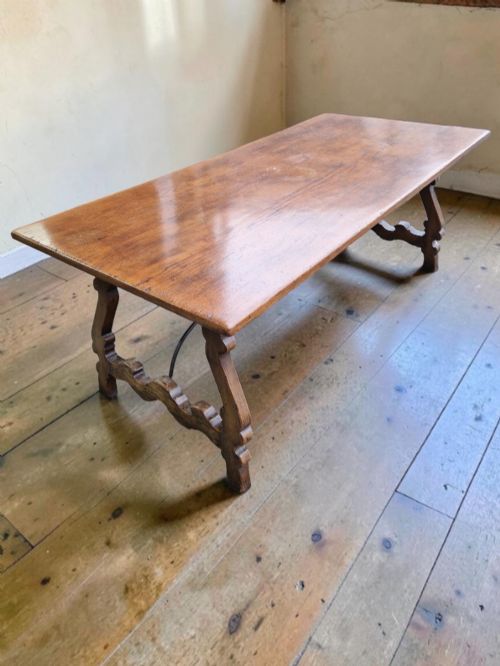
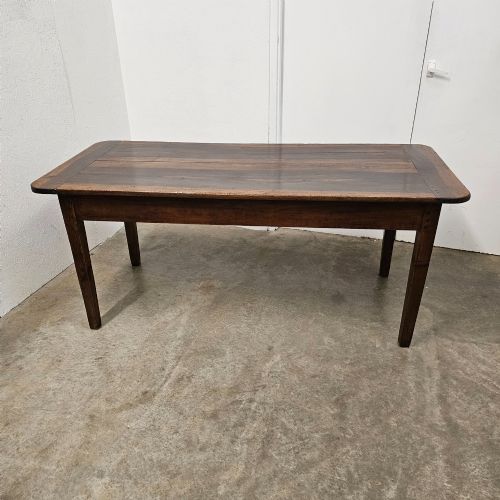
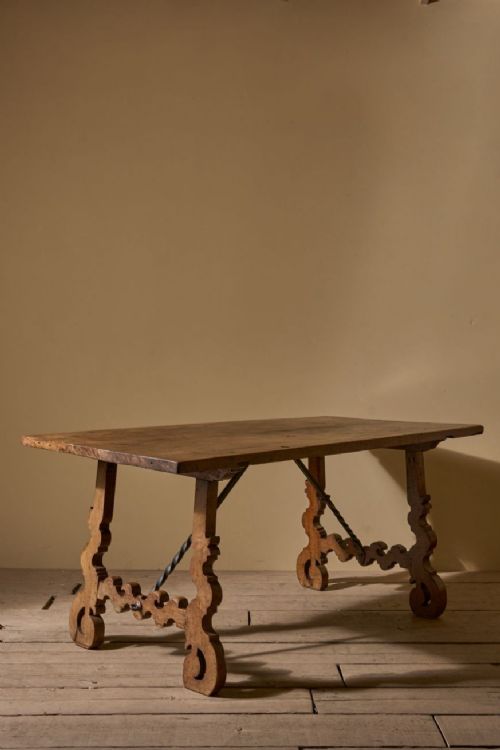
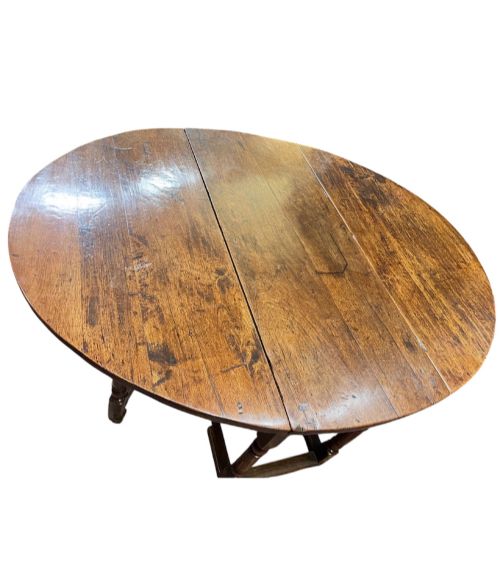
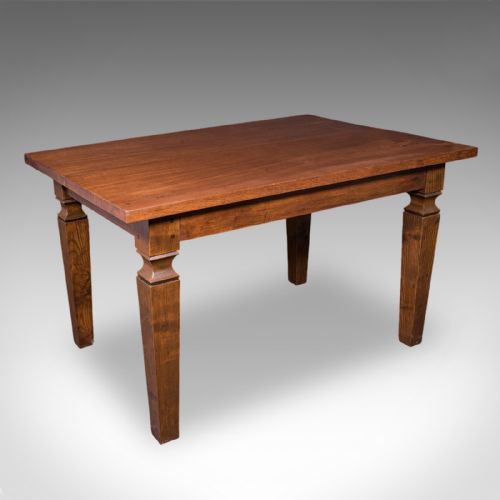
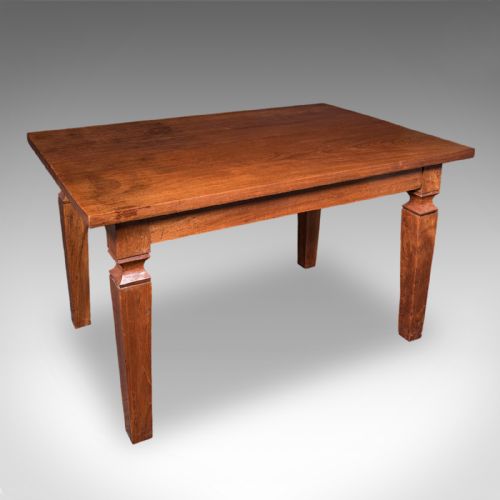
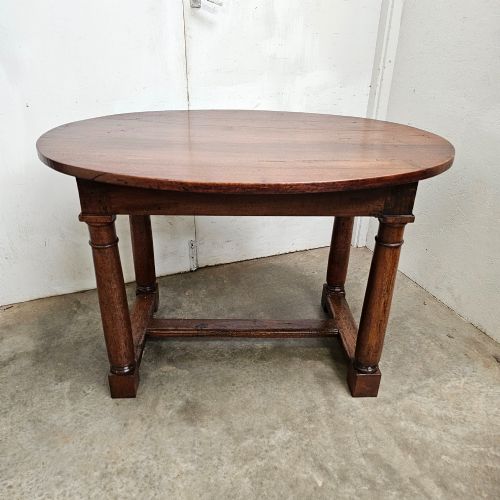
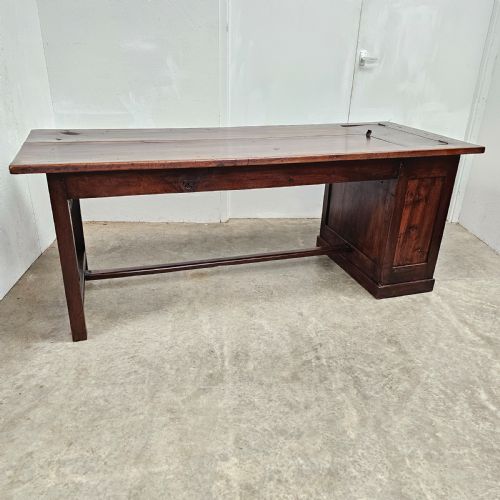
The selection ranges from Spanish gateleg and trestle formats to French refectory and farmhouse designs. Rectangular refectory formats and round country configurations dominate the current examples.
Origins trace primarily to French, Spanish, and Italian workshops, where local timber and traditional joinery produced sturdy domestic surfaces. These tables serve daily dining and preparation functions while retaining deep historical patina.
Materials and construction
Construction relies primarily on solid walnut timbers, occasionally supplemented by fruitwood, oak, and wrought iron supports. Workshops utilised thick planks for table tops, sometimes constructed as two-board surfaces.
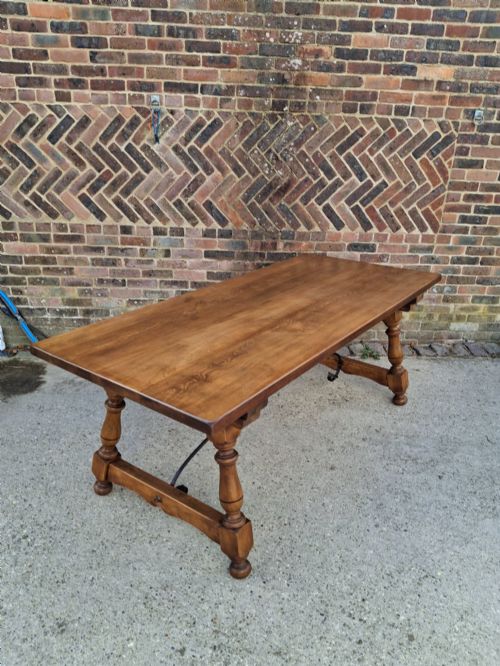
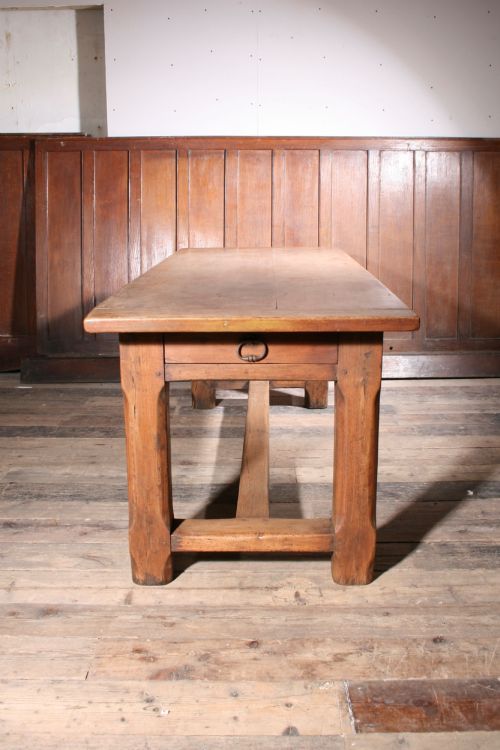
Framing incorporates traditional joinery techniques including trestle bases, gateleg mechanisms, and H stretchers. These structural elements provide stability for heavy wooden tops while reflecting regional stylistic preferences from Spanish Baroque to French provincial.
Rustic Walnut Dining Table Retail Price Guide 2026
Typical asking prices for rustic walnut dining table among the pieces listed under this phrase on Sellingantiques today, from the lower quarter to the upper quarter. They describe what is for sale here now, not the wider market.
Object forms span dining tables, prep tables, centre tables, and large refectory designs originating from French, Spanish, and Italian workshops.
Factors determining quality
Quality rests in the integrity of the timber selection and the retention of original surface patination. Superior pieces display dense grain patterns in the walnut alongside authentic signs of age and historic domestic use.
Proportion and structural balance distinguish finer examples from standard utilitarian workshops. The sophistication of regional styling, whether Spanish baroque or French country, elevates the visual presence of the timber.
The Rustic Walnut Dining Table Glossary
- Refectory table
- A long narrow dining table traditionally used in monastic or communal dining halls. These examples often feature stretcher bases for added stability.
- Gateleg table
- A table with hinged leaves supported by swing-out legs. This form allows the surface area to expand or contract according to space requirements.
- Trestle table
- A table consisting of two or more heavy vertical supports connected by a horizontal beam. This design maximises legroom along the length of the surface.
- H stretcher
- A horizontal wooden brace shaped like the letter H that connects the legs of a table. It adds structural rigidity to heavy timber frames.
Rustic Walnut Dining Table: Frequently Asked Questions
How do I care for a walnut dining table?
Maintain the timber by using dry cloths for daily dusting and avoiding excessive moisture on the surface. Periodic application of natural wax preserves the historic finish.
Keep the wood away from direct heat sources and strong sunlight to prevent warping or fading over time.
Are these tables suitable for everyday family use?
These tables were originally built for heavy domestic tasks, making them exceptionally sturdy for daily meals and gatherings. Solid timber construction handles routine use without compromising structural integrity.
Existing marks and patination from previous centuries mean new daily use simply adds to the historical character of the wood.
How can I tell the period of a table?
Dating relies on examining the joinery methods, timber species variations, and regional stylistic traits visible in the base and top. Eighteenth-century examples often display hand-cut joints and denser timber patination compared to later nineteenth-century or 1930s pieces.
Hardware elements, such as wrought iron braces or turned stretchers, also provide clear indicators of manufacturing eras.
What is the difference between refectory and farmhouse tables?
Refectory tables traditionally feature longer, narrower proportions designed for communal dining, often supported by trestles or central stretchers. Farmhouse variants typically emphasise broad timber boards and sturdy legs suited for kitchen preparation.
Both styles utilise heavy walnut construction but serve slightly different functional origins within European domestic history.