
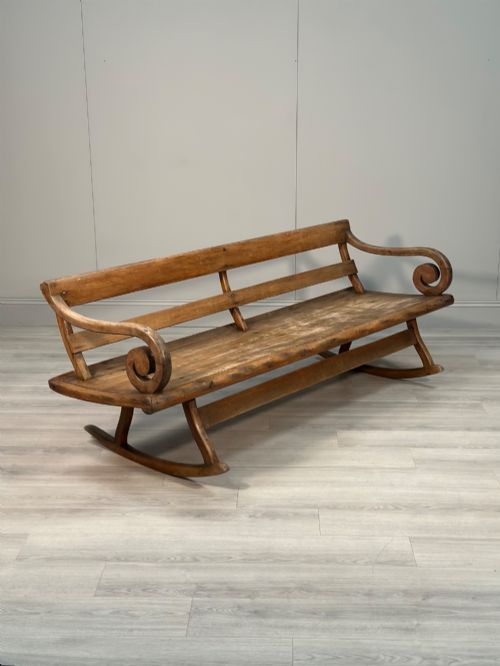
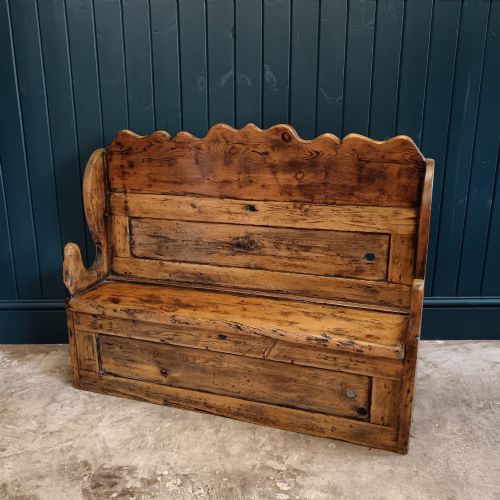
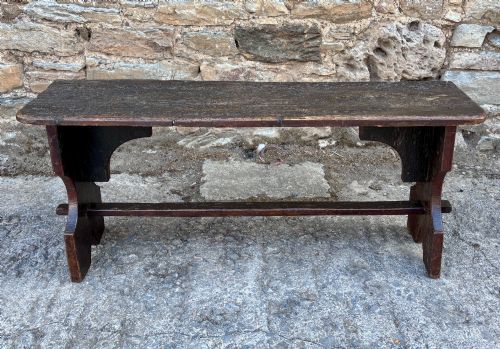
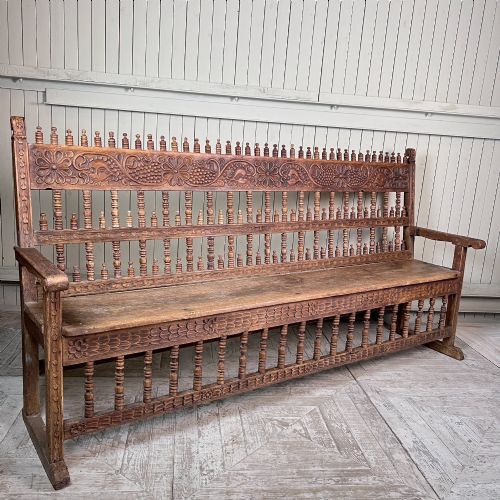
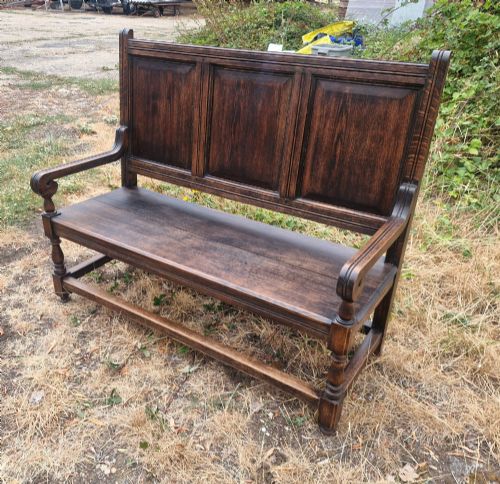
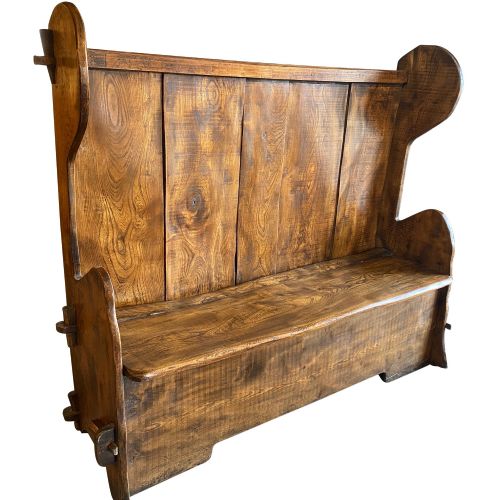
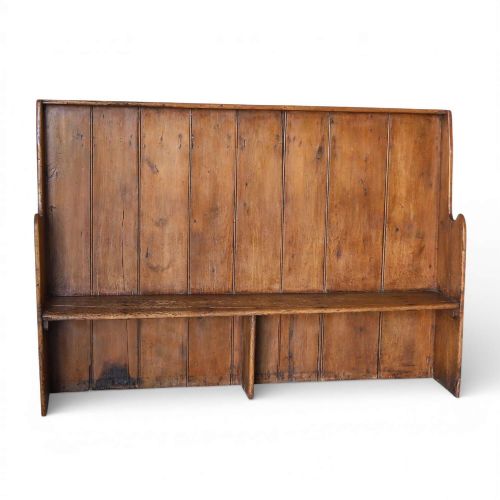


Rustic Timber Pew Bench
A rustic timber pew bench brings honest craft and heritage weight into a home, offering sturdy seating grounded in centuries of utility.
Rustic Timber Pew Bench
A rustic timber pew bench represents seating designed for communal or domestic spaces, drawing from traditions across English, European, and Colonial workshops. Buyers searching this phrase look for substantial wooden seating that carries the marks of daily use and simple craftsmanship.
The pieces available span the eighteenth, nineteenth, and early twentieth centuries, encompassing forms such as high-back settles, hall benches, and church pews. Elm, pine, oak, and chestnut dominate the construction, often shaped into benches with storage boxes, canopies, or spindle backs.
English country and rustic farmhouse styles appear frequently alongside Spanish colonial and folk art examples. These benches serve practical purposes in hallways, dining spaces, and living areas where solid seating with historical character is required.
Construction and materials
Makers built these benches using solid timbers including elm, pine, oak, chestnut, and mixed hardwoods, selecting woods suited to heavy daily wear. Joinery relied on traditional methods, securing thick planks for seats and backs with pegged joints and solid framing.
Surfaces exhibit various historic finishes, ranging from waxed pine and honey brown patina to bleached chestnut and original paint. Some pieces incorporate structural elements like storage boxes beneath the seat or protective high backs designed to block draughts in older rooms.
Listings feature woods spanning pine, elm, oak, chestnut, and painted hardwoods across the eighteenth and nineteenth centuries.
Distinctions in quality
Quality in these benches rests on the integrity of the original timber and the survival of authentic surface patination. Pieces retaining their early wax, untouched paint, or rich grain variation hold greater presence than those stripped or overly restored.
Construction depth also separates examples, with heavier box settles and carved hardwood frames demonstrating greater joinery ambition than simpler boards. The balance of proportions, from long dining lengths to slim hallway proportions, dictates how successfully the bench integrates into a room.
The Rustic Timber Pew Bench Glossary
- Settle
- A wooden bench with high back, solid arms, and often a enclosed storage base. It was designed to keep draughts away from the sitter in medieval and later halls.
- Patina
- The surface sheen and colour developed by wood over decades of handling, waxing, and exposure to light. This visual depth indicates age and authenticity.
- Box settle
- A specific form of bench featuring a hinged seat opening to a storage compartment below. It combines seating with domestic containment.
- Canopy
- A projecting wooden hood built over the top of a settle or pew. It trapped warmth and provided shelter from cold air currents in large rooms.
- Spindle
- A turned wooden rod supporting the backrest of a bench. It lightened the visual weight of heavy timber seating.
Rustic Timber Pew Bench: Frequently Asked Questions
Where should I place a long wooden bench?
These benches suit narrow hallways, large dining tables, or against a blank living room wall where their linear form provides anchor.
Ensure you measure the walkway clearance carefully, as high-back settles and deep box seats require more floor space than standard chairs.
How do I clean an old pine bench?
Dust the timber regularly with a dry, soft cloth to prevent grit from settling into the grain and historic surface.
Apply a traditional beeswax sparingly if the wood appears dry, avoiding modern silicones that alter the historic patina.
Can I use a vintage bench for dining?
Many longer examples function well alongside dining tables, provided the seat height matches your table clearance.
Check the depth of any under-seat storage box, as thick framing can occasionally reduce legroom for seated diners.