

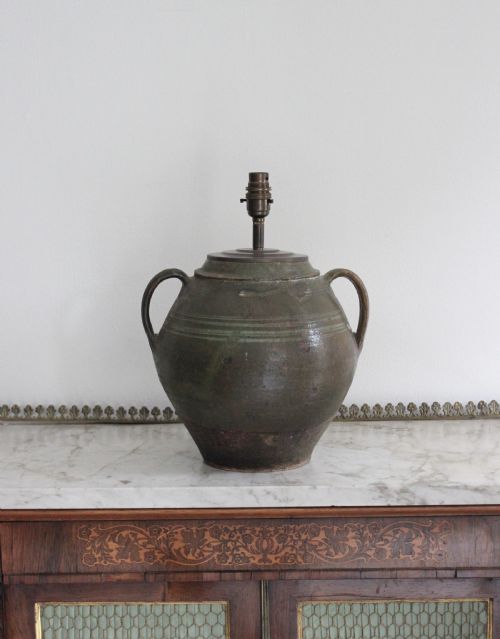
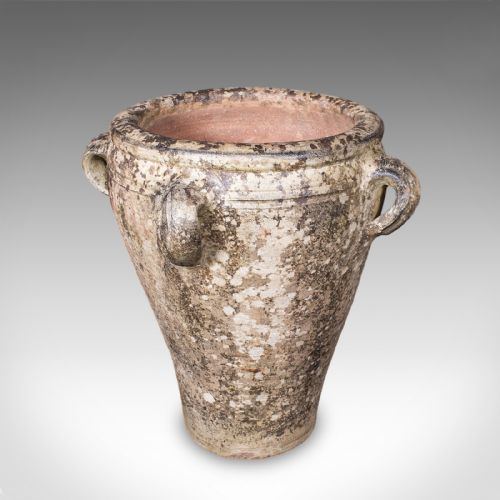
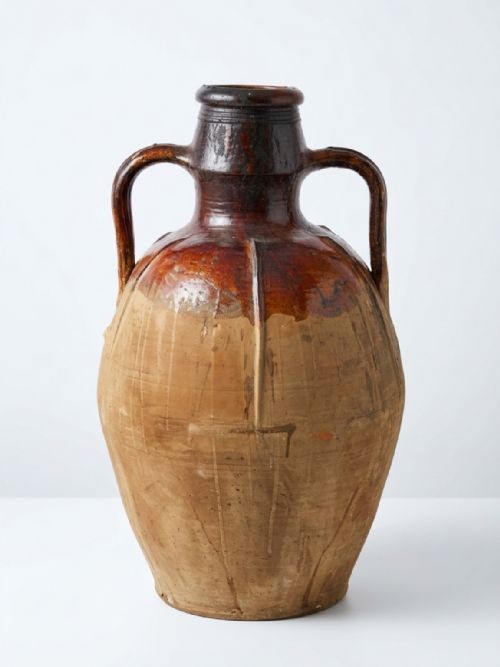
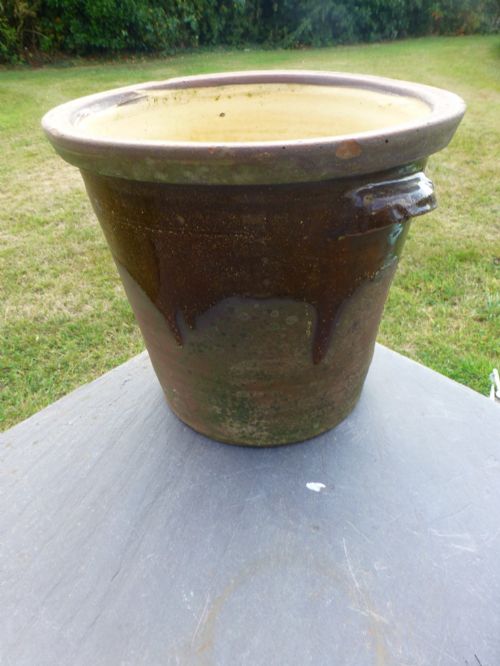




Rustic Terracotta Vessel
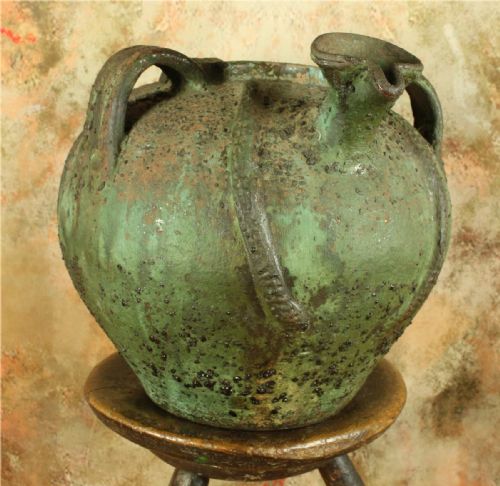
These heavy, tactile pots are what people mean by a rustic terracotta vessel, prized for their weathered surfaces and honest utility.
Rustic Terracotta Vessel
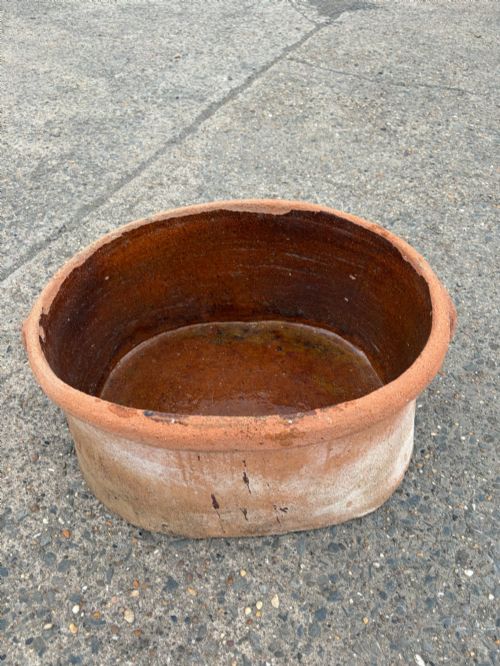
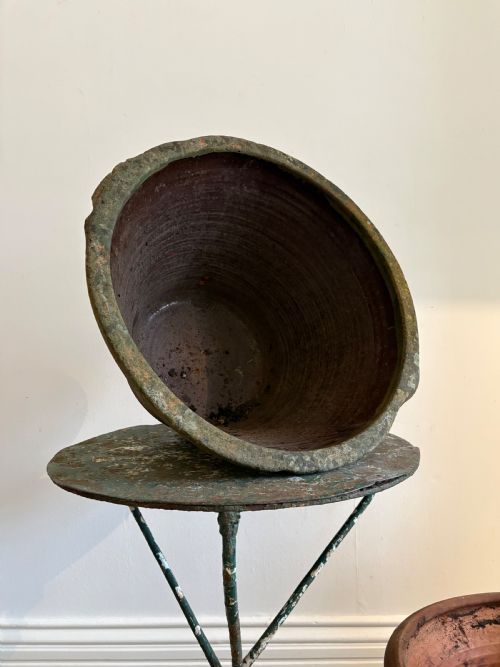
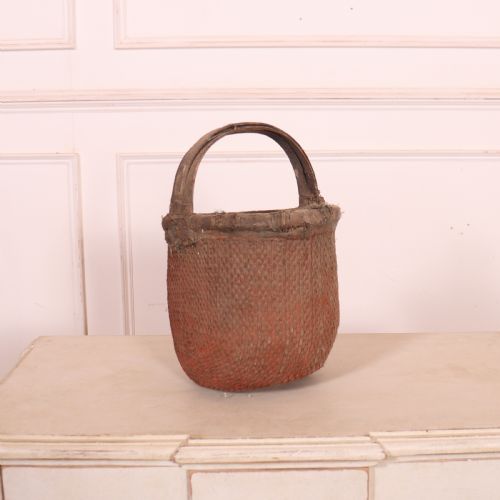
A rustic terracotta vessel encompasses a wide group of utilitarian earthen containers, including large olive jars, confit pots, wine jars, dairy bowls, and garden planters. Most pieces originate from the nineteenth century, with French, Italian, and Mediterranean examples appearing frequently across the selection.
Buyers often encounter large oil jars with handles, glazed dairy crocks, and weathered garden urns designed for practical storage and agricultural use. These objects range from tall amphora forms to wide-mouthed bowls, each shaped by regional traditions of utilitarian pottery.
How they were made
Potters shaped local clay by hand or on wheel before firing the vessels in traditional kilns, producing porous earthenware bodies. Many examples received partial lead glazes, paint, or lime wash applications to seal the interiors or finish the surfaces for agricultural tasks.
Centuries of exposure to oil, water, and earth altered the porous terracotta, creating distinct patinas alongside iron fixings or wrought iron elements on select jars.
Rustic Terracotta Vessel Retail Price Guide 2026
Typical asking prices for rustic terracotta vessel among the pieces listed under this phrase on Sellingantiques today, from the lower quarter to the upper quarter. They describe what is for sale here now, not the wider market.
Listings feature nineteenth-century earthenware, stoneware, and terracotta forms originating from France, Italy, Turkey, and England.
What varies in quality
The distinction between ordinary utility items and superior examples lies in the integrity of the surviving surface and the balance of the proportions. Original painted finishes, lime wash, and authentic patinas left by olive oil or dairy use elevate an object's visual depth.
Structural completeness and the preservation of handles, rims, and historic glazes separate well-preserved specimens from heavily repaired or weathered vessels.
The Rustic Terracotta Vessel Glossary
- Terracotta
- A porous, unglazed or glazed fired earthenware made from natural clay. This material forms the primary body of almost every vessel in the collection.
- Confit pot
- A traditional French earthenware jar featuring single or dual handles, typically glazed on the interior. These pots were originally utilised for preserving and storing meats.
- Olive jar
- A large, bulbous storage vessel traditionally employed around the Mediterranean for holding olive oil. They often feature multiple handles and heavy, robust walls.
- Dairy bowl
- A wide, open earthenware vessel designed for setting milk and skimming cream. These items frequently display glazed interiors for ease of cleaning.
- Patina
- The surface sheen and textural change acquired through age, weathering, and use. On these vessels, patina reflects decades or centuries of agricultural work.
Rustic Terracotta Vessel: Frequently Asked Questions
How were these vessels used originally?
These vessels served purely practical functions in rural households and agricultural production. Farmers and merchants used them to store olive oil, wine, grain, and preserved foods.
Open bowls were specifically designed for dairy work, such as setting milk to separate cream. Over decades of daily labour, these utilitarian items absorbed their contents, creating the patinas seen today.
Can I use these pots in the garden?
Many of these pieces began as garden planters, dairy crocks, or agricultural storage jars. Their robust terracotta and earthenware construction suits outdoor display.
Buyers should protect unglazed earthen vessels from severe winter frost to prevent cracking, as porous clay absorbs moisture over time.
How do I identify French confit pots?
French confit pots typically feature a distinct glazed upper section and interior, contrasting with unglazed lower bodies. They often include one or two horizontal handles placed near the rim for lifting.
Originating from various regions in France, these pots vary in size from small single items to large storage jars.
What causes the different surface finishes?
The varied surfaces result from original manufacturing techniques combined with years of agricultural use and weathering. Potters applied glazes, paint, or lime wash to seal porous clay or finish the exterior.
Subsequent exposure to oil, moisture, and earth produced aged patinas and subtle colour variations across the terracotta body.