

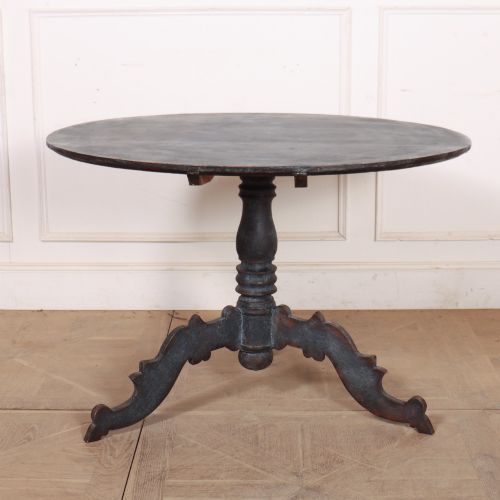
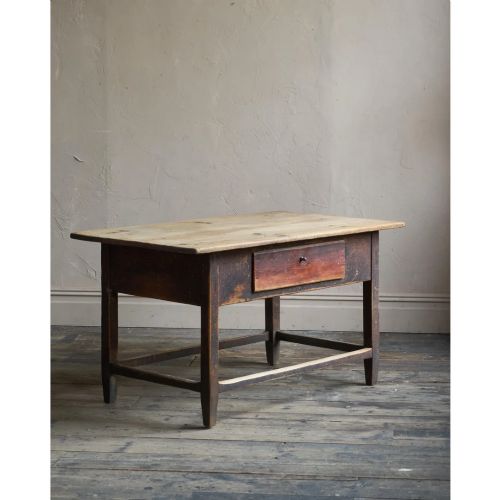
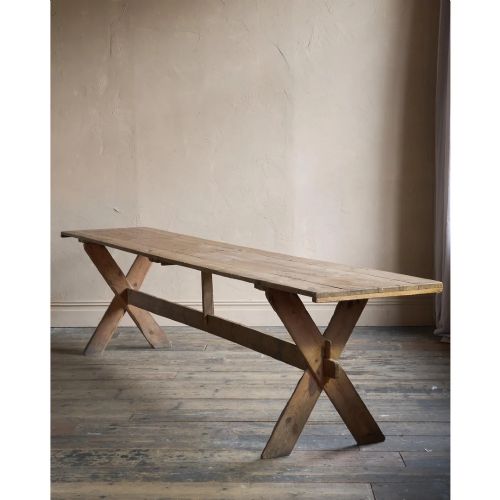
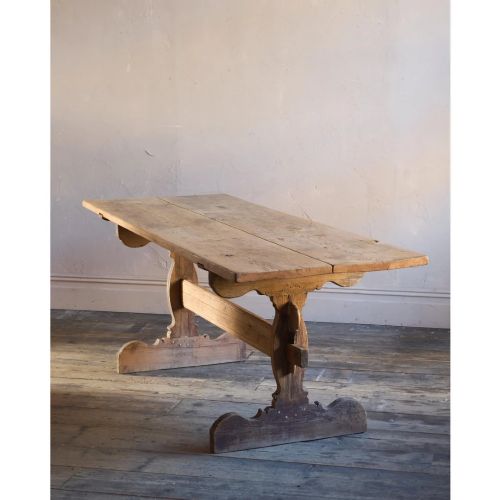


Rustic Swedish Tables
Rustic swedish tables combine simple northern utility with soft painted surfaces, offering practical charm for modern country interiors.
Rustic Swedish Tables
Rustic swedish tables encompass practical domestic furniture designed for everyday use in Scandinavian homes across multiple centuries. When exploring rustic swedish tables, buyers encounter utilitarian forms built for specific household tasks rather than formal display.
The majority of pieces met on this page date from the nineteenth century, reflecting the heritage of country joinery. Common formats range from kitchen and dining tables to compact side tables, console tables, and occasional pieces.
Makers utilised local timbers to construct robust frames suited to rural life. Styles span Scandinavian country, rustic farmhouse, Gustavian restraint, and folk art traditions.
Materials and construction
Joiners relied principally on pine, softwood, and birch, often selecting timber for immediate local availability. Tables frequently incorporate sturdy box stretchers, trestle supports, or X-frames to stabilise heavy use.
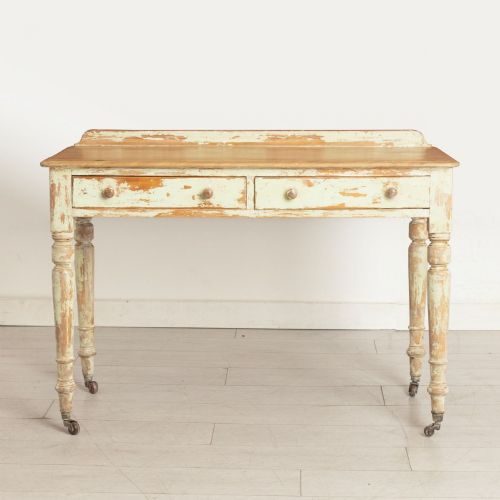
Surfaces often display traditional paint treatments, including Falu red or layered ragwork finishes that protect the wood while adding decorative colour. Carpenters also utilised oak for specific structural elements where extra strength was required.
Materials recorded across the selection include pine, birch, oak, and softwood, finished with traditional paints or left as weathered timber.
Judging quality and character
The distinction between ordinary utility items and finer examples rests in the survival of original painted surfaces and authentic patination. Weathered textures and scraped paint reveal the organic history of a piece without diminishing its structural integrity.
Proportion and construction detail elevate certain tables above standard domestic work. Examples featuring thoughtful joinery, such as drop-leaf mechanisms or distinctive birch root figuring, demonstrate superior craftsmanship within a vernacular tradition.
The Rustic Swedish Tables Glossary
- Falu Paint
- A traditional red paint derived from copper mine waste, valued for its protective qualities and matte finish. It remains a defining characteristic of rural Scandinavian woodwork.
- Slagbord
- A traditional Scandinavian drop-leaf table supported by swing legs. These tables offered space-saving flexibility in smaller rooms.
- Box Stretcher
- A framework of horizontal wooden rails connecting the lower legs of a table. This addition provides significant structural rigidity to pine and softwood frames.
- Ragwork Paint
- A decorative paint technique where rags or cloths are used to manipulate wet pigment on the surface. This creates a mottled, textured pattern typical of folk art decoration.
- Gustavian
- The Swedish neoclassical style spanning the late eighteenth and early nineteenth centuries. It reinterprets French court aesthetics through a simpler, brighter northern lens.
Rustic Swedish Tables: Frequently Asked Questions
How were these tables used originally?
These tables served demanding domestic roles in rural kitchens, dining spaces, and workshops. Many functioned as preparation surfaces for baking or daily meals.
Others acted as general utility tables for writing or holding household items. Their robust construction accommodated heavy manual labour in domestic settings.
Are original painted finishes common?
Original paint surfaces survive on many nineteenth-century examples, often showing characteristic weathering and wear from generations of use. These layers tell the physical history of the piece.
Some tables retain early Falu paint or ragwork decoration, while others display scraped pine surfaces where later layers have worn away.
What woods were typically used?
Pine and softwood form the primary material for the majority of these domestic tables. Birch also appears frequently, particularly in writing desks and occasional pieces.
Oak was occasionally utilised for heavy structural members or specific components requiring extra strength. Timber selection depended entirely on regional availability.
How do I fit them into modern homes?
Their restrained proportions and neutral or painted tones allow these tables to integrate easily into contemporary dining rooms and kitchens. A simple pine or painted side table works well as an accent piece.
Larger trestle or dining tables provide functional gathering spaces while introducing texture and historical character to a room.