


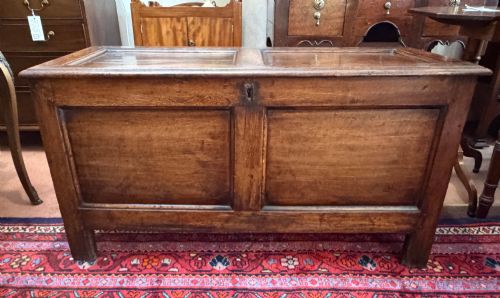
Rustic Storage Box
A rustic storage box provides honest utility and timeless character, ranging from sturdy pine trunks to carved oak coffers.
Rustic Storage Box
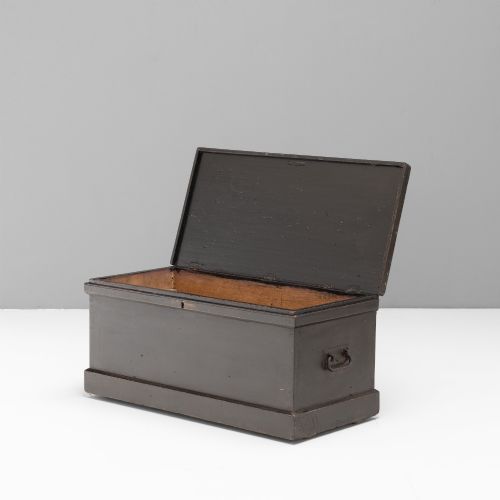
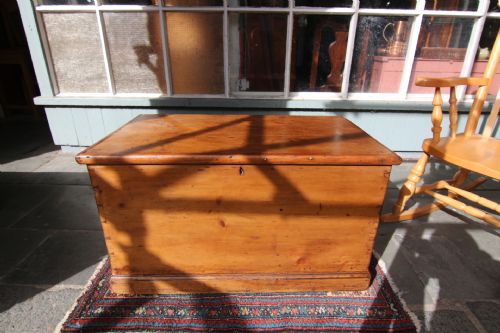
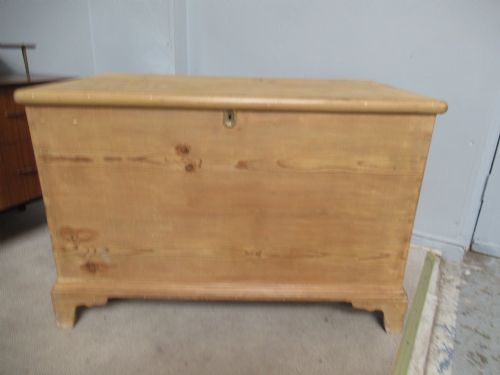
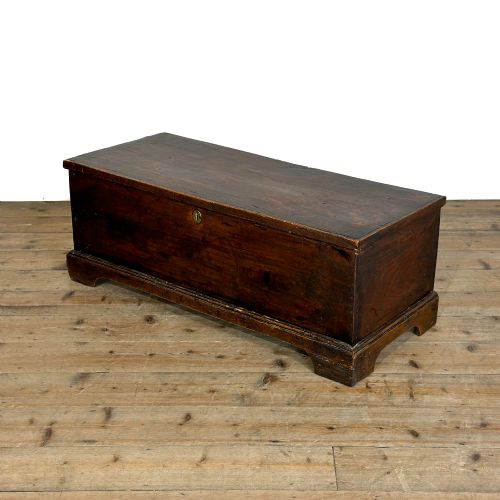
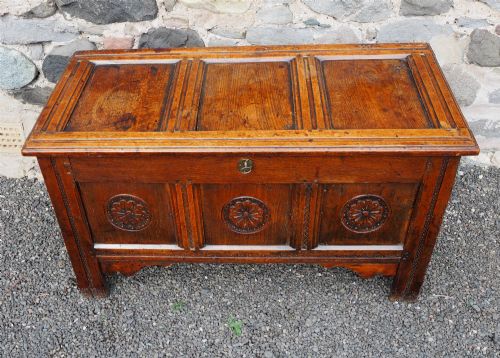
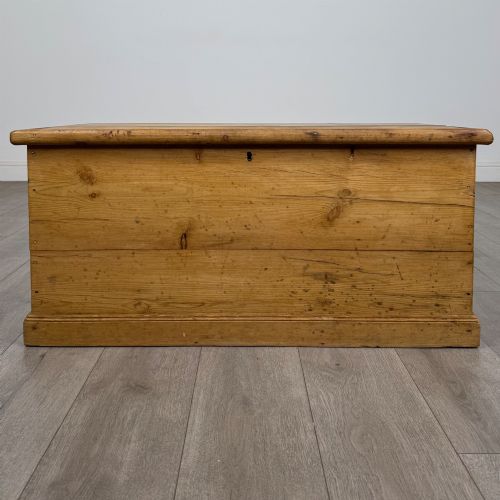
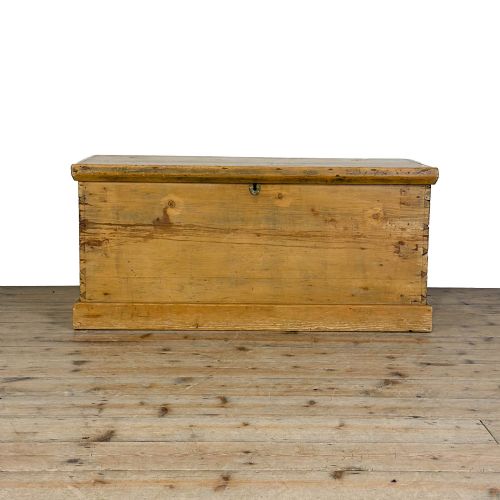
A rustic storage box encompasses sturdy utilitarian vessels designed for domestic holding and transportation, spanning blanket chests, document boxes, and heavy coffers. Buyers searching for a rustic storage box will frequently encounter nineteenth-century pine trunks and seventeenth- to eighteenth-century oak coffers on this page.
These utility items originate from diverse domestic and regional settings, including Welsh, French, and Scandinavian workshops. Forms vary from simple six-plank constructions to panelled dowry chests equipped with internal drawers or iron strapwork.
Materials and construction methods
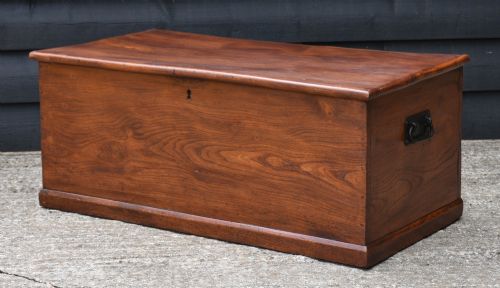
Makers utilised native timbers such as oak, elm, and pine, selected for structural strength and local availability. Iron and brass hardware, including hand-forged strapwork and hinges, reinforced heavy lids and corners for regular travel and domestic service.
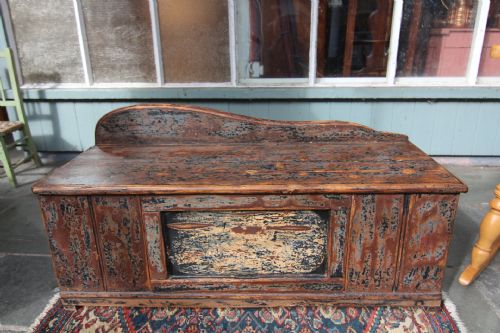
Joinery methods relied on traditional techniques appropriate to the period, from simple pegged planking to framed panels. Surfaces were frequently left untreated, stripped to bare wood, or finished with early paint.
Some nineteenth-century travellers clearly packed heavy, as monumental teak chests required iron bindings to survive the journey.
Factors determining quality
Quality rests upon the integrity of the timber selection and the retention of original structural components like hinges, feet, and internal tills. Pieces constructed from dense, figured oak or well-patinated elm demonstrate superior craftsmanship compared to basic utility boxes.
The sophistication of decorative enrichment, such as period carving on seventeenth-century panels or hand-forged iron strapwork on nineteenth-century painted pine, elevates an ordinary container into a notable example.
The Rustic Storage Box Glossary
- Coffer
- A heavy wooden chest traditionally used for storing valuables or dry goods. These sturdy containers often feature hinged lids and panelled construction.
- Six-plank coffer
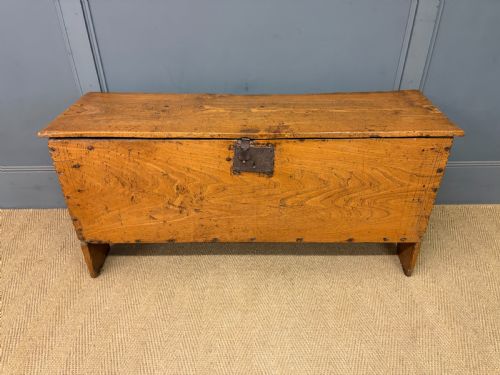
- A primitive chest constructed from six individual boards joined directly at the edges. This straightforward method represents an early form of box-making.
- Strapwork
- Flat bands of metal, commonly iron or brass, applied to wooden chests for structural reinforcement. This technique provides both utility and decorative contrast against the timber.
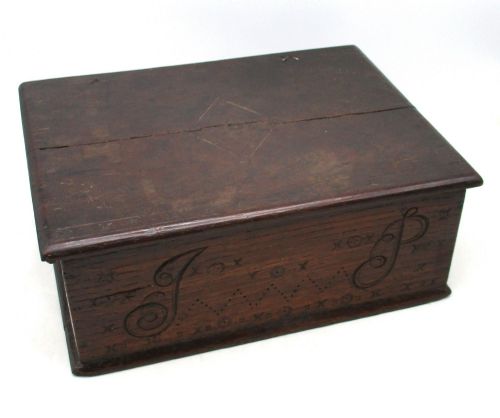
- Bible box
- A small, portable desk or storage box designed to hold sacred texts and writing materials. These compact pieces frequently feature sloping lids and internal compartments.
- Box settle
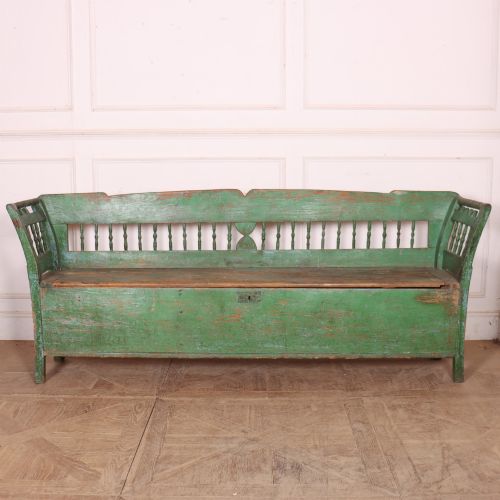
- A high-backed wooden bench incorporating a concealed storage compartment beneath the seat. This dual-purpose furniture maximised utility in early domestic interiors.
Rustic Storage Box: Frequently Asked Questions
What were these boxes originally used for?
These boxes served essential domestic functions, holding textiles, valuable documents, grain, and personal belongings in homes and travel.
Heavier coffers and trunks doubled as seating or tables in compact historical dwellings while keeping contents secure.
How do I date an oak coffer?
Dating relies on observing construction methods, joinery types, and decorative motifs characteristic of specific centuries.
Early seventeenth-century examples often display hand-carved panels and pegged joints, whereas later pieces show standardised machining.
Are pine chests durable enough for daily use?
Victorian and nineteenth-century pine trunks were built robustly for travel and heavy household storage.
Solid pine and pitch pine variants withstand regular opening and closing while adding stable character to modern rooms.
Where should I place a blanket box at home?
A blanket box fits naturally at the foot of a bed or beneath a window for accessible linen storage.
Smaller document boxes or bible chests function well on top of sideboards or tables to hold smaller items.