

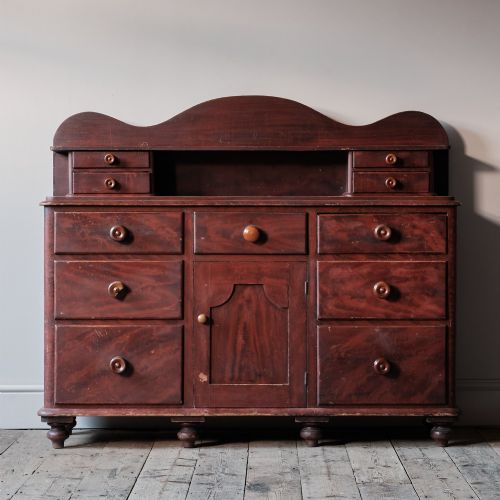
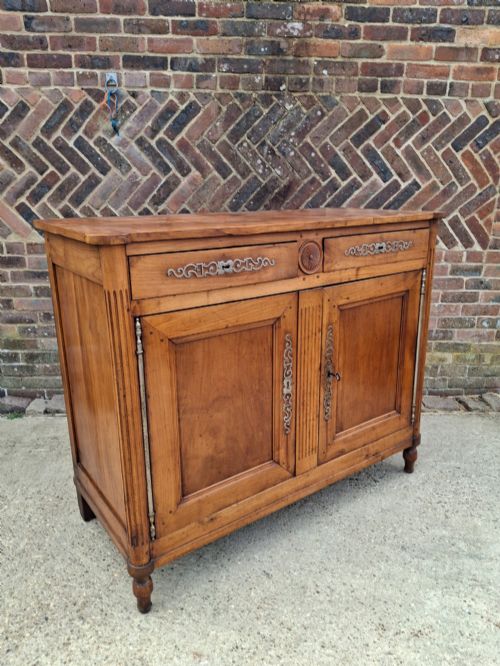
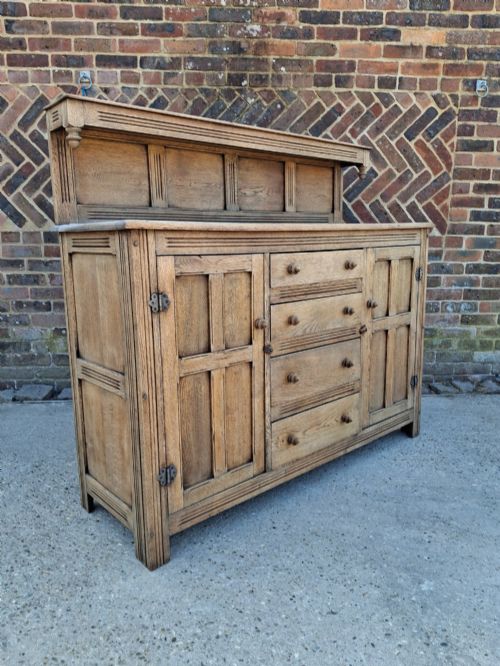
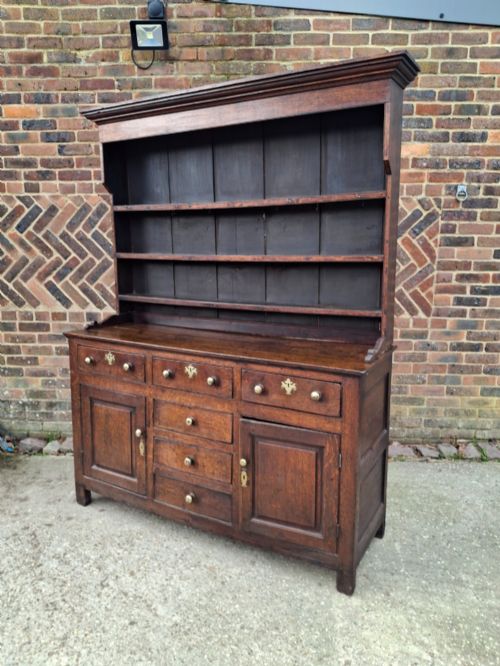
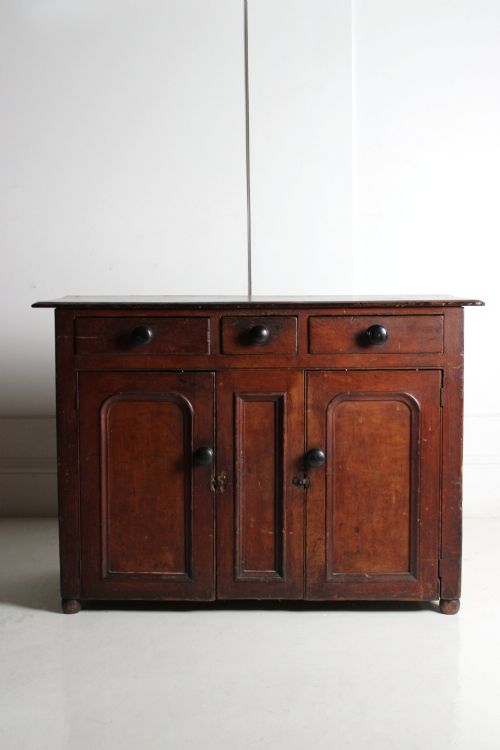
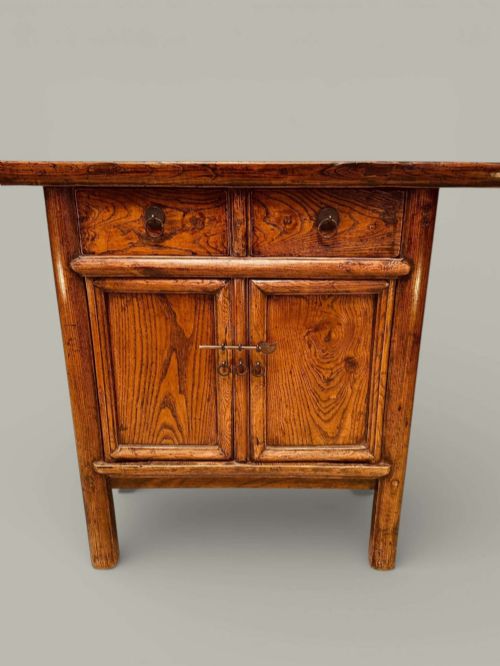

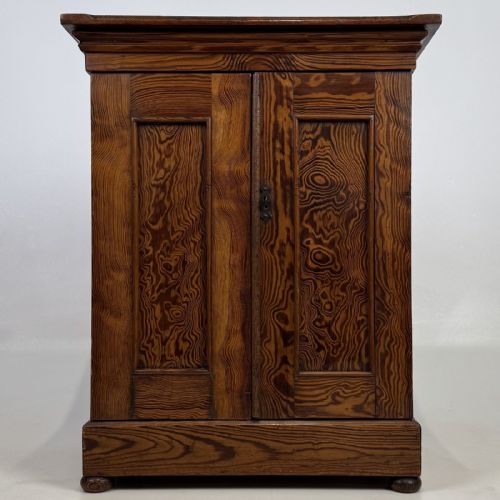
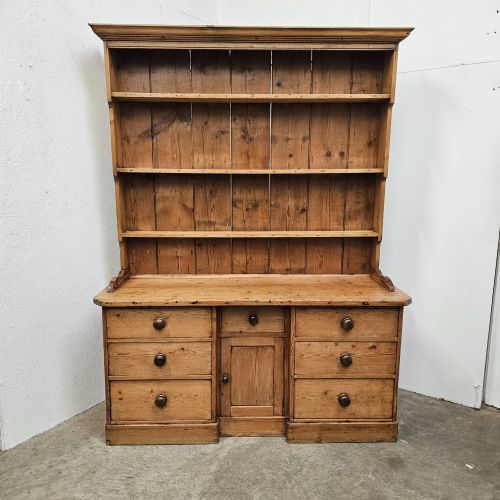
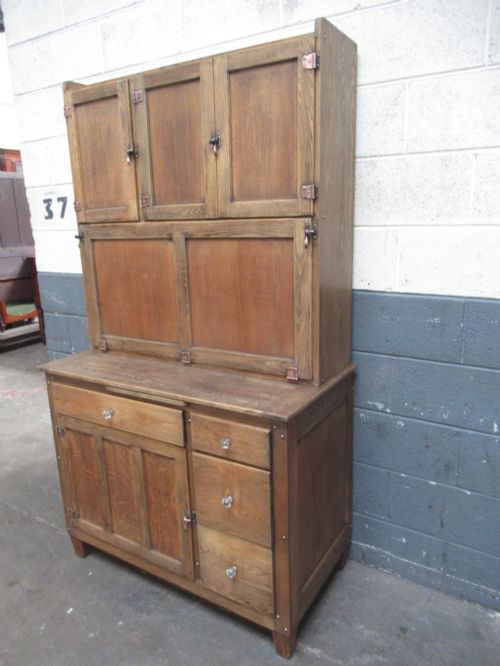

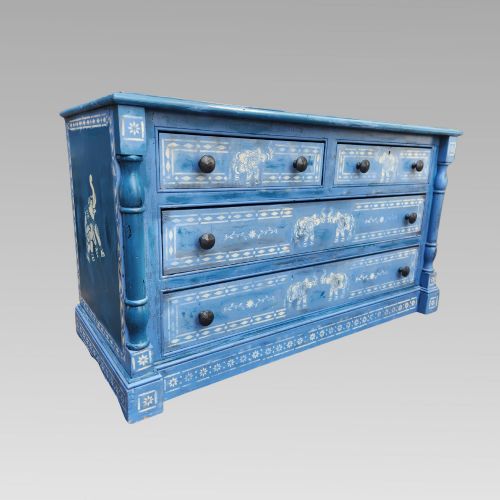
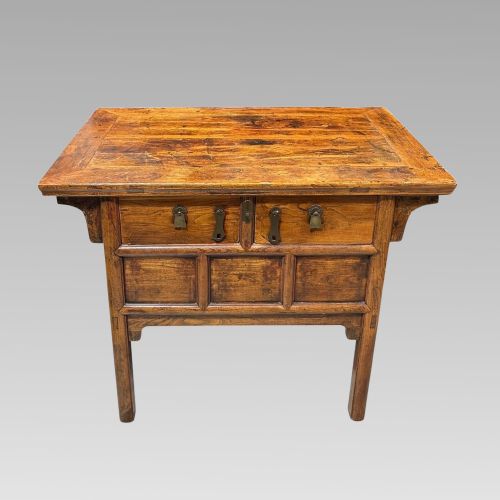
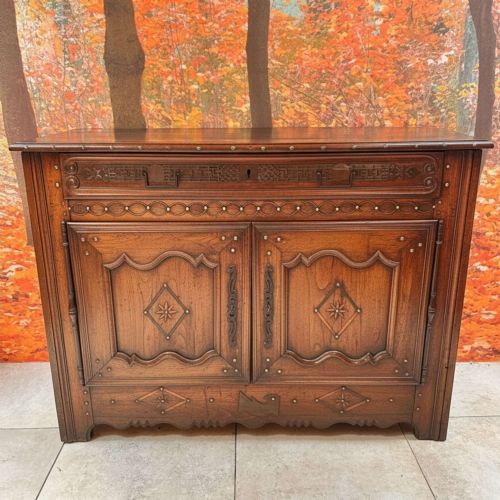
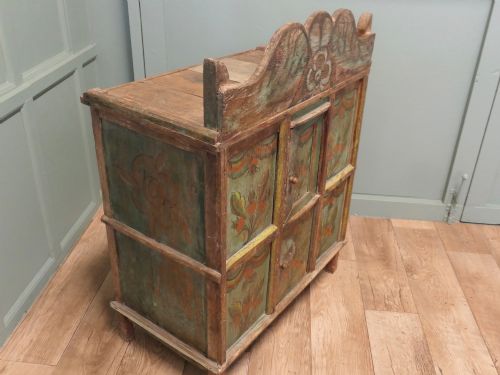
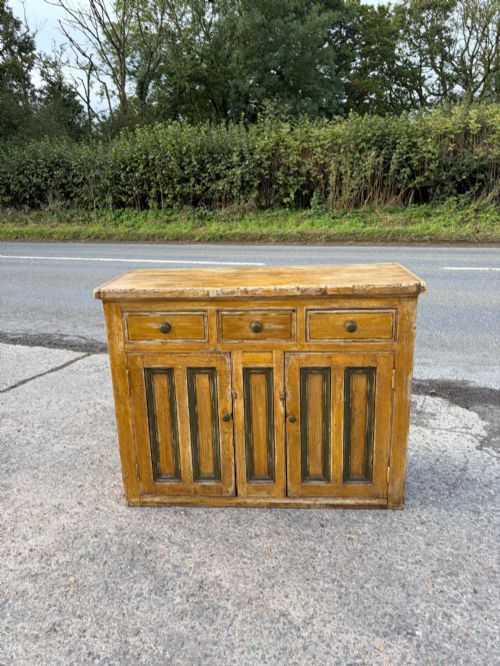
Rustic Sideboard Cabinet
These rustic sideboard cabinet pieces unite practical storage with honest utility, offering sturdy timber build and vernacular character.
Rustic Sideboard Cabinet
A rustic sideboard cabinet encompasses diverse utilitarian storage furniture built across the eighteenth, nineteenth and twentieth centuries in regional vernacular styles. Pieces appearing on this page span Georgian, Victorian, Edwardian and early twentieth-century eras, reflecting domestic kitchen and pantry storage traditions.
The selection ranges from pine kitchen dresser bases and housekeeper cupboards to oak sideboards, apothecary chests and Welsh dressers. Buyers also encounter French provincial buffets, Chinese elm cabinets and Indian teak storage pieces alongside traditional English designs.
Pine and oak predominate among the forms, often configured with drawers, cupboards or open shelving. Pieces frequently show utilitarian origins in farmhouse kitchens, boot rooms and pantries rather than formal parlours.
Materials and construction methods
Construction relies heavily on solid regional timbers such as pine, oak, teak and elm, selected for local availability and utilitarian strength. Joinery employs traditional techniques suited to heavy daily use in kitchens and storerooms.
Surfaces often display original paint, wax finishes or natural patinas built up through decades of domestic service. Metal hardware like brass ring handles, pulls and iron fittings secure doors and drawers.
Rustic Sideboard Cabinet Retail Price Guide 2026
Typical asking prices for rustic sideboard cabinet among the pieces listed under this phrase on Sellingantiques today, from the lower quarter to the upper quarter. They describe what is for sale here now, not the wider market.
Some nineteenth-century cupboards retain the faint aroma of dried herbs and farm butter from decades spent guarding pantry supplies.
Distinctions in construction and surface preservation
Quality rests upon the integrity of the timber frame, the retention of original surface patinas, and the survival of period hardware. Pieces retaining original paint or wax finishes show greater historical authenticity than later stripped examples.
The sophistication of regional joinery and the presence of original fittings, such as brass ring handles or glazed upper doors, separate everyday utility pieces from finer vernacular examples.
The Rustic Sideboard Cabinet Glossary
- Dresser base
- A lower sideboard or cabinet section without the upper plate rack, typically fitted with drawers and cupboards.
- Enfilade
- A long sideboard or buffet featuring multiple doors in a continuous line, common in continental European furniture.
- Patina
- The surface sheen and colour developed on timber through age, wear and regular waxing.
- Cwpwrdd deuddarn
- A traditional Welsh two-section cupboard used for household storage, often constructed from solid oak.
- Confiturier
- A small French cabinet traditionally utilised for storing preserves and confits, also known as a jam cupboard.
Rustic Sideboard Cabinet: Frequently Asked Questions
What rooms suit a rustic sideboard cabinet?
These cabinets work naturally in kitchens, dining rooms and boot rooms where generous storage is required for tableware, linens or provisions.
Their utilitarian character also allows them to serve as hallway storage or living room media consoles while adding warmth through exposed timber grain.
How do I care for waxed pine or oak?
Maintain waxed timber surfaces by dusting regularly with a soft cloth and applying a traditional beeswax polish when the wood appears dry.
Avoid placing these cabinets near direct heat sources or strong sunlight, which can dry out the timber and cause surface cracking.
Are these cabinets purely English?
While many examples originate from English and Welsh country workshops, the selection includes continental pieces from France as well as styles from China and India.
Each regional tradition uses local woods such as oak, pine, elm or teak and reflects the domestic storage customs of its origin.
How can I tell a dresser base from a full dresser?
A dresser base consists solely of the lower cupboard or drawer unit, functioning essentially as a sideboard.
A full dresser includes an upper section featuring open shelves or a glazed cabinet designed for displaying plates and ceramics.