



Rustic Rural Oil Painting
A rustic rural oil painting captures the quiet rhythms of countryside life through layered brushwork and natural pigments.
Rustic Rural Oil Painting
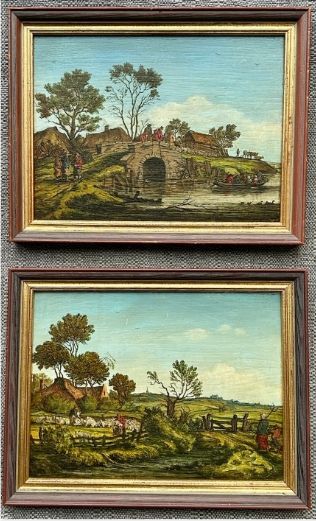
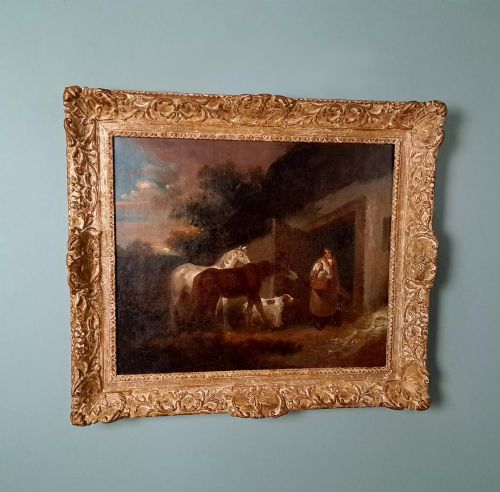
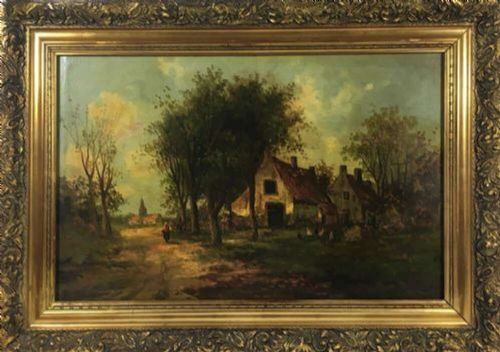
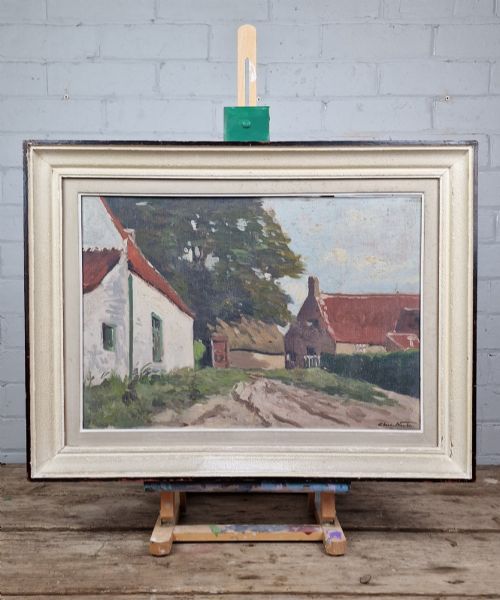
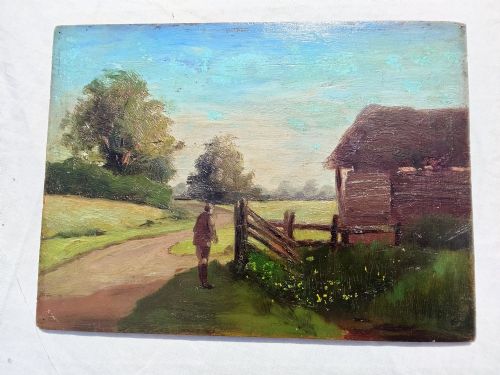
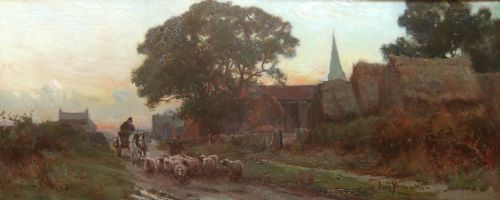
A rustic rural oil painting portrays agrarian scenes, farmyards, cottages, and country landscapes created primarily across the nineteenth and twentieth centuries. These works record pastoral life, agricultural labour, and village settings through various regional British and continental European schools. Buyers searching for a rustic rural oil painting encounter representations of horses and carts, harvest fields, and riverside dwellings rendered in styles ranging from Victorian realism to British impressionism.
The compositions on this page span several decades, stretching from early nineteenth-century panels to mid twentieth-century canvases. Works attributed to identified painters sit alongside pieces from English, French, and Flemish schools. The recurring subjects focus on domestic farm animals, figures near streams, and rustic cottages nestled in rural terrain.
Materials and construction
These works utilise oil paint applied to prepared canvas, wooden panels, or rigid boards. Artists built up their compositions using brush and palette knife techniques, layering pigment to achieve texture in foliage, earth, and stone walls. Wooden panels provide a solid support for detailed nineteenth-century Flemish style pieces, whilst stretched canvas accommodates larger pastoral landscapes.
Frames often incorporate gold leaf or gilt wood, which reflects light across the surface of the painting. The combination of oil paint and supportive wooden or canvas backings ensures durability, allowing the pigments to retain their depth over successive centuries.
Styles represented in the archive range from British impressionism and post-impressionism to Victorian realism and rural pastoralism.
Distinctions in quality
The standard of a painting depends upon the artist's command of light, perspective, and atmospheric depth within the rural setting. Finer examples demonstrate careful observation in the rendering of figures, livestock, and architectural elements such as thatched cottages. Weaker works rely on formulaic compositions and rigid application of pigment without tonal variation.
The handling of the medium itself separates competent studio output from accomplished fine art. Superior pieces display confident, varied brushwork that defines the texture of a hay field or a weathered barn, whereas lesser works show flat, uniform areas of colour.
William Joseph Shayer Senior·Charles Houben·Miles Birkett Foster·Owen Bowen·James Kyd·Henry John Yeend King·Majorie Hoare·Charles Vickers·R. Palnay·James William Booth·Robert Russell MacNee·Abraham Hulk Junior·John Frederick Herring·ROBERT MCGREGOR·W E Millner·Ernest Higgins Rigg·Georgina Lara·T.B.Garvie·John Falconar Slater·William Greaves·James ward·Arthur Walker Redgate·Nora Munro Summers
The Rustic Rural Oil Painting Glossary
- Oil paint
- A slow-drying paint made by combining pigment particles with a drying oil, typically linseed oil. This medium allows artists to blend colours smoothly and build thick textured layers known as impasto.
- Canvas
- A heavy woven fabric stretched across a wooden frame to serve as a support for oil paintings. Linen and cotton duck are common varieties found in historical works.
- Giltwood
- Wood that has been coated with a thin layer of gold leaf or gold paint. Frames constructed in this manner add reflective brightness around the perimeter of a dark pastoral scene.
- Genre painting
- The pictorial representation of scenes from everyday life, typically involving ordinary people engaged in common activities. In rural contexts, this includes farm labourers, market scenes, and domestic cottage interiors.
- Post-Impressionism
- An art movement that developed from impressionism, extending its use of vivid colours and thick application whilst emphasising geometric forms or expressive content. Works in this style often use simplified shapes and bold brushstrokes to convey the essence of a landscape.
Rustic Rural Oil Painting: Frequently Asked Questions
What periods do these paintings cover?
The works span from the early nineteenth century through the Victorian era and into the mid-twentieth century.
Most pieces date from the Victorian period up to the nineteen-thirties, reflecting changing artistic movements across those decades.
What surfaces were used for these paintings?
Artists painted on stretched canvas, wooden boards, and wooden panels.
Canvas supports are common in larger landscape compositions, while wooden panels often appear in nineteenth-century works.
How do I identify a genre painting?
Genre paintings depict ordinary people engaged in everyday activities rather than historical or mythological subjects.
In these rural scenes, look for figures working in farmyards, tending livestock, or walking along country lanes.
Where were these rural scenes painted?
The landscapes depict countryside settings in Britain, France, and Flanders.
Artists recorded local farms, thatched cottages, riversides, and agricultural fields specific to those regions.