


Rustic Pottery Vessel
A rustic pottery vessel brings earthy utility into a room, offering tactile historical character through weathered clay and time-worn glaze.
Rustic Pottery Vessel
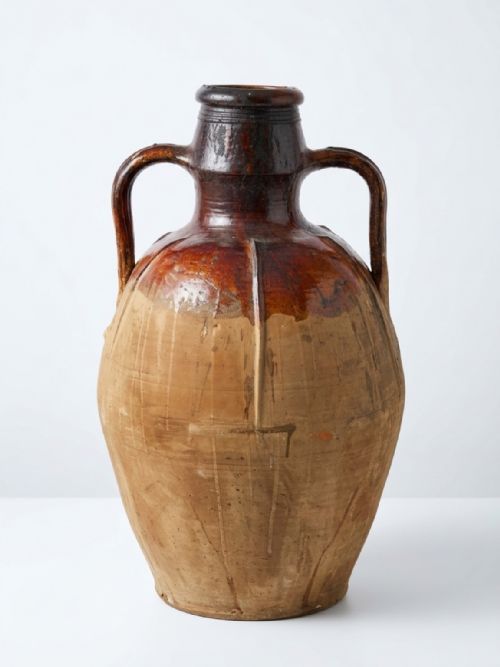
A rustic pottery vessel encompasses utilitarian forms designed for storage, preservation, and daily domestic labour across past centuries. Buyers examining this category encounter functional containers shaped for oil, wine, vinegar, water, and dairy work rather than purely decorative parlour ornaments.
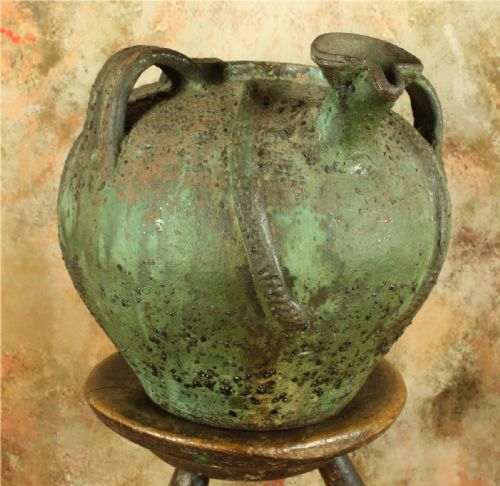
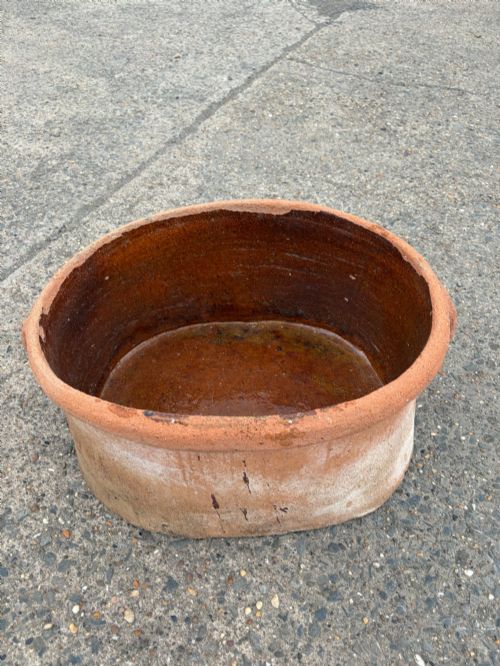
The selections available here lean heavily into nineteenth-century examples alongside eighteenth-century specimens, featuring regional French, German, Italian, and Mediterranean pieces. Common physical manifestations include large olive jars, confit pots, slipware jugs, salt-glazed flagons, and sturdy dairy bowls.
Confit pots and olive jars dominate the forms present, reflecting their survival rate in rural farmhouses and agrarian settings. These vessels connect modern interiors directly to historical food production and provincial hearths.
Materials and construction methods
Makers utilised local earth, shaping terracotta, earthenware, and heavy stoneware by hand or on simple wheels to create thick, durable walls. These porous or semi-porous bodies were chosen for their practical utility in keeping contents cool or withstanding heavy daily handling.
Surfaces often received lead glazes, salt glazes, or simple painted decoration to seal the clay and manage liquids like oil and vinegar. Firing took place in traditional kilns, leaving characteristic kiln marks, surface irregularities, and tonal variations born from uneven heat distribution.
Some seventeenth-century German flagons wear spirited mask decorations on their bellies, keeping a watchful eye over the vinegar.
Assessing quality in provincial ceramics
Quality in a rustic pottery vessel rests on the integrity of the form, the proportional balance of handles, and the visual character of the glaze. A superior example displays confident throwing or hand-building, where functional necessity merges naturally with pleasing domestic proportion.
The depth of historical patina and the honesty of age-related wear dictate the standing of a piece among collectors. Intact glazes, original handles, and minimal modern intervention separate standard utilitarian kitchenware from genuinely compelling historical survivors.
The Rustic Pottery Vessel Glossary
- Terracotta
- A porous, unglazed or glazed fired earthenware of a brownish-red colour. It was widely used throughout the Mediterranean for large agricultural storage jars.
- Salt glaze
- A glossy, translucent texture resembling orange peel created by throwing common salt into the kiln during high-temperature firing. This technique protects stoneware from absorbing liquids.
- Slipware
- Pottery decorated with a thin mixture of clay and water applied before firing to create linear patterns or contrasting surfaces. It frequently appears on traditional English and European kitchen jugs.
- Confit pot
- A specialised French earthenware jar featuring handles, traditionally glazed on the upper interior and used for preserving duck or pork. These vessels formed a staple of rural domestic life.
- Flagon
- A large bottle or jug with a handle, often fitted with a stopper or narrow neck, designed for holding fermented drinks or oils. Salt-glazed variants were common in northern Europe.
Rustic Pottery Vessel: Frequently Asked Questions
What were rustic pottery vessels used for?
These vessels served essential utilitarian roles in rural households, functioning as storage containers for agricultural produce such as olives, wine, olive oil, and rendered meats. Families relied on them daily for food preservation and kitchen prep.
Over generations, their durability made them fixtures in dairies, cellars, and pantries across Europe. Today, their original functional purpose translates into decorative focal points for modern homes.
How do I care for antique earthenware?
Antique earthenware and terracotta have porous bodies that require gentle handling and protection from persistent moisture. Dust them gently with a dry cloth rather than using harsh chemical cleaning agents.
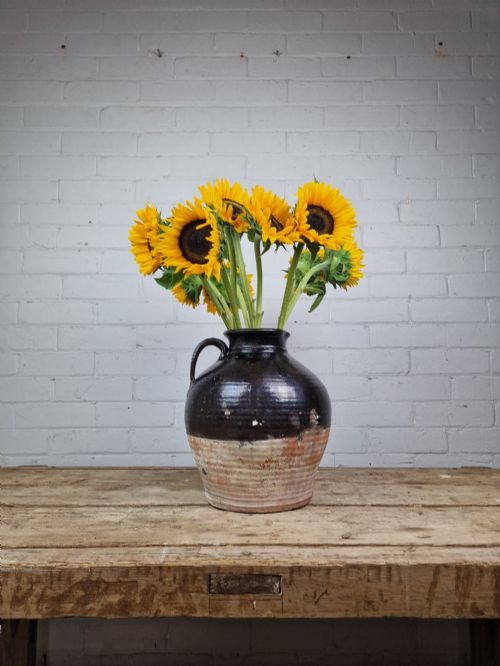
If used to hold dried botanical stems, place a waterproof liner inside rather than pouring water directly into the vessel. This preserves the historical clay body and prevents mineral damage.
How can I tell the age of a confit pot?
Age is determined by observing the forming marks, the composition of the local clay, and the characteristics of the partial glaze. Older nineteenth-century and eighteenth-century examples exhibit handmade irregularities and heavy potting that later factory reproductions lack.
Patina also offers clues, showing cumulative wear around the rim and handles from decades of domestic use. Comparing the weight and thickness against documented period specimens helps confirm dating.
Are salt-glazed vessels waterproof?
Salt glazing creates a vitrified, glass-like surface that effectively seals stoneware, making the body impermeable to liquids. This chemical reaction during firing rendered German and French salt-glazed flagons ideal for storing vinegars and oils.
Even so, hairline fractures acquired over centuries mean buyers should test containers before trusting them with valuable liquids. Most collectors display them dry to preserve their historic fabric.