
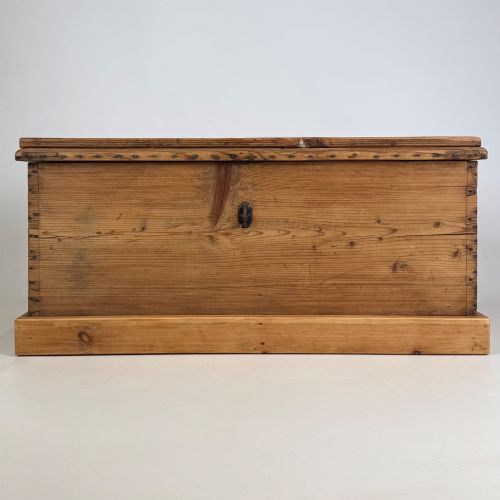
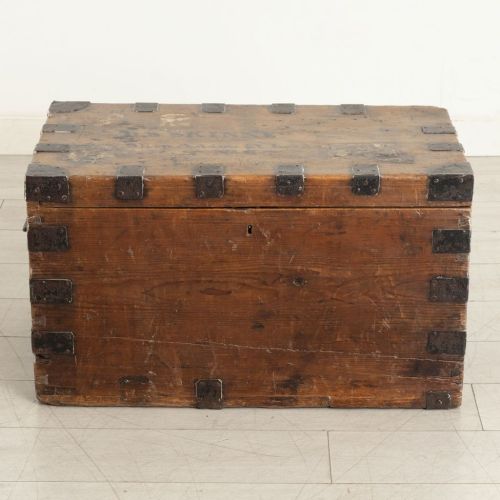
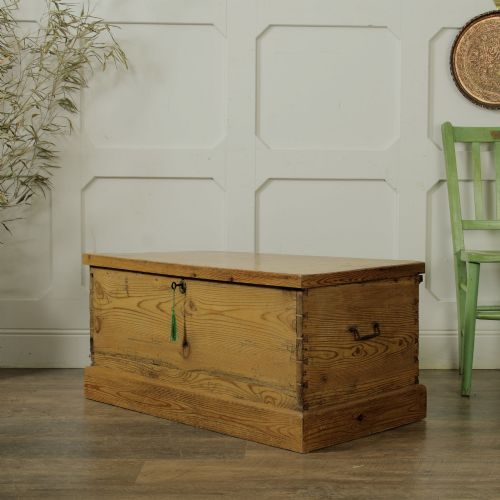
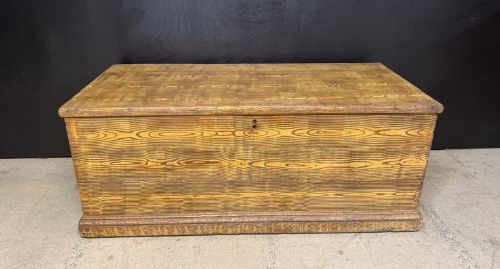
Rustic Pine Boxes
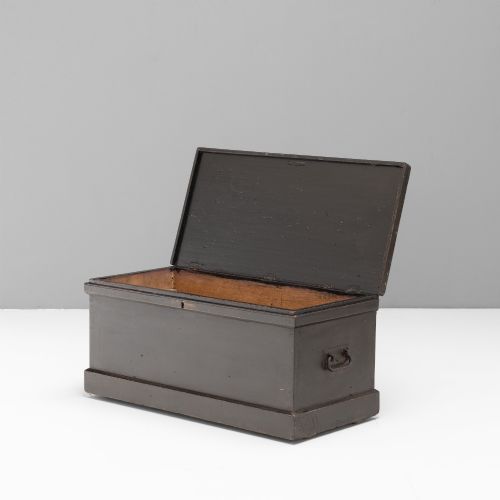
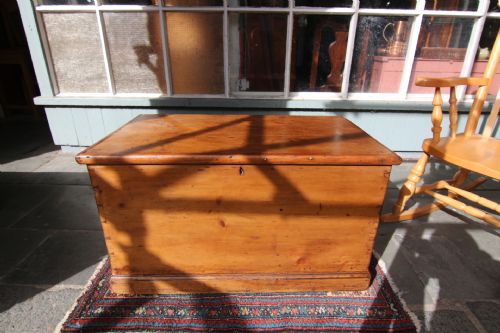
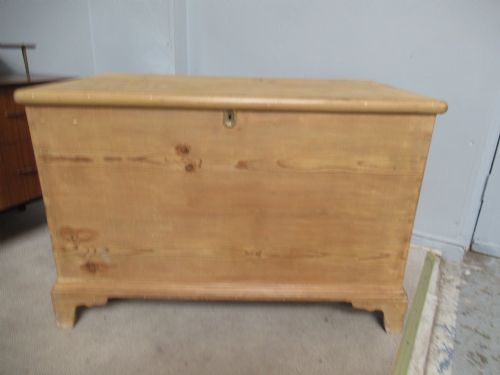
These rustic pine boxes are sturdy utility pieces built for storage, combining plain softwood with practical iron or brass hardware for everyday use.
Rustic Pine Boxes
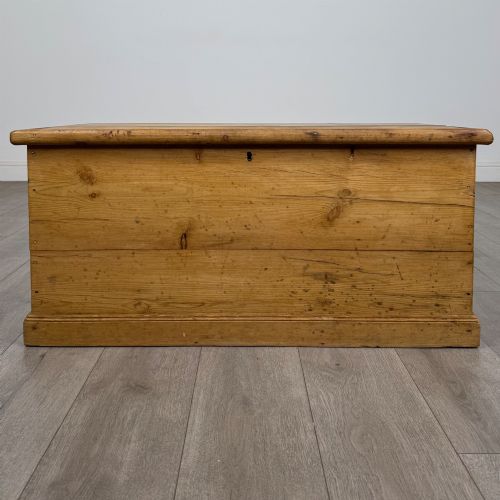
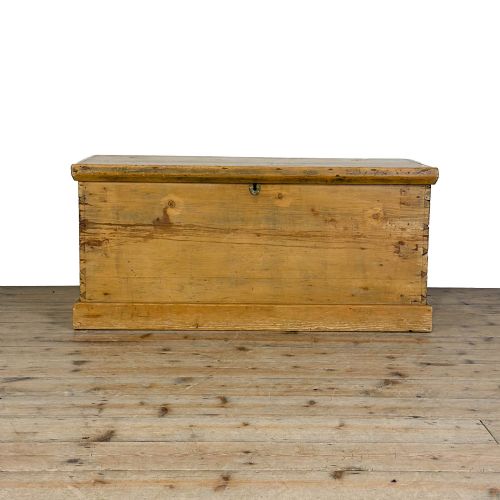
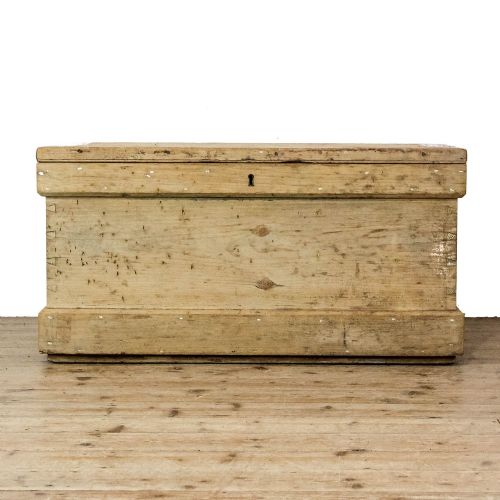
Rustic pine boxes serve as the primary category for utilitarian storage vessels encountered on this page, taking forms from simple blanket chests to fitted trunks with internal drawers. Buyers look to these items for functional household storage that carries genuine age and straightforward character.
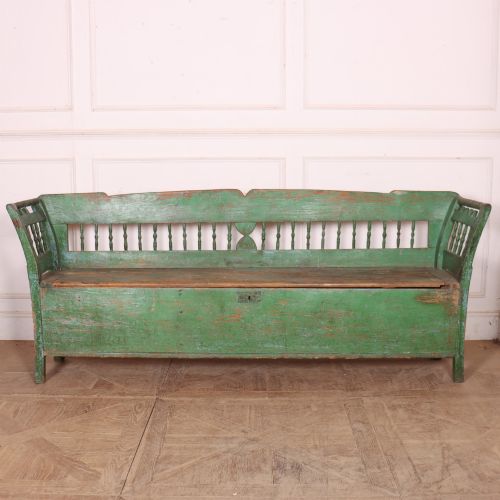
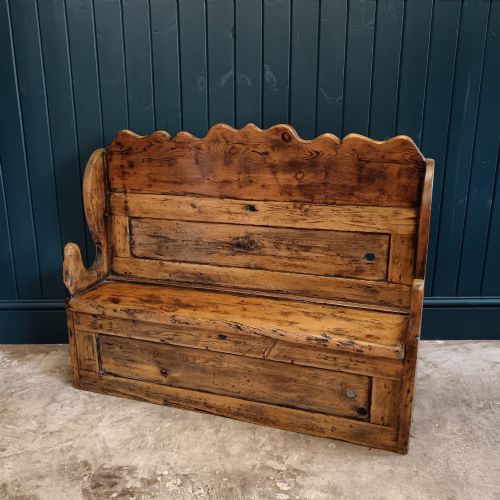
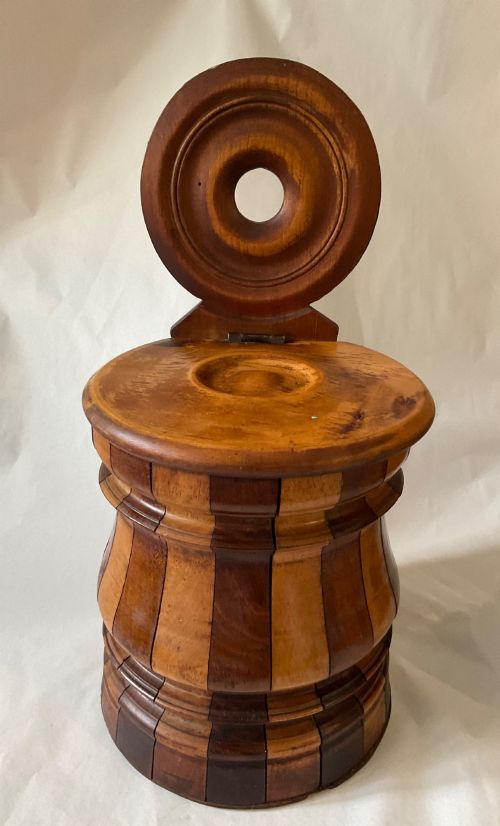
The selection ranges across several centuries, drawing heavily from nineteenth-century Victorian examples alongside eighteenth-century Georgian and continental pieces. Alongside standard lidded chests, the material stretches across related utilitarian forms including benches, wall boxes, and tool chests.
Most items originate from domestic or provincial workshops, reflecting regional building traditions across Britain, Scandinavia, France, and Hungary. These pieces served hardworking roles in farmhouses, halls, and travel, which accounts for their robust construction.
Materials and construction methods
Construction relies primarily on solid pine and pitch pine, occasionally paired with secondary timbers like elm or mixed woods for internal structures. Planks are joined with simple corner methods, sometimes reinforced for heavy travel use.
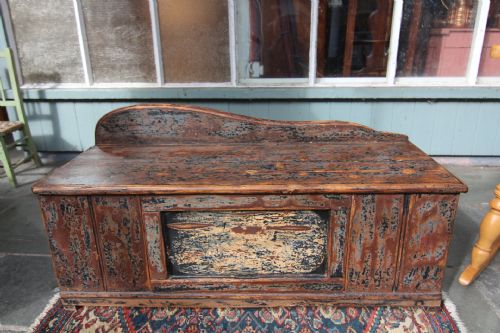
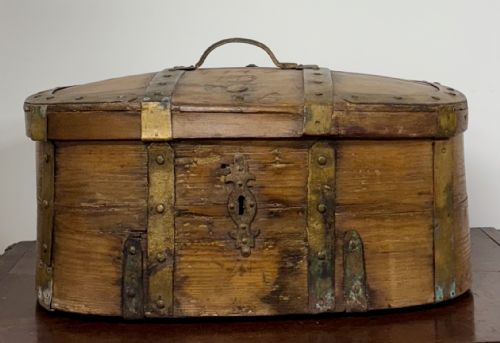
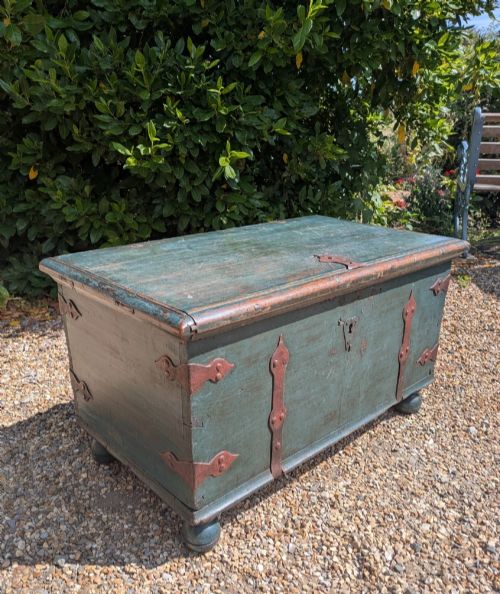
Hardware consists of hand-forged iron strapwork, hinges, and occasional brass fittings that secure the lids and corners. Surface treatments vary between waxed finishes, scumble glaze, and layers of original paint.
One box includes interior pigeon holes, proving that even laundry storage sometimes succumbed to a desperate need for paperwork organisation.
Assessing quality and character
Quality rests upon the integrity of the original timber and the retention of early surface treatments such as original paint or period wax. Pieces retaining internal fittings like till drawers or original hand-forged strapwork command greater interest from collectors.
Proportion and scale dictate the visual weight of the piece, with simpler provincial forms offering straightforward utility while fitted or painted examples demonstrate more deliberate craftsmanship.
The Rustic Pine Boxes Glossary
- Mule chest
- A storage chest featuring one or more drawers beneath the main lidded compartment. This form bridges the gap between a simple blanket box and a chest of drawers.
- Scumble
- A decorative painting technique involving a translucent top layer manipulated over a lighter base colour to simulate grain. It appears frequently on nineteenth-century trunks.
- Strapwork
- Metal bands or hinges applied across the exterior of a box or chest to reinforce the joints. Hand-forged iron examples provide both structural strength and decorative contrast.
- Pitch pine
- A dense, resinous variety of pine known for its prominent grain pattern and durability. It was frequently utilised for travel trunks and heavy-duty storage pieces.
Rustic Pine Boxes: Frequently Asked Questions
What were rustic pine boxes used for?
These boxes served multiple household functions, primarily storing blankets, textiles, personal belongings, or tools. Their sturdy construction also allowed them to double as travel trunks or casual seating in hallways and farmhouses.
Over time, they adapted to changing domestic needs, moving from working storage to decorative interior furnishings that still provide practical capacity.
How do I care for a waxed pine box?
Maintain a waxed pine surface by applying a traditional beeswax polish sparingly and buffing it with a soft cloth. Keep the wood away from direct heat sources and strong sunlight to prevent the timber from drying out or splitting.
Avoid using modern liquid silicone sprays or harsh chemical cleaners, as these can strip the historic wax finish and alter the patina of the pine.
How can I tell the age of a pine chest?
Dating relies on examining the construction methods, tool marks, and hardware types used in the piece. Hand-forged iron strapwork, hand-cut dovetails, and early paint layers typically point towards eighteenth or early nineteenth-century origins.
Later Victorian examples often feature machine-sawn boards, standard brass hinges, and simpler internal arrangements while retaining the utilitarian character of earlier models.
What is the difference between a coffer and a blanket box?
A coffer generally refers to a heavy, robust storage chest, often associated with earlier centuries and architectural joinery. A blanket box specifically describes a chest dedicated to storing household textiles and linens.
In practical terms, the titles overlap frequently depending on regional terminology and the exact proportions of the specific item.