
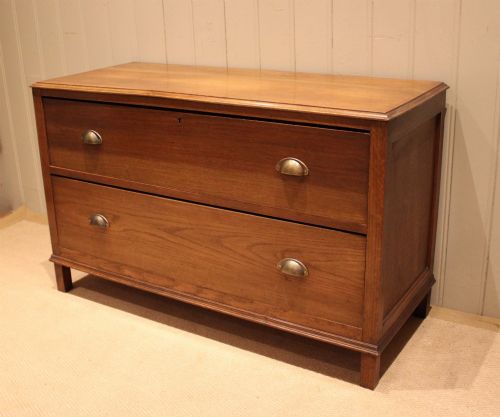
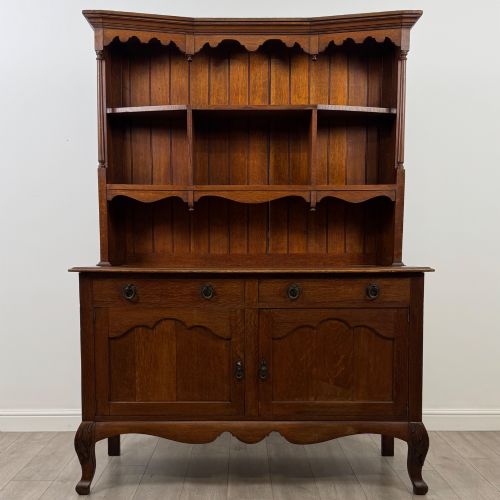
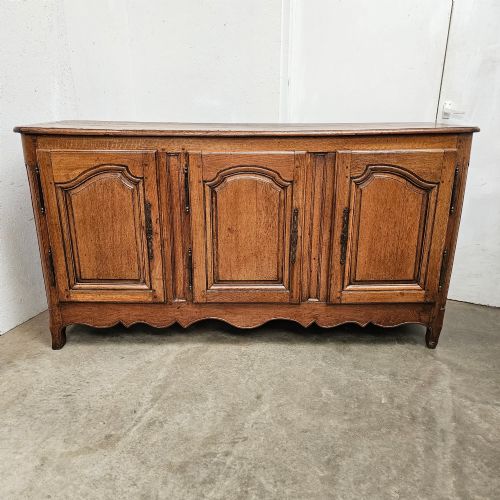
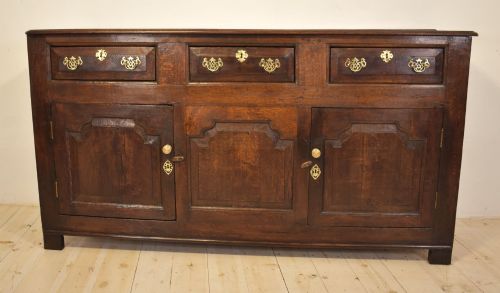
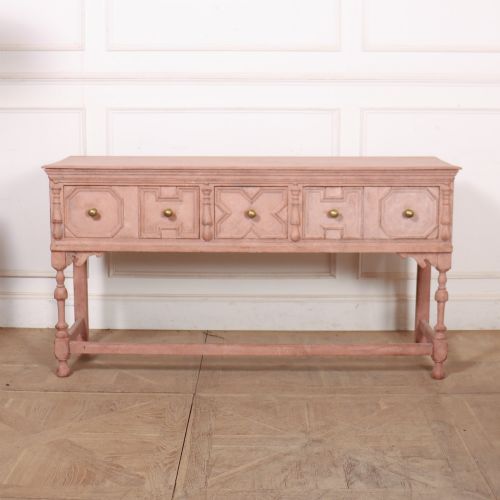
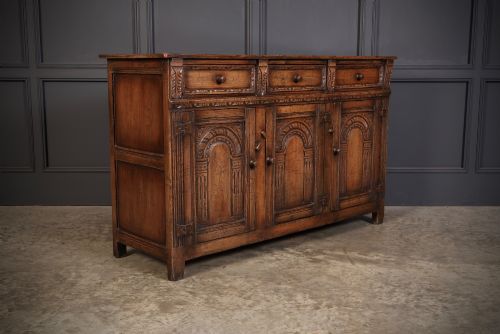
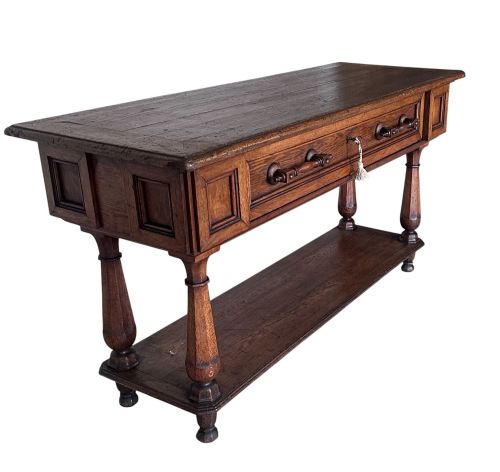
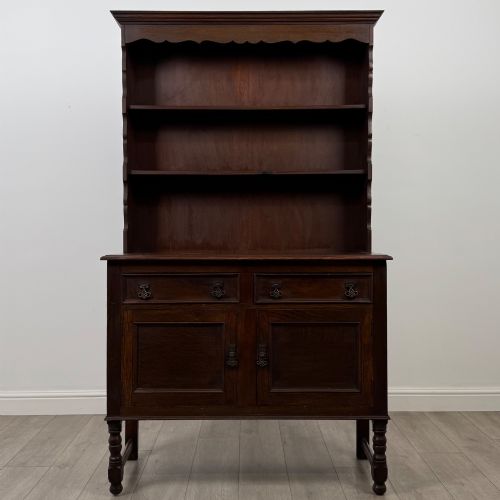
Rustic Oak Sideboard Dresser
These rustic oak sideboard dresser examples offer honest proportions and practical storage, drawing buyers who value genuine domestic history.
Rustic Oak Sideboard Dresser
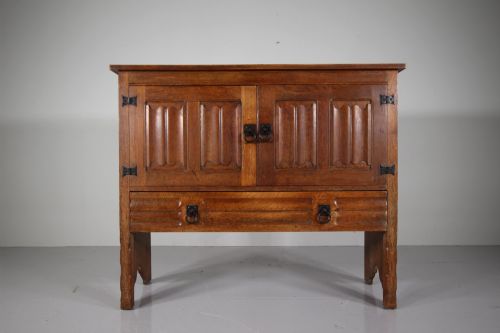
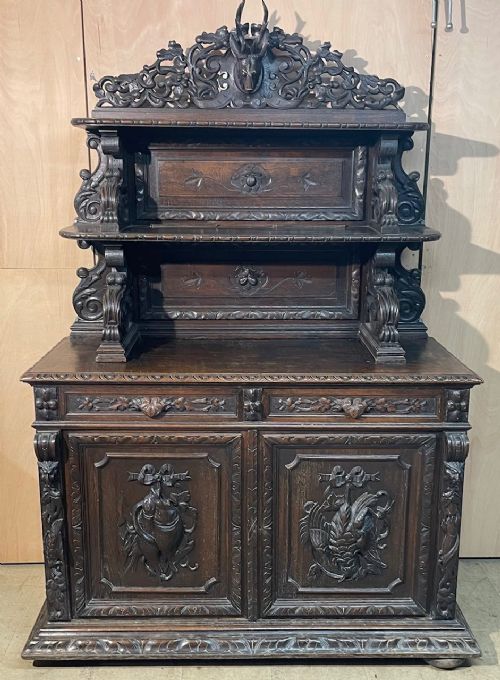
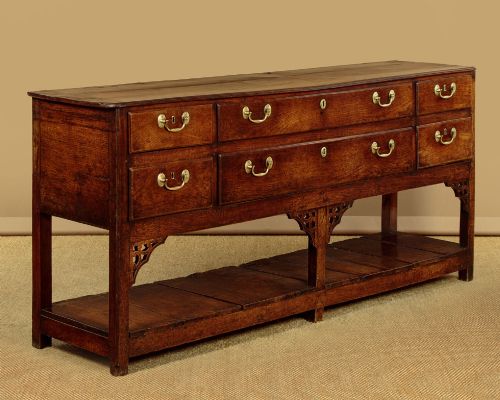
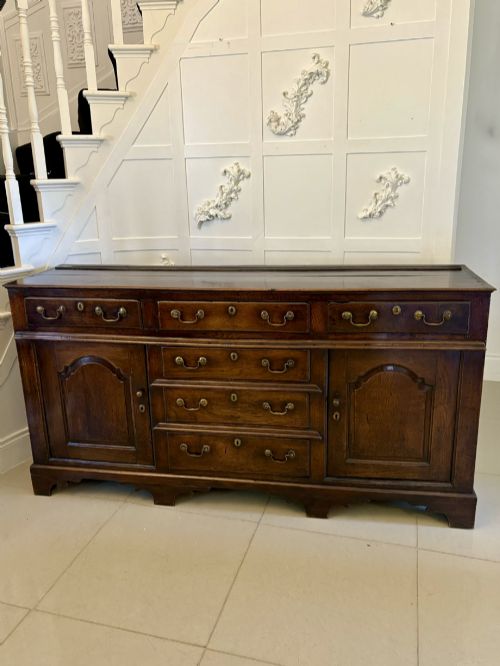
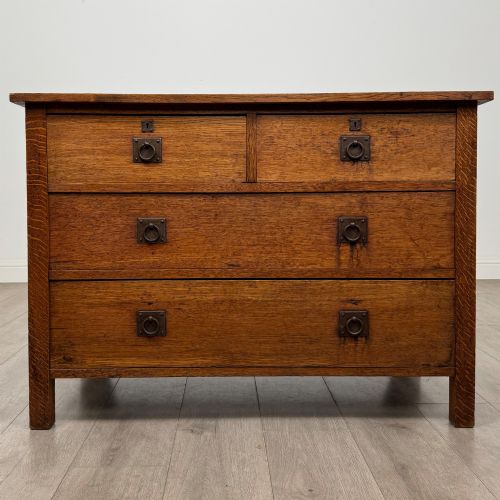
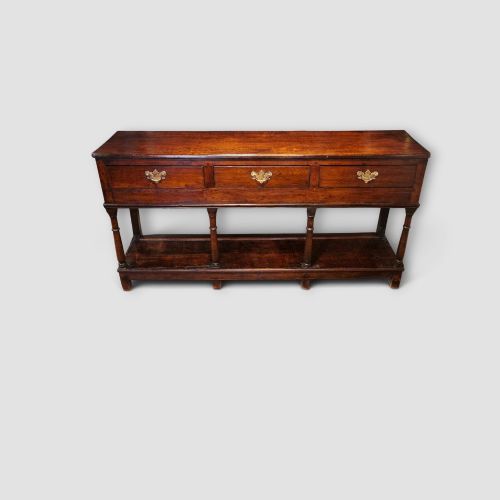
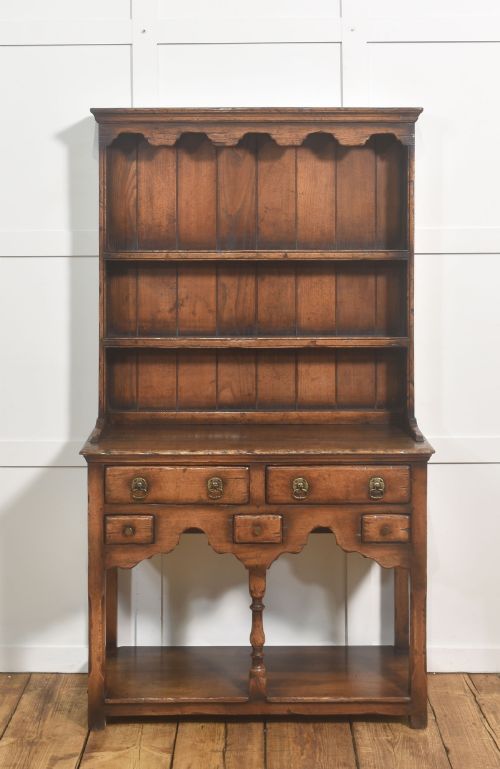
A rustic oak sideboard dresser brings together sturdy timber frames and functional storage surfaces built for everyday domestic use. When searching for a rustic oak sideboard dresser, buyers encounter pieces varying from open potboard bases to full plate racks and enclosed cupboards.
The selections span centuries of vernacular design, drawing heavily on English country and Welsh traditions alongside French provincial influences. Makers built these forms to serve utilitarian purposes in kitchens and dining spaces, resulting in straightforward layouts prioritising drawers and shelving.
Many examples date from the eighteenth and nineteenth centuries, though Edwardian revivals and later periods also appear regularly. These items suit contemporary interiors that favour tactile materials and time-worn timber over polished uniformity.
Materials and construction methods
The primary material across these listings is solid oak, frequently paired with secondary timbers like fruitwood, pine, or elm in less visible sections. Craftsmen utilised traditional joinery techniques to frame heavy boards, ensuring structural stability for daily service.
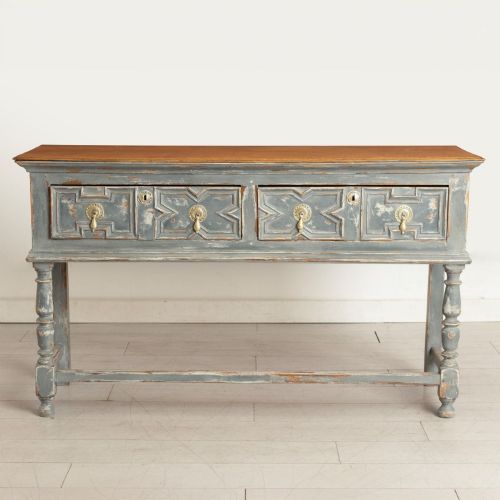
Metal hardware such as brass pulls, iron hinges, and wrought iron fastenings provide functional contrast against the timber surfaces. Paint finishes and bleached treatments appear on select items, showing that historical owners altered the wood to suit changing tastes.
Listings feature periods ranging from the 18th century through the Edwardian era, constructed primarily in solid oak with brass and iron hardware.
Factors influencing quality
The integrity of the timber and the depth of natural patina dictate the standing of a piece within the range. Original hardware and undisturbed surface wear separate honest survivals from heavily restored examples.
Proportion and regional character also play a central role, with vernacular items showing distinctive local traits in their drawer arrangements and carving styles. Pieces retaining their original potboards or plate racks command stronger interest than modified items.
The Rustic Oak Sideboard Dresser Glossary
- Potboard
- An open lower shelf built into the base of a dresser for storing heavy kitchen pottery. This feature distinguishes many traditional vernacular pieces.
- Dresser base
- The lower section of a dresser comprising drawers and cupboards without the upper plate rack. These often function independently as sideboards.
- Plate rack
- An upper wooden shelving unit designed to display plates upright against a wall or backing board. They frequently accompany eighteenth and nineteenth century bases.
- Enfilade
- A long sideboard or low cabinet featuring a series of doors, commonly found in French provincial furniture. The term refers to the aligned sequence of units.
- Vernacular
- Furniture built by regional carpenters for local domestic use rather than following high fashion or court styles. These pieces emphasise utility and local material availability.
Rustic Oak Sideboard Dresser: Frequently Asked Questions
What is the difference between a dresser and a sideboard?
A traditional dresser often includes an upper plate rack for displaying ceramics, whereas a sideboard consists solely of a low base with drawers and cupboards.
Many pieces listed under this search combine both terms, referring to low dresser bases that function practically as sideboards in modern dining rooms.
How do I date an antique oak dresser?
Dating relies on observing construction details, timber characteristics, and regional style indicators such as drawer dovetailing and board widths.
Earlier eighteenth-century items typically show hand-cut joinery and deep patination, while Edwardian revivals display uniform machine-cut elements and lighter finishes.
Where were these pieces originally made?
The listings show origins spanning English country workshops, Welsh rural districts, and French provincial regions.
Local timber availability and domestic customs shaped the design of each area, resulting in distinct regional variations in proportion and carving.
Can I use a dresser base in a modern kitchen?
These low timber cabinets provide robust surfaces and generous drawer storage suited for contemporary kitchens and dining areas.
Their sturdy construction and practical proportions allow them to serve effectively as serving stations or freestanding prep units.