
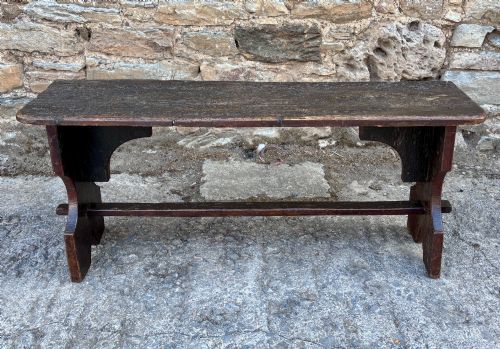
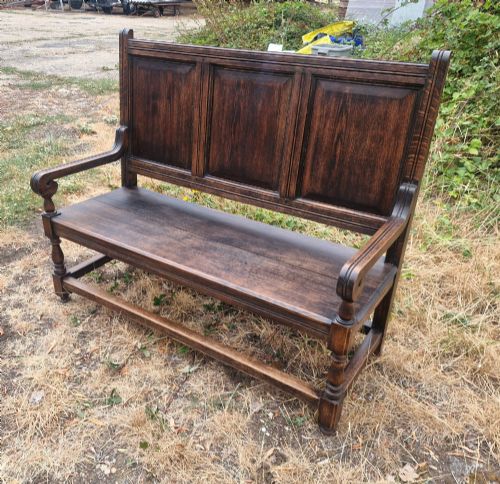
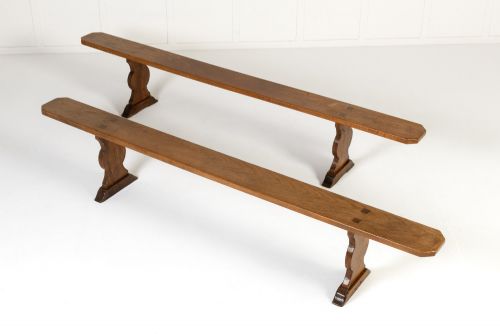
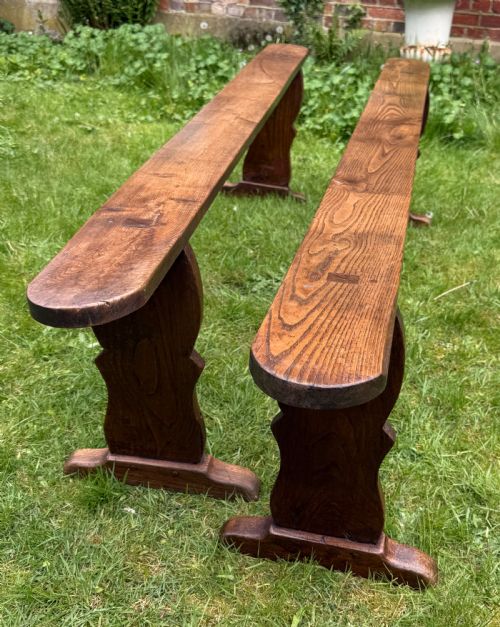


Rustic Oak Hallway Bench
A rustic oak hallway bench offers sturdy seating and character for an entryway, bringing traditional carpentry directly into daily domestic life.
Rustic Oak Hallway Bench
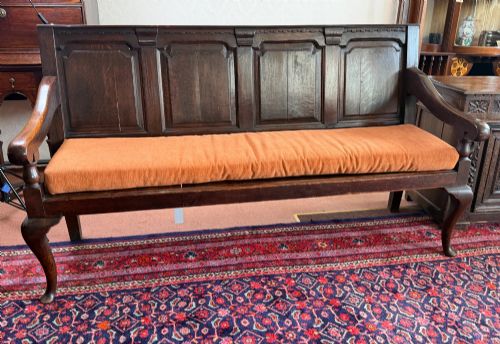
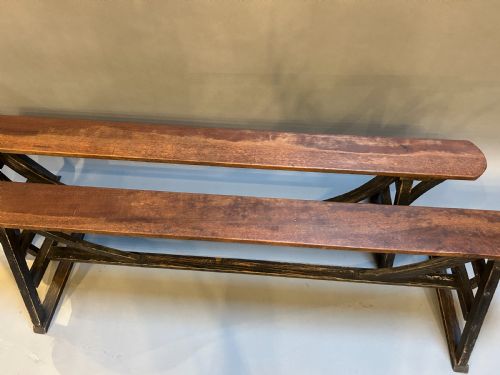
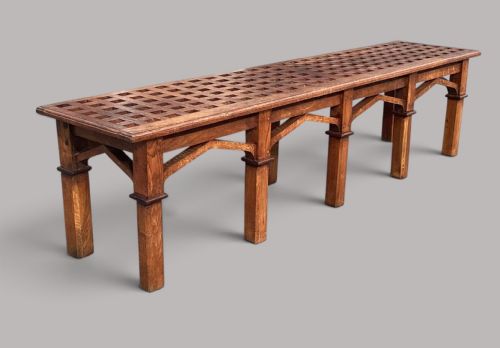
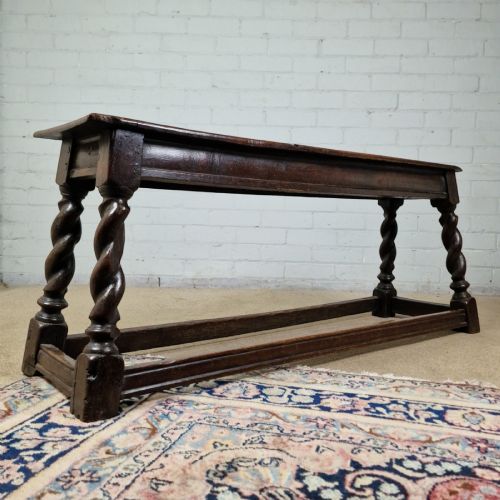
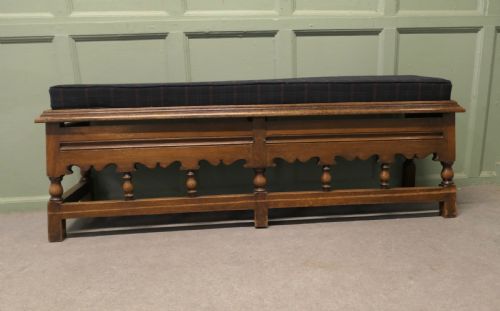
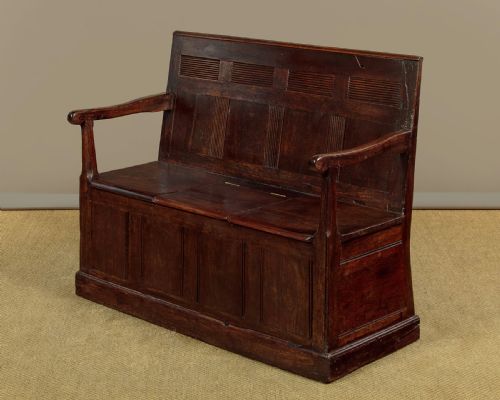
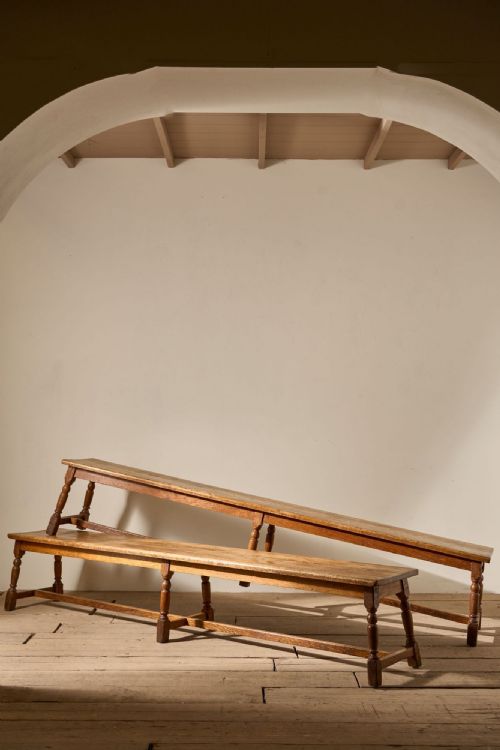
A rustic oak hallway bench serves as practical seating within an entryway, often incorporating storage compartments, panelled backs, or boot storage facilities beneath the seat. When exploring a rustic oak hallway bench selection, buyers encounter forms ranging from long refectory trestle tables to narrow box settles and compact Edwardian seat benches.
The periods represented stretch from the late seventeenth century through the Victorian era and into the early twentieth century, encompassing both English country pieces and continental examples. Regional variations such as Welsh box settles or French oak benches appear frequently alongside straightforward nineteenth-century seating.
These items function primarily as functional hall furniture designed to withstand regular domestic traffic while establishing a distinct historical aesthetic. Buyers frequently select these pieces for their combination of robust timber construction and straightforward utilitarian design.
Construction and materials
Carpenters relied principally on solid oak, complemented by elm, pine, and various hardwoods, shaping the timber using traditional hand tools and pegged joinery. Panels were typically fitted into grooved frames to accommodate natural wood movement over centuries of use.
Surface finishes developed organically through decades of waxing and handling, occasionally resulting in pale bleached oak appearances or deep patinated tones. Structural elements include sturdy trestle bases, integrated storage boxes, and panelled backs designed for maximum durability.
The listings on this site span the seventeenth to the early twentieth centuries, featuring oak, elm, pine, and hardwood.
Assessing quality in construction
The distinction between standard utility items and finer examples often rests on the integrity of the original timber and the complexity of the joinery. Pieces featuring untouched patination, sound structural framing, and well-executed panel work command greater appreciation among collectors.
Proportions and regional provenance also influence the standing of an item, with specific forms like box settles or traceable ecclesiastical origins demonstrating notable craftsmanship. The absence of extensive modern timber replacement preserves the integrity of these historical items.
The Rustic Oak Hallway Bench Glossary
- Settle
- A wooden bench with a high back, solid arms, and often a storage box beneath the seat. This form protected occupants from draughts in older hallways.
- Box Settle
- A seat featuring an enclosed compartment under the hinged lid for storage. Such pieces served dual purposes in traditional homes.
- Trestle
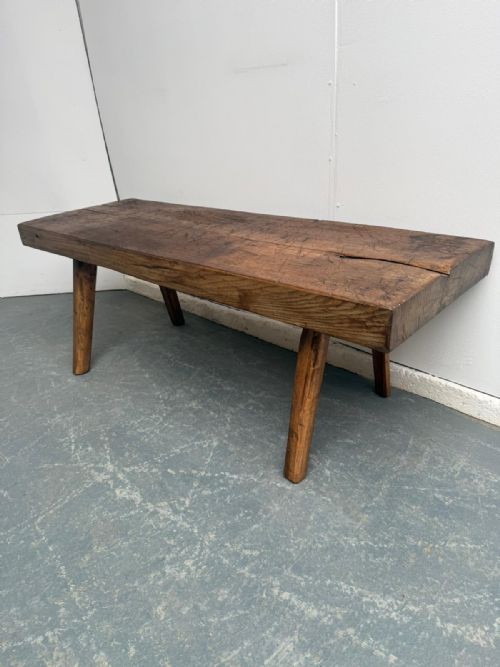
- A structural support consisting of a horizontal beam fixed to two splayed legs. This method provides stable support for long refectory benches.
- Bleached Oak
- Timber that has undergone a lightening process to reduce the warmth of the natural grain. This treatment yields a pale, muted surface tone.
- Panelled
- Construction method utilising thin wooden boards fitted within a rebated frame. This technique prevents warping while adding decorative depth.
Rustic Oak Hallway Bench: Frequently Asked Questions
How do I maintain a rustic oak hallway bench?
Apply a microcrystalline wax periodically to nourish the dry timber and protect the historical surface from moisture.
Avoid placing the seating near direct heat sources to prevent timber splitting.
Can I use an antique settle for boot storage?
Many box settles and hall benches include integrated storage compartments beneath the seat specifically designed for footwear.
Ensure items are dry before placing them inside enclosed wooden compartments to protect the interior.
How do I distinguish eighteenth-century oak from later revivals?
Examine the joinery for hand-cut peg markers, irregular tool marks, and natural timber shrinkage consistent with age.
Later Jacobean revival pieces often display uniform machine finishing and different structural proportions.