
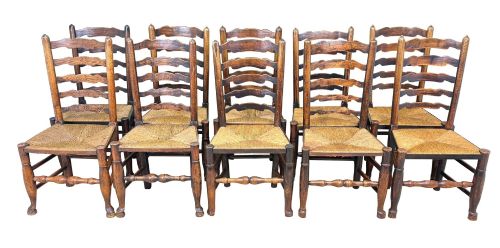
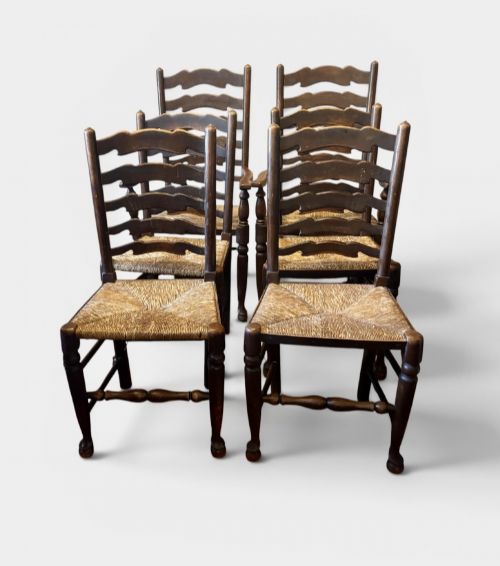


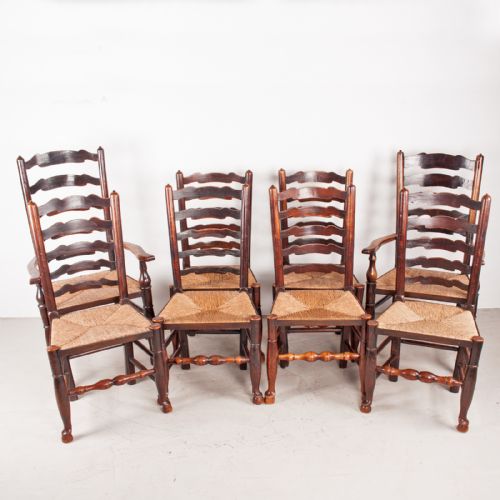


Rustic Ladderback Dining Chairs
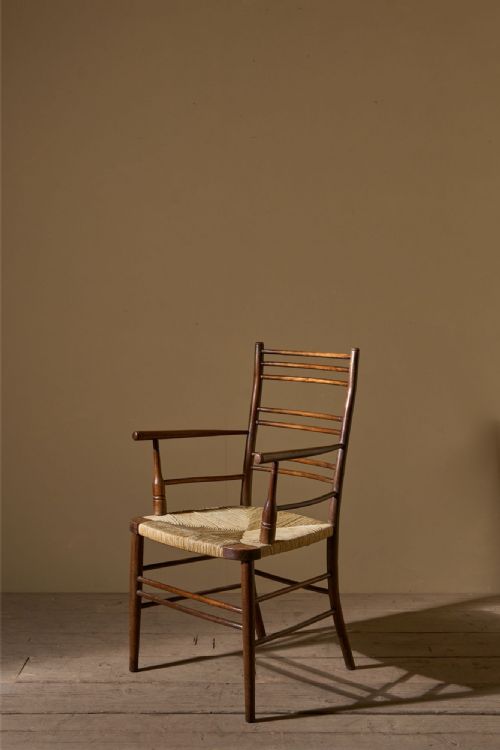
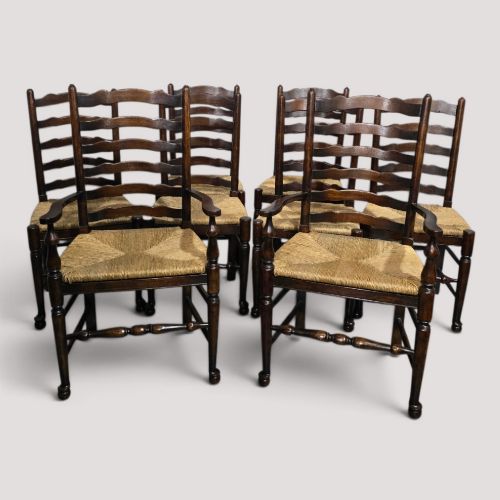
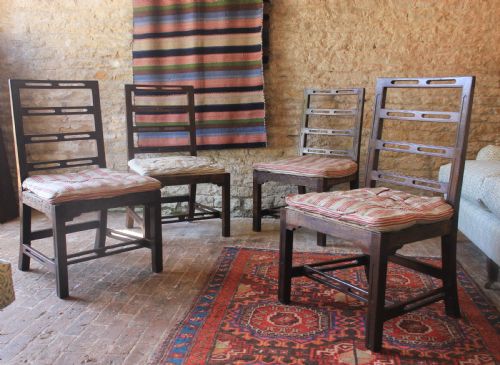
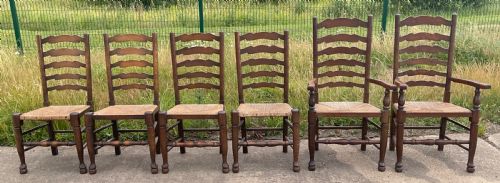
These rustic ladderback dining chairs bring solid country vernacular style to the table, fashioned from honest hardwoods and woven seats.
How they were made
Traditional makers built these chairs using native hardwoods such as oak, elm, ash, beech, and dark hardwoods for sturdy frames and turned uprights. Steam-bending shaped the characteristic horizontal back slats.
Seats relied on tactile organic materials, utilising woven rush, straw, or súgán plaited cord. Joinery relied on time-tested pegged mortise and tenon construction to withstand heavy kitchen use.
What varies in quality
Quality rests in the balance of proportions and the integrity of the timber selection. Superior examples display thoughtful turning on the uprights and carefully matched sets of horizontal slats.
The tightness and neatness of the rush or straw weaving reveal the maker's skill. Original matching frames with minimal structural alteration command greater appreciation among collectors.
Listings feature oak, elm, ash, and beech timbers paired with traditional rush and straw seating.
Heals
The Rustic Ladderback Dining Chairs Glossary
- Ladderback
- A chair with horizontal slats or rails between the vertical back posts. This form dates back centuries in country vernacular furniture.
- Rush seat
- A seating surface woven from dried marsh rushes twisted into cord. It provides a resilient and traditional foundation.
- Carver
- An armchair designed to sit at the head of a dining table. These typically feature supportive side arms.
- Súgán
- An Irish term for twisted straw or hay used for chair seating. It creates a durable plaited surface.
- Spindle back
- A chair back filled with multiple thin turned wooden spindles instead of flat slats. This variation appears across country seating.
Rustic Ladderback Dining Chairs: Frequently Asked Questions
What defines a ladderback chair?
A ladderback chair uses horizontal wooden rails set between two vertical back posts, resembling the rungs of a ladder.
This functional regional design prioritises sturdy construction and comfortable support.
Are rush seats durable?
Rush seats offer surprising resilience and flexibility under everyday seating conditions when kept dry.
Traditional marsh rush or straw weaves last for decades with proper care and minimal maintenance.
How do I date these chairs?
Dating relies on examining the turning style of the wood, the construction joints, and material wear.
Eighteenth-century examples display hand-turned irregularities, while nineteen-thirty pieces show more uniform machine shaping.
Can I mix different chair sets?
Mixing single carvers with matching side chairs follows historic farmhouse traditions of gathering seating as needed.
Matching sets of four, six, or eight pieces provide a more formal unified appearance around the dining table.