


Oak Ladderback Side Chairs
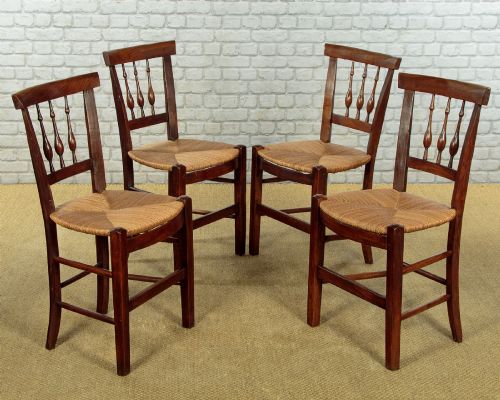
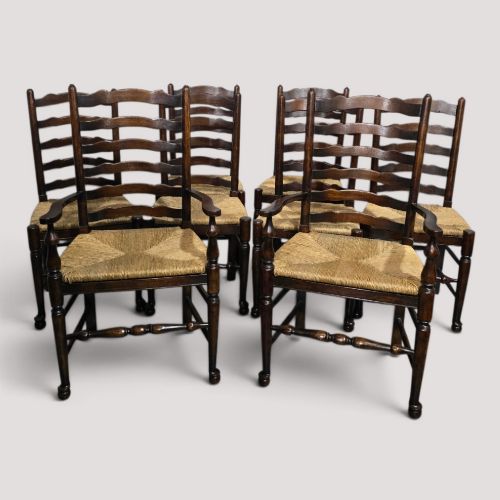
Oak ladderback side chairs bring honest country craftsmanship into a room, offering sturdy frames and woven seating.
Oak Ladderback Side Chairs
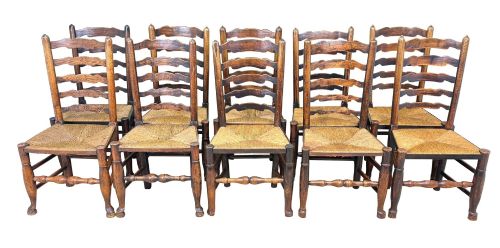
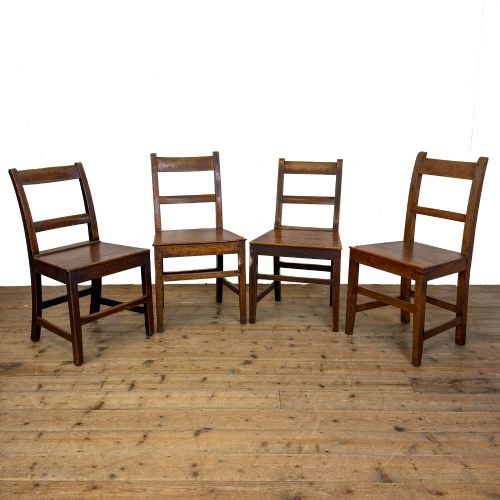
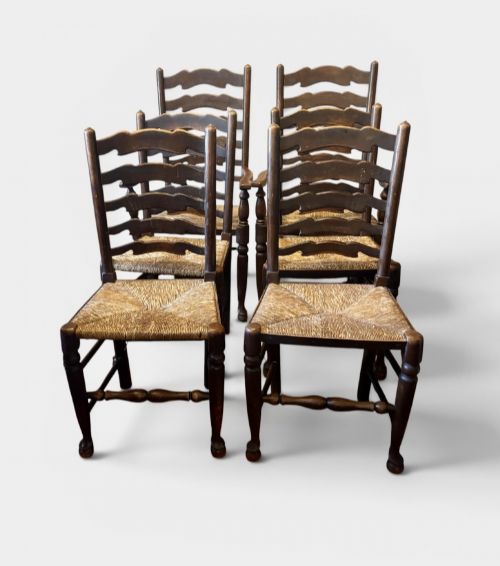
Oak ladderback side chairs appear in various forms across this page, from small groups to large sets suited for dining. Buyers looking for oak ladderback side chairs typically encounter pieces spanning the eighteenth century through to the nineteen thirties.
The selection includes regional styles such as Welsh, Irish, and English country vernacular examples, alongside formal Georgian and later Arts and Crafts interpretations. Many survive as sets, though single chairs and smaller pairings also emerge.
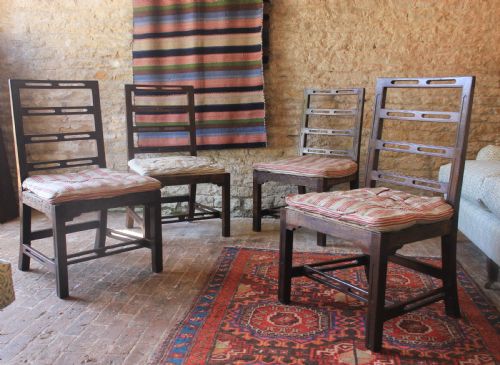
Makers working in the Arts and Crafts tradition sit alongside anonymous village carpenters. This mix provides choices ranging from simple farmhouse kitchen seating to refined dining chairs.
Materials and construction
Construction relies heavily on solid oak for the frames, sometimes paired with elm or other hardwoods for seats and structural components. These woods provide the rigidity needed for tall ladder backs and slender uprights.
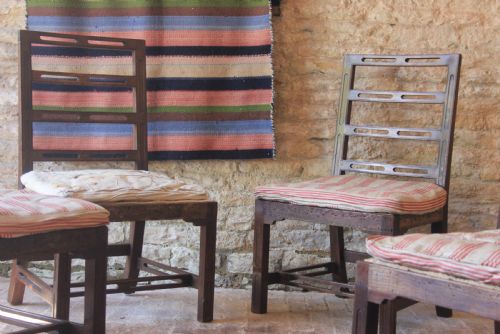
Seating surfaces frequently employ woven rush, offering a resilient and flexible base that complements the wooden framework. Textile and velvet upholstery appear on specific later examples, while other chairs rely purely on bare wood and rush.
One unexpected chair even rolls into the room on wheels.
Judging quality
Quality rests on the integrity of the timber and the tightness of the joinery across the ladder rails and rear posts. Superior examples maintain firm joints without excessive replacement wood or compromised structural pins.
The rhythm and profile of the horizontal slats dictate the visual success of the piece, with well-turned finials and balanced proportions separating standard utility seating from finer artisan output.
LAWRENCE NEAL·EDWARD GARDENER·HEALS
The Oak Ladderback Side Chairs Glossary
- Ladderback
- A chair design featuring multiple horizontal wooden slats between the rear upright posts resembling the rungs of a ladder. This form has roots in vernacular European and British seating traditions.
- Side chair
- An upright chair without arms designed primarily for dining or occasional use around a room. These pieces form the majority of standard set configurations.
- Vernacular
- Objects built by local craftsmen to practical designs using regional materials rather than following academic architectural styles. These pieces reflect the specific habits of rural makers.
- Finial
- A decorative turned ornament capping the top of the rear chair posts. They provide a finished appearance to the upper frame.
Oak Ladderback Side Chairs: Frequently Asked Questions
How do I date an oak ladderback chair?
Dating relies on observing construction marks, turning styles, and the wear patterns on the wood. Earlier pieces often display hand-split components and pegged joints.
Later nineteenth and twentieth-century versions show machine assistance and standardised turnings. Comparing the specific slat profile helps narrow down the decade.
Can I use these chairs for daily dining?
Most solid oak chairs handle regular daily use provided the frame remains tight and stable. Rush seats hold up well under normal sitting conditions if kept dry.
Larger sets make practical dining arrangements for modern homes. Checking the joint strength prevents unexpected wobbles during meals.
Are rush seats difficult to maintain?
Rush seats require basic care to prevent drying out and breaking in heavy-use environments. Keeping them away from excessive moisture preserves the natural fibres.
Traditional woven pads last for decades with gentle cleaning. Professional re-rushing remains possible if the weave eventually fails.
What defines Arts and Crafts ladderbacks?
Arts and Crafts chairs emphasise honest construction, visible joinery, and the direct mark of the maker. Makers during this period stripped away unnecessary ornament to focus on line and material.
Named workshops often produced numbered or stamped pieces reflecting this philosophy. These chairs bridge historic country styles with modern design movements.