



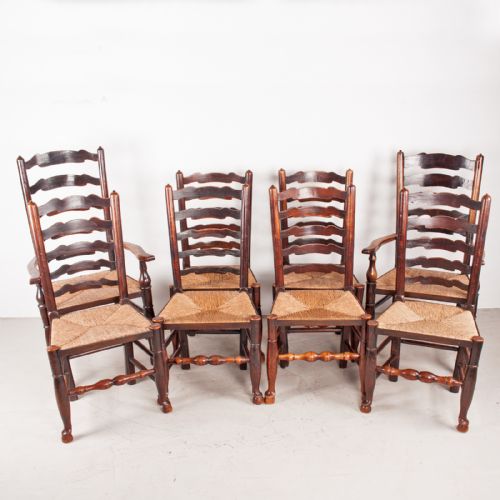


Rustic Ladderback Armchair
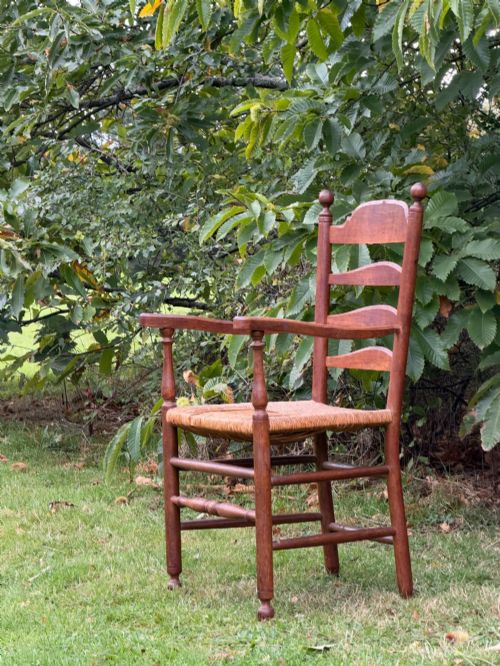
A rustic ladderback armchair offers sturdy vernacular comfort, built from native woods with woven seating for everyday country living.
Rustic Ladderback Armchair
The rustic ladderback armchair is a traditional form rooted in country vernacular furniture, designed for practical utility and sturdy domestic seating. When exploring a rustic ladderback armchair on this page, you encounter pieces spanning from the eighteenth century through to the early twentieth century, reflecting enduring rural traditions.
How they were made
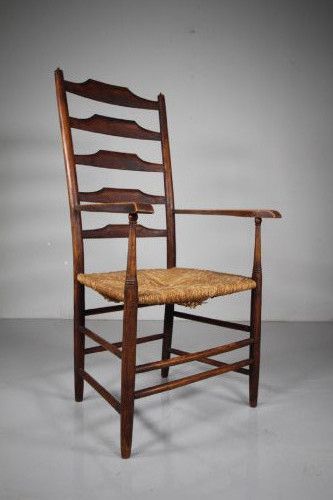
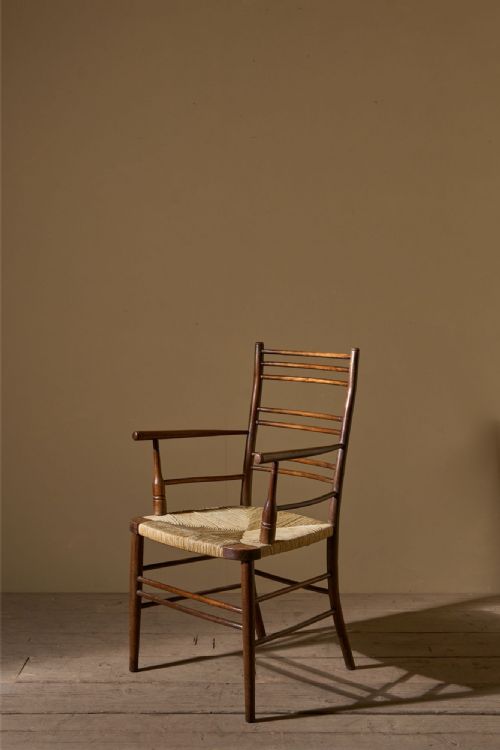
Construction relies on native hardwoods such as ash, oak, elm, and beech, selected for strength and local availability. Turnery and jointing techniques give the frames their characteristic upright posts and horizontal slats.
Seats are traditionally woven from natural rush, or occasionally seagrass, threaded tightly across the frame to create a resilient and supportive platform for the sitter.
Rustic Ladderback Armchair Retail Price Guide 2026
Typical asking prices for rustic ladderback armchair among the pieces listed under this phrase on Sellingantiques today, from the lower quarter to the upper quarter. They describe what is for sale here now, not the wider market.
Listings span from the 18th century to the 1930s, featuring ash, oak, elm, beech, and rush.
What varies in quality
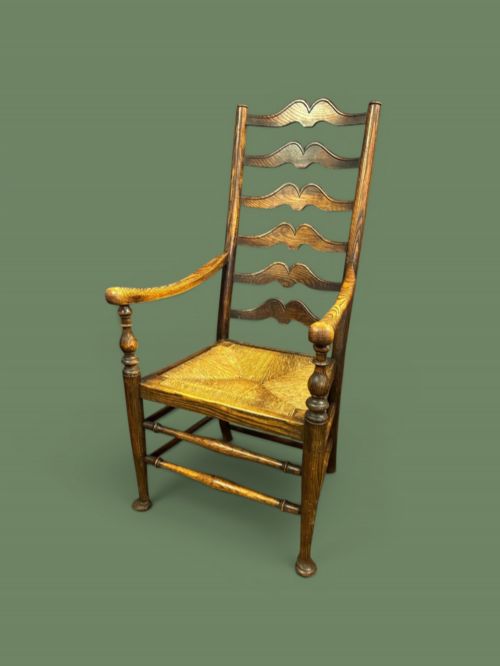
Quality depends upon the integrity of the timber framing, the tightness and material of the woven rush seat, and the balance of the proportions. Finer examples display careful turning on the uprights and a pleasing patina accumulated over generations of use.
Regional variations in joinery and the selection of secondary woods distinguish simpler vernacular pieces from more resolved maker-attributed works.
Philip Clissett
The Rustic Ladderback Armchair Glossary
- Ladderback
- A chair style featuring horizontal slats, or rungs, between the vertical back posts. These slats provide back support and often curve to fit the human spine.
- Rush seat
- A seating surface woven from dried marsh rushes around a wooden frame. This technique yields a textured, resilient pad.
- Vernacular furniture
- Domestic objects made by local craftspeople using regional materials, prioritising utility and tradition over high-style court fashions.
Rustic Ladderback Armchair: Frequently Asked Questions
How do I date a ladderback armchair?
Dating relies on examining the timber species, the turning style of the posts, and signs of wear. Earlier pieces often exhibit hand-split components and older types of rush work.
Changes in chair proportions and regional construction methods across the eighteenth and nineteenth centuries further help place a piece within a specific era.
Are rush seats durable for daily use?
Natural rush seating is surprisingly robust and supports regular sitting when maintained properly. Avoiding excessive moisture helps preserve the integrity of the plant fibres.
Over decades, traditional rush develops a smooth sheen, though heavily worn seats can be re-woven by skilled craftspeople using traditional methods.
What is the difference between an armchair and a carver?
In historical dining sets, a carver refers specifically to the armed chair placed at the head of the table. Standard side chairs lack these arms.
Rustic ladderback carvers offer wider seating and supportive armrests while matching the general slat design of the accompanying dining chairs.
How do I place these chairs in a modern room?
These armchairs function well as standalone reading seats or paired at the ends of a dining table. Their organic timber tones complement both contemporary and traditional interiors.
Allowing sufficient space around the piece highlights the handcrafted turnery and the texture of the rush seating.