
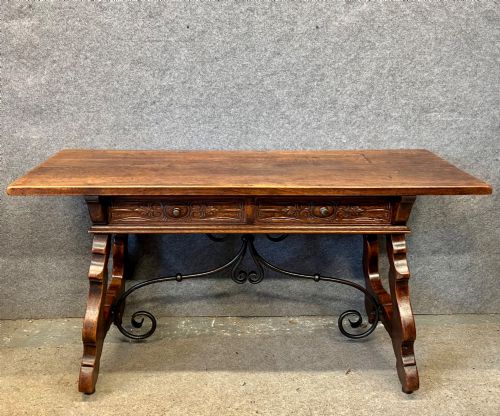


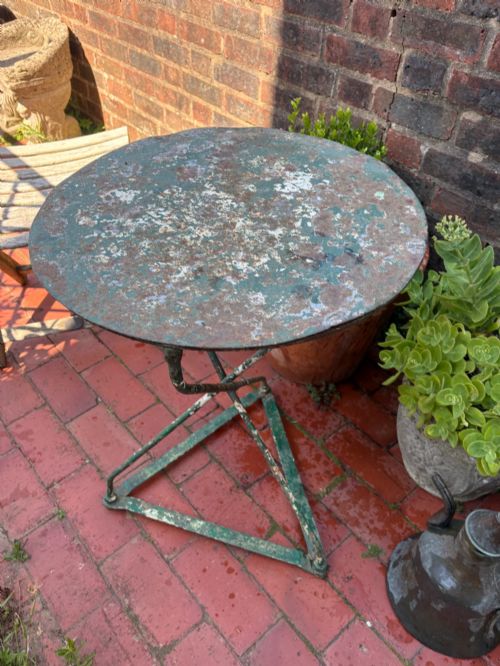


Rustic Iron Side Table
A rustic iron side table brings industrial strength and time-worn character to a room, pairing sturdy metal frames with timber or marble surfaces.
Rustic Iron Side Table
A rustic iron side table combines utilitarian metal frames with timber, pine, oak, walnut, or marble tops, originating from various periods including the 18th century, Victorian era, and early twentieth century. These pieces bridge the gap between heavy-duty industrial hardware and domestic furniture, serving multiple functions across different rooms.
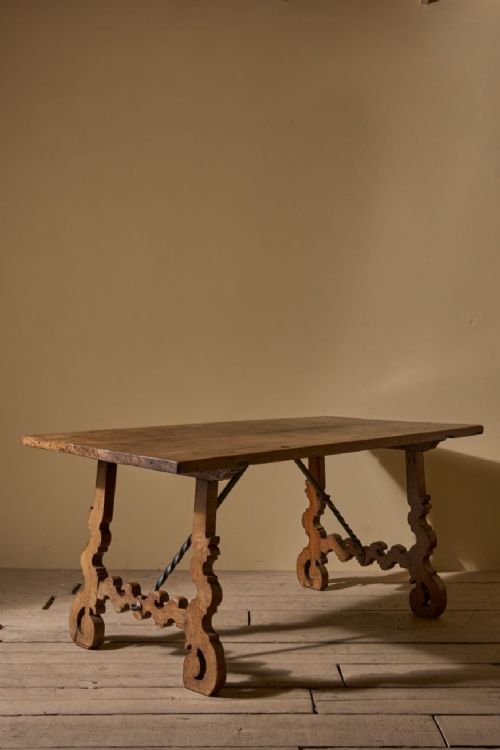
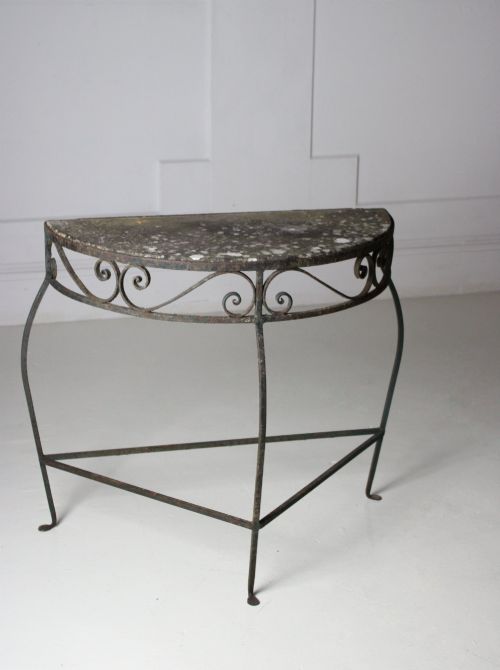
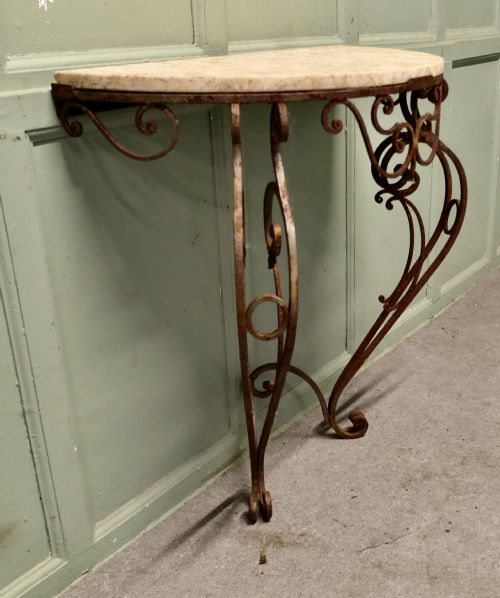
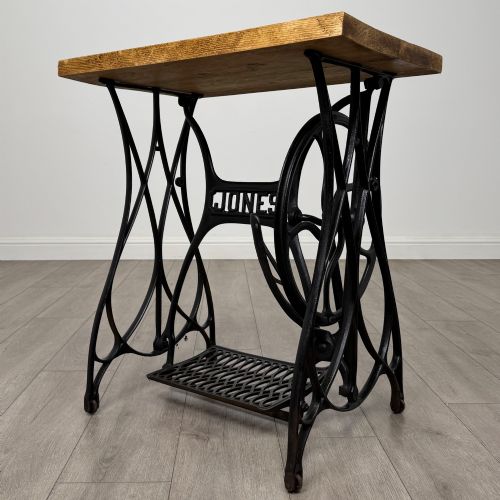
The selection ranges from French country console tables and Spanish provincial oak pieces to industrial machine bases topped with reclaimed pine. Buyers frequently encounter forms designed originally for gardens, bistros, or estate utility, which now find a second life beside armchairs and sofas.
Continental origins strongly shape the available stock, with French and Spanish designs predominating alongside English examples. Whether dealing with a round gueridon table or a trestle structure, the fundamental character remains anchored in the contrast between cold metal and organic wooden or stone surfaces.
Materials and construction methods
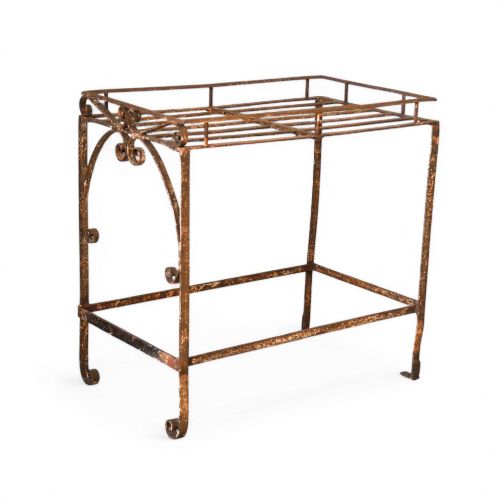
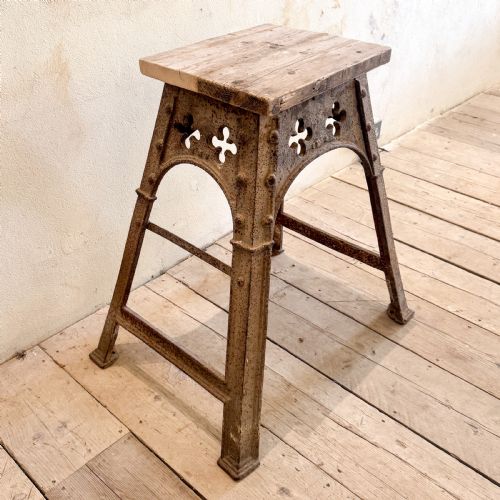
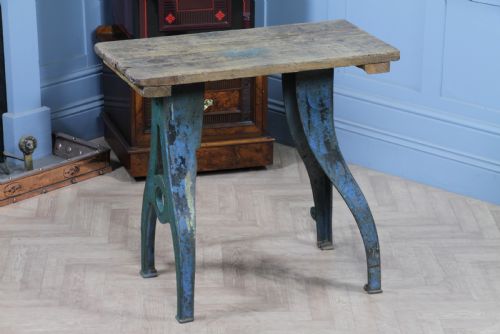
Makers utilised wrought iron and cast iron for the structural supports, often adapting industrial machine bases, agricultural mangle frames, or hand-forged scrollwork to bear the load. These metal elements provide the weight and durability characteristic of the category.
Surfaces consist predominantly of timber, including pine, oak, walnut, fruitwood, and occasionally marble or steel. These tops were joined to the iron bases using traditional carpentry methods or mechanical fixings suited to workshop and garden environments.
The inventory spans the seventeenth century through the 1930s, including Victorian and Edwardian examples.
Distinguishing quality in iron and timber furniture
Quality rests in the harmony between the supporting metal base and the fitted top, where period-correct pairing elevates a piece above generic assembled items. Hand-forged wrought iron displays individual hammer marks and considered proportions that distinguish it from mass-produced industrial elements.
The integrity of the timber top, whether aged pine, figured walnut, or heavy slab marble, dictates the overall refinement. Original patination on both the metalwork and the surface material provides the visual depth that collectors seek.
The Rustic Iron Side Table Glossary
- Wrought iron
- Iron that has been heated and shaped with tools by a smith. This material shows slight irregularities from the hand-forging process.
- Cast iron
- Molten iron poured into a mould to create rigid shapes. It provides the intricate details seen on nineteenth-century machine bases and garden tables.
- Gueridon
- A small French round table supported by one or more columns or pedestals. These often feature iron tripod bases and marble or wooden tops.
- Console table
- A table designed to stand against a wall, frequently with a narrow profile. They appear in the evidence paired with marble or timber surfaces.
- Trestle table
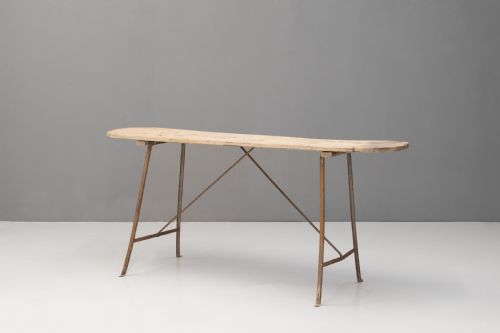
- A table consisting of two or more supports connected by a horizontal beam. This construction offers robust stability for heavy timber tops.
Rustic Iron Side Table: Frequently Asked Questions
How do I clean an iron base without damaging the finish?
Dust the metal regularly with a dry cloth to remove loose particles. Apply a light coat of clear paste wax if the iron requires protection against moisture.
Avoid harsh chemical cleaners or abrasive scouring pads that strip original patination and paint layers. Gentle maintenance preserves the historic surface accumulated over decades of use.
Are these tables suitable for outdoor use?
Many pieces originate as garden or cafe furniture designed to withstand outdoor conditions. Wrought and cast iron elements naturally endure the elements when placed on patios or terraces.
Wooden or marble tops require more caution regarding prolonged exposure to rain and frost. Storing vulnerable tables indoors during winter months prevents timber warping and stone degradation.
How can I tell an older iron table from a modern reproduction?
Examine the metal joints for signs of hand-forging, riveting, or traditional casting flaws rather than uniform modern welding. Period pieces display genuine wear patterns and patination consistent with their stated era.
Check the timber or marble top for appropriate ageing, tool marks, and integration with the base. Authentic examples show a natural relationship between the support and the surface.