



Rustic Iron Lighting
Rustic iron lighting encompasses hand-forged chandeliers, floor lamps, and lanterns that bring period character and robust metalwork into a room.
Rustic Iron Lighting
Rustic iron lighting covers utilitarian and decorative metal fixtures designed for illumination, ranging from early rushlight holders to large chandeliers. When searching for rustic iron lighting, buyers encounter pieces spanning the eighteenth, nineteenth, and early twentieth centuries.
The selection on this page relies heavily on wrought iron constructions, often paired with glass, copper, or brass elements. Standard lamps, wall sconces, and hall lanterns dominate the current forms available to collectors.
Many examples draw on regional styles such as Arts and Crafts, Gothic Revival, and French country aesthetics. Blacksmith-made floor lamps and multi-branched chandeliers form the core of the items seen here.
How they were made
Makers shaped wrought iron manually at the forge, using heat and hammering to produce scrolls, twisted stems, and structural brackets. Blacksmiths incorporated functional mechanisms like spring actions and adjustable arms into rushlight holders and floor lamps.
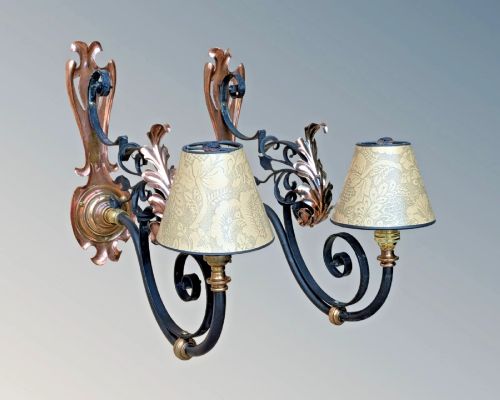
Glass panels, crystal drops, and coloured fruit ornaments frequently complement the metal frameworks in lanterns and chandeliers. Secondary materials such as copper and brass appear alongside iron to form detailed wall lights and hanging lamps.
Rustic Iron Lighting Retail Price Guide 2026
Typical asking prices for rustic iron lighting among the pieces listed under this phrase on Sellingantiques today, from the lower quarter to the upper quarter. They describe what is for sale here now, not the wider market.
A nineteenth-century iron chandelier comes hung with coloured crystal fruits, grapes, apples, and pears.
What varies in quality
The standard of forging dictates the primary quality of these pieces, separating simple utilitarian production from refined artistic execution. Skill in handling the metal determines whether scrollwork and joints appear fluid and balanced.
Materials integrated with the iron, such as coloured crystal or leaded glass panels, influence the overall character and visual weight of a fixture. Original components and intact mechanisms hold greater weight than later replacements.
Heals
The Rustic Iron Lighting Glossary
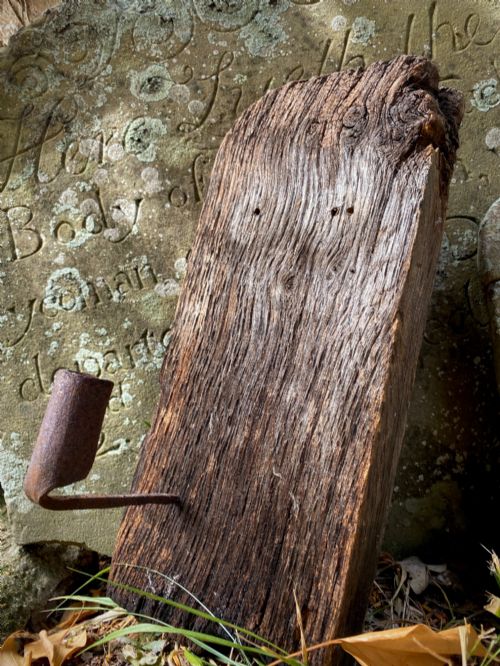
- Rushlight holder
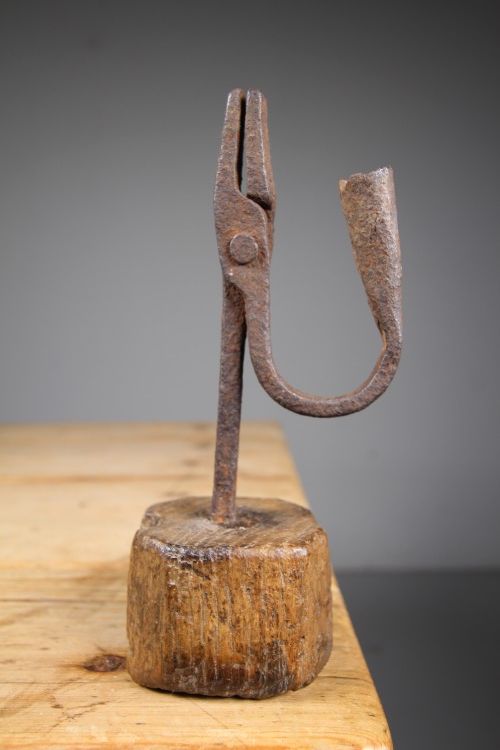
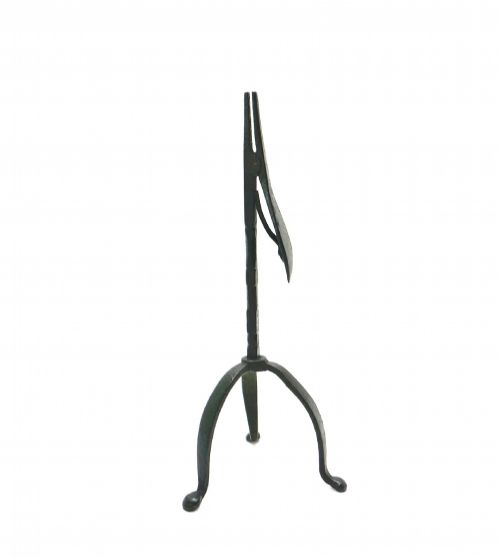
- A spring-action device designed to grip a dried rush dipped in fat for illumination. These small iron items often sit on tripod bases.
- Chandelier
- A branched hanging fixture suspended from the ceiling to hold multiple candles or light sources. Examples here incorporate iron frames hung with crystal fruits.
- Standard lamp
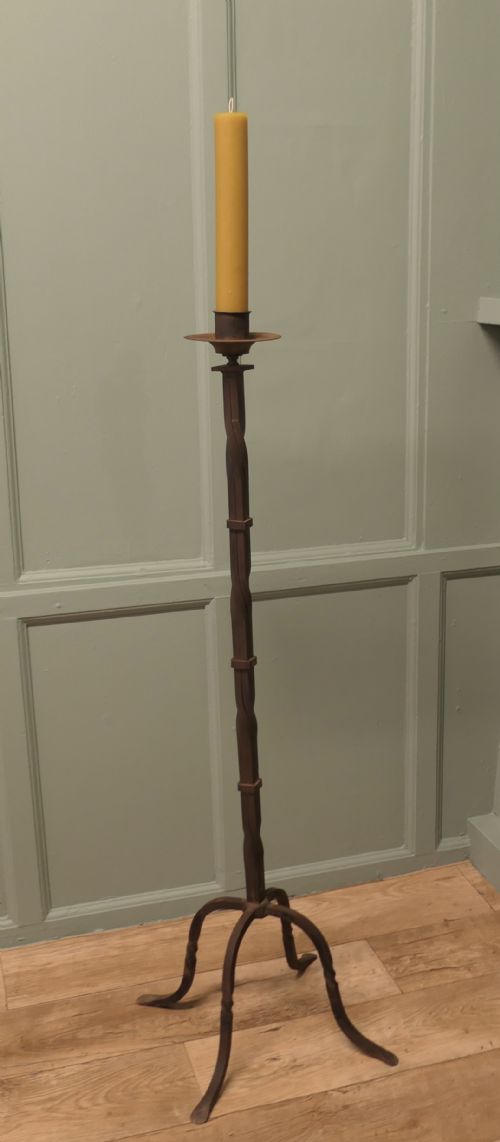
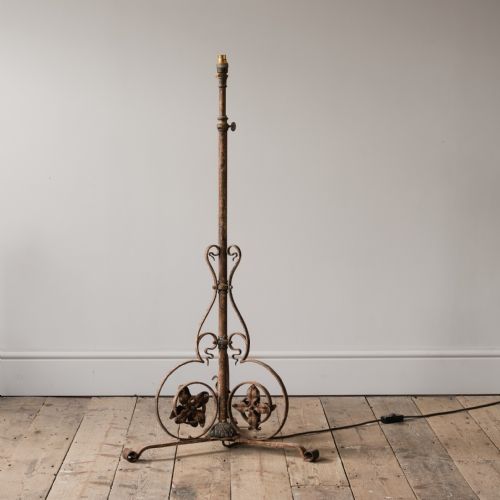
- A tall floor-standing lighting fixture with an upright shaft, sometimes featuring an adjustable arm. Blacksmiths forged these from wrought iron during the nineteenth century.
- Hall lantern
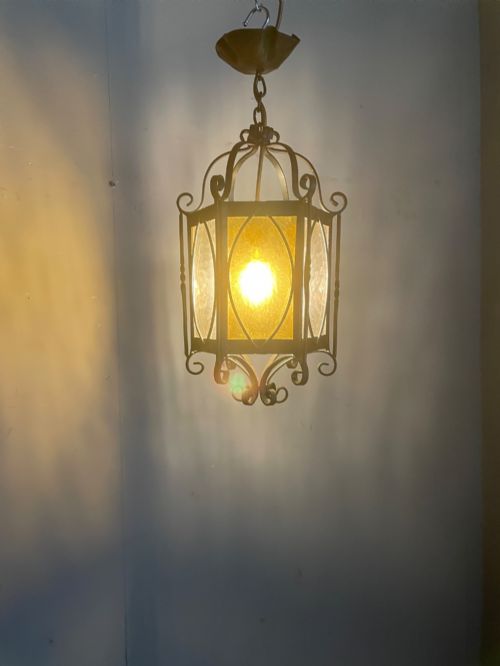
- An enclosed hanging light designed for corridors or entrance spaces. They frequently combine iron frameworks with glass panels and decorative copper elements.
Rustic Iron Lighting: Frequently Asked Questions
How do I date a wrought iron floor lamp?
Dating relies on construction marks, tool traces, and the style of the metalwork, such as nineteenth-century blacksmith techniques.
Examining the adjustment mechanisms and base formation helps distinguish earlier handmade pieces from later reproductions.
Were these lanterns meant for indoor or outdoor use?
Many hall lanterns and wall lights served interior spaces like hallways and porches, depending on their weather resistance.
Glazed hexagonal designs and enclosed bracket lights provided protection for candles against drafts in high-traffic areas.
What is a rushlight holder used for?
Rushnip devices clamped dried rushes dipped in animal fat to provide basic household illumination before cheap candles became widespread.
These small iron implements typically sat on tables or stood on tripod bases near seating areas.
How do Arts and Crafts iron lights differ?
Arts and Crafts pieces emphasise visible hand-forging, honest construction, and simpler structural forms without excessive ornamentation.
They often date around 1900 to 1910, reflecting a movement towards traditional blacksmithing skills.