



Rustic Horse Artwork
Rustic horse artwork captures agricultural labour and rural transport in oil and watercolour.
Rustic Horse Artwork
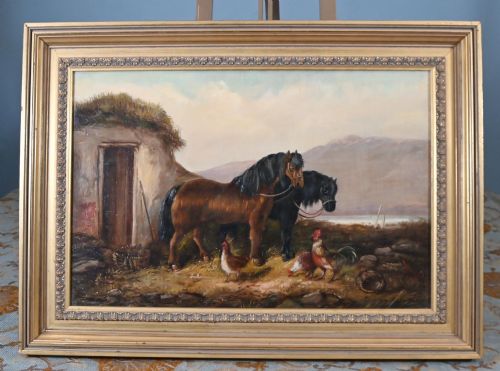
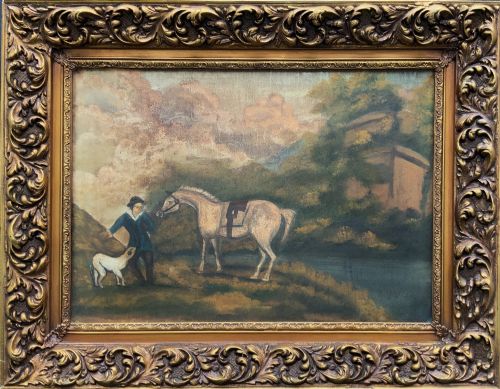
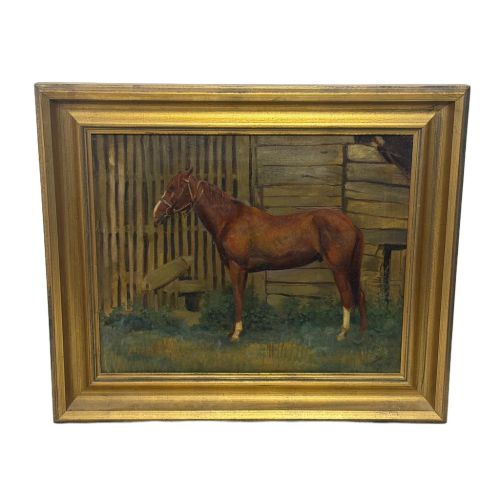
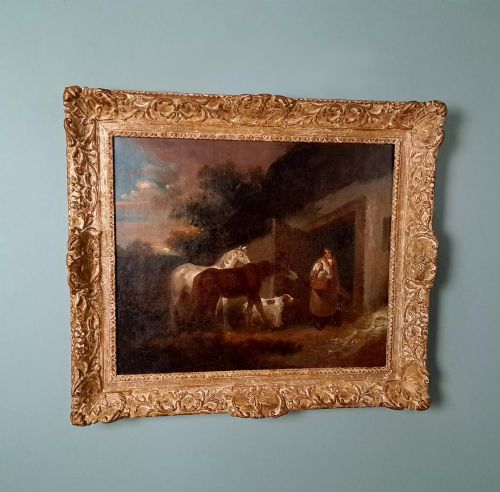
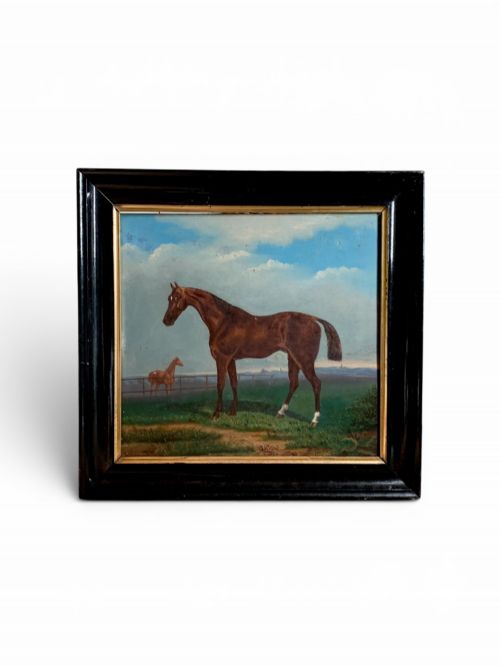
Rustic horse artwork encompasses oil paintings and watercolours depicting horses in agricultural, pastoral and village settings. These pieces document rural working life through depictions of cart horses, farmyard scenes and stable interiors.
The selections span from the Georgian period through the nineteenth century and into the early twentieth century. Most examples present traditional British and French rural subjects executed on canvas, panel, board or paper.
Materials and techniques
Artists utilised oil paint and watercolour as the primary media to render these rural subjects. Canvases, wooden panels and watercolour paper provide the foundation for works finished with gilt wood framing.
Techniques range from detailed academic brushwork to looser impressionistic strokes. Painters applied pigments directly to boards and canvases to capture the light and atmosphere of farmyards and country lanes.
Rustic Horse Artwork Retail Price Guide 2026
Typical asking prices for rustic horse artwork among the pieces listed under this phrase on Sellingantiques today, from the lower quarter to the upper quarter. They describe what is for sale here now, not the wider market.
Several pieces faithfully preserve the exact moment a farmer leads horses homewards or hounds attend a pony.
Factors of quality
Quality rests upon the handling of anatomy and movement in the horses, alongside the rendering of natural light. Stronger compositions demonstrate careful observation of farmyard labour and landscape perspective.
The integrity of the original support, whether canvas, panel or paper, alongside the preservation of the paint surface, influences the standing of a piece. Framing choices and the clarity of attribution further distinguish individual works.
William Joseph Shayer Senior·George Morland·James William Booth·John Frederick Herring·William Manners·John Baragwanath King·George Soper
The Rustic Horse Artwork Glossary
- Oil painting
- A work created using pigments bound in a drying oil medium, typically applied to canvas, wood panel or board. This technique allows for rich colour depth and textural buildup.
- Watercolour
- A painting method where fine pigments are suspended in a water-based solution, usually worked on paper. It produces transparent washes and delicate tonal gradations.
- Gilt wood
- Wood that has been treated with a thin layer of gold leaf or metallic gilt finish. Such frames are common on period paintings.
- Panel
- A solid flat piece of wood used as a rigid painting support prior to or alongside the widespread adoption of canvas.
- Pastoral
- A genre of art depicting rural life, agriculture and idealized country scenes. These works focus on the harmony of human labour, animals and landscape.
Rustic Horse Artwork: Frequently Asked Questions
What periods do these paintings date from?
The available pieces primarily date from the Georgian era through the nineteenth century up to the nineteen-thirties. This span covers shifts from traditional rural realism towards British and French impressionist approaches.
Examination of the support materials, framing styles and signatures helps contextualise the date of execution. Most works align with established nineteenth-century pastoral traditions.
How were these artworks displayed originally?
Period works were typically framed in gilt wood and hung in domestic interiors or country houses. They reflected the owner's affinity for rural life, agriculture and equine subjects.
Today, these framed oils and watercolours suit traditional studies, living rooms or hallways. Their framing often preserves nineteenth-century mounting conventions.
What subjects appear in these scenes?
Common subjects include shire horses working in hay fields, cart horses being unyoked and stable interiors. Scenes often feature farmyards, country inns and gipsy encampments.
The works document historical agricultural practices involving horses before mechanisation. Figures of farm workers, attendants and handlers frequently accompany the animals.
How do I distinguish oil from watercolour?
Oil paintings utilise heavy pigments on canvas, panel or board with visible brush texture and opacity. Watercolours are executed on paper, displaying transparent washes and lighter fluid applications.
Oils generally require protective varnish layers, whereas watercolours are mounted behind glass. The underlying support serves as a primary indicator of the medium.