



Rustic Genre Scene Painting
These rustic genre scene painting works capture everyday domestic and rural life, offering a charming window into past centuries that collectors cherish for their narrative warmth.
Rustic Genre Scene Painting
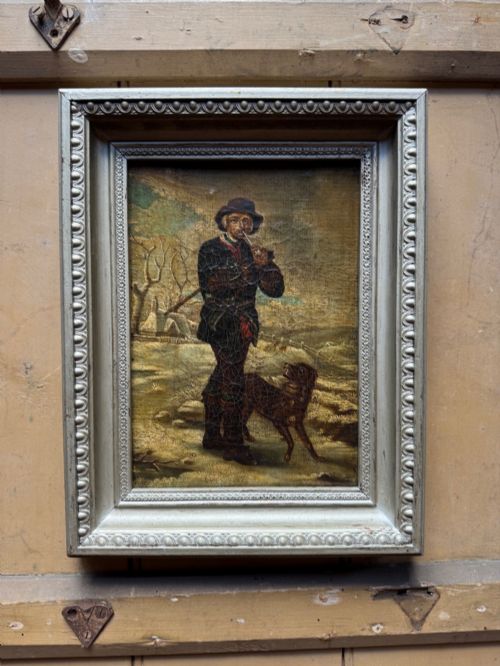
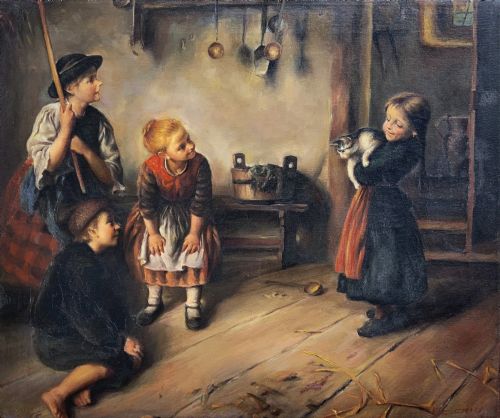
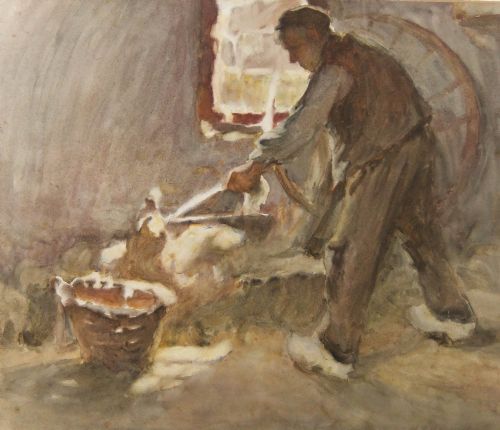
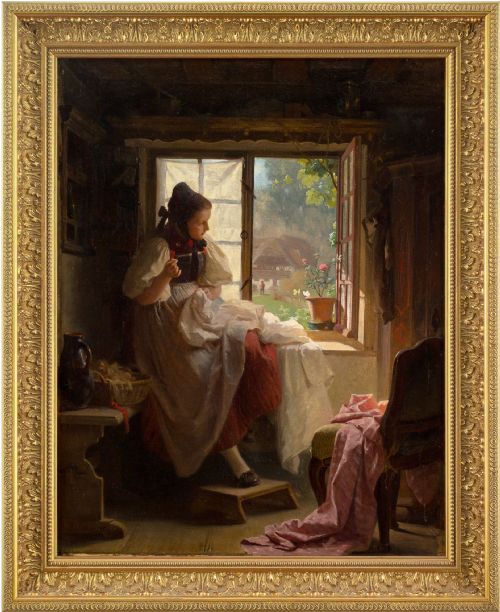
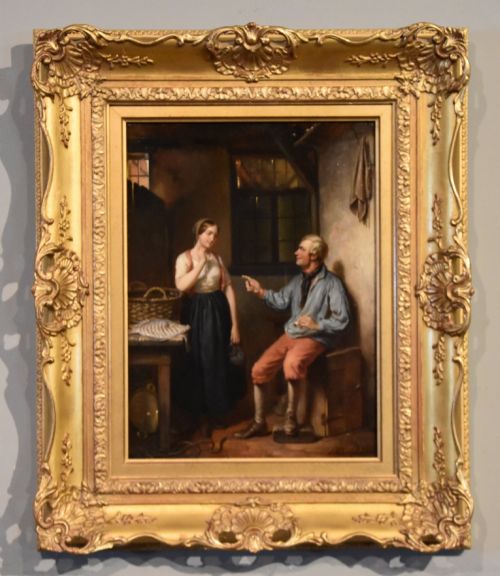
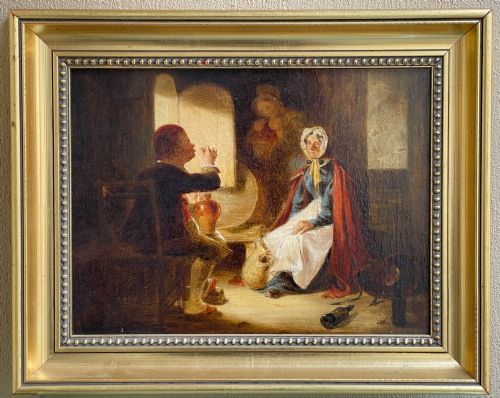
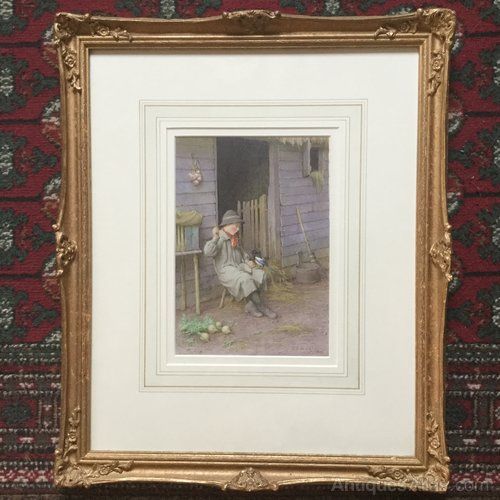
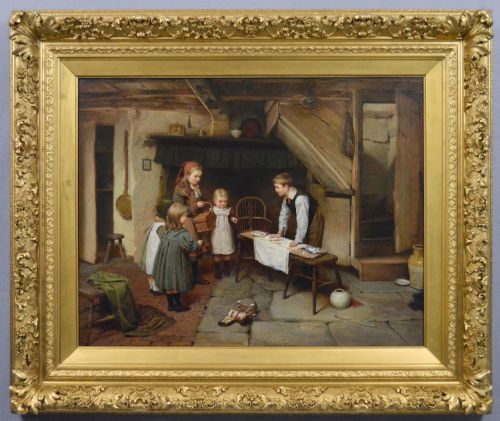
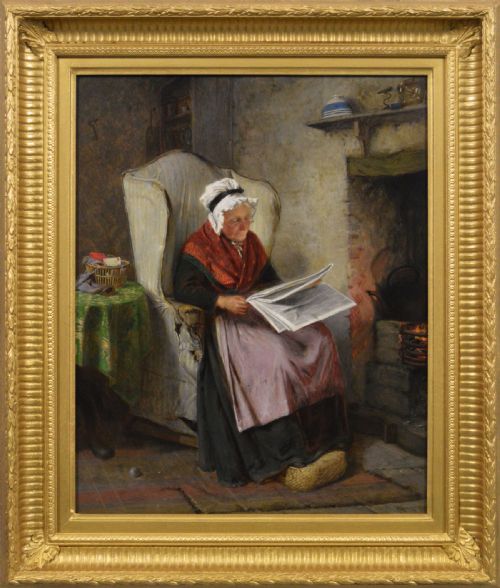
A rustic genre scene painting depicts everyday domestic and rural subjects, such as cottage interiors, blacksmith shops, tavern scenes, and farmyards. These works capture moments in the lives of ordinary people, often focusing on children, labourers, and women engaged in traditional tasks like spinning wool or sewing.
The pieces available originate predominantly from the nineteenth century and the Victorian period, though examples stretch from the Georgian era into the mid-twentieth century. Buyers frequently encounter framed watercolours, lithographs, and oil paintings on canvas, board, or panel.
Subjects range from British country life to French village scenes and Dutch interiors. Many works portray specific regional settings, including Highland cottages and Welsh domestic spaces.
Materials and Technique
Artists created these works primarily using oil paint on canvas, wood panels, or boards, alongside watercolour and paper for works on paper. Supports were often prepared with gesso before pigment was applied.
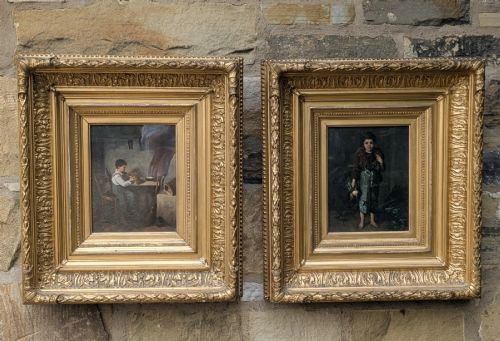
Finished pictures were typically housed in decorative gilt wood or giltwood frames that enhanced the visual depth of the domestic and rural subjects.
Several cottages recorded in these scenes appear suspiciously well-swept for busy blacksmiths and spinning maids.
Quality and Execution
Quality rests in the handling of light, expression, and narrative detail within the domestic or rural setting. Superior pieces demonstrate confident brushwork and precise draughtsmanship that bring figures and interior textures to life.
The strength of composition and the subtlety of colour balancing distinguish exceptional works by named artists from simpler, unsigned school productions.
Henry Silkstone Hopwood·Max Kaltenmoser·Jacob Akkersdijk·Miles Birkett Foster·Charles Edward Wilson·Harry Brooker·Haynes King·James Kyd·Henry John Yeend King·Thomas Couture·John Henry Dell·David Woodlock·Théophile Emmanuel Duverger·Henry Spernon Tozer·Gustav Goemans·Edward Killingworth Johnson·Robert McGregor·George Morland·Henry Charles Bryant·James Ward·Alfred Provis·Jonathan Pratt
The Rustic Genre Scene Painting Glossary
- Genre painting
- Painting that depicts scenes from everyday life, typically involving ordinary people in domestic or rural settings. This style focuses on narrative and human activity rather than formal portraiture or grand history.
- Gesso
- A plaster-like mixture used as a base coat on wood panels or canvases to prepare the surface for painting. It provides a smooth, stable ground for oil pigments.
- Giltwood
- Wood that has been coated with a thin layer of gold leaf or gilt. It is commonly found on the ornate frames enclosing 19th-century paintings.
- Lithograph
- A printmaking technique based on the chemical repulsion of oil and water. Artists used this method to reproduce original painted compositions for wider circulation.
Rustic Genre Scene Painting: Frequently Asked Questions
What subjects appear in these paintings?
These works depict everyday scenes of country and domestic life. Common subjects include cottage interiors, farmyards, blacksmiths at work, and families gathered by firesides.
Figures typically include children playing, women spinning wool or sewing, and rural labourers. The focus remains squarely on the quiet routines of past rural communities.
How do I date a 19th-century painting?
Dating relies on stylistic clues, framing methods, and the physical support material. Nineteenth-century works often utilise canvas stretched over wooden frames or wooden panels stamped by artists' suppliers.
Signatures, artist biographical dates, and framing styles also provide clear chronological markers. Many works are explicitly attributed to Victorian or Georgian periods through documentation.
Where should I hang these artworks?
These paintings suit traditional living spaces, studies, and dining rooms where their warm domestic narratives can be appreciated up close. Smaller watercolours and panels work well in intimate alcoves or grouped on a gallery wall.
Placement should avoid direct sunlight to protect pigments on canvas and paper from fading over time. Pairing them with period gilt frames enhances their traditional aesthetic.
How do oil and watercolour differ here?
Oil paintings on canvas or panel offer rich, deep textures and layered colour blending suited to dim cottage interiors and dramatic lighting. Watercolours on paper provide a lighter, more luminous quality often used for airy pastoral scenes.
Both mediums were popular for genre subjects throughout the nineteenth century. Oils generally require heavier giltwood framing, while watercolours are preserved under glass.