



Rustic English Landscape Painting
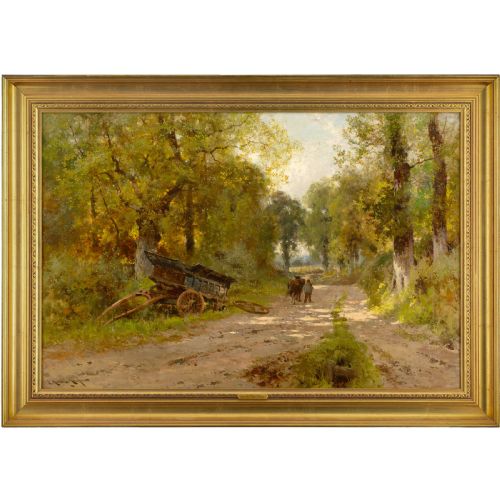
A rustic english landscape painting captures the pastoral charm of the countryside through traditional oils and watercolours.
Rustic English Landscape Painting
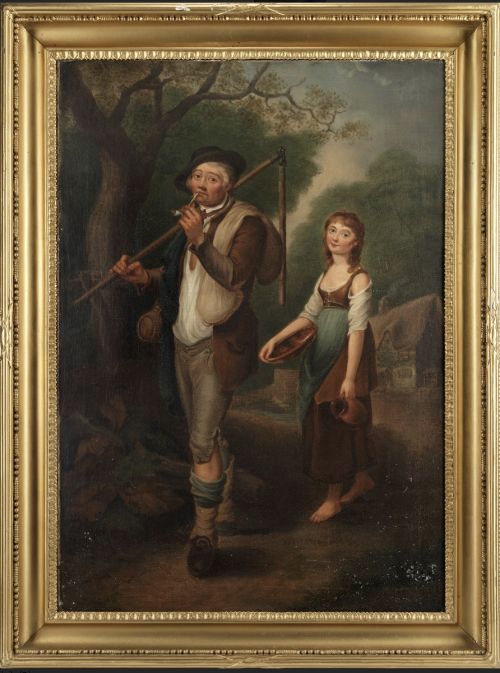
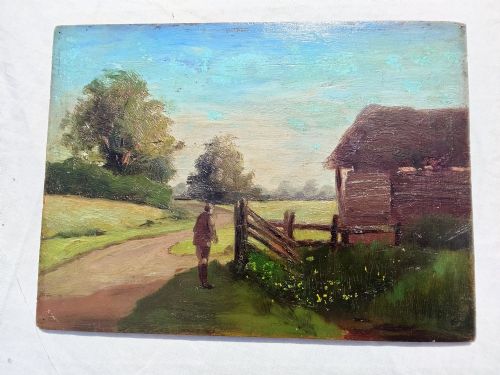
A rustic english landscape painting depicts rural scenes, farming life, and countryside cottages rooted in British traditions. You will most frequently encounter nineteenth-century works alongside early twentieth-century examples on panel, canvas, or paper.
The selection ranges from detailed watercolours of Devon and Somerset villages to large oil paintings of harvest time and farm yards. These artworks record the changing rural topography across Georgian, Victorian, and Edwardian periods.
How they were made
Artists painted these rural views primarily using oil paint on canvas or wooden board, as well as watercolour and gouache on paper. Canvases were occasionally laid onto board for extra stability during the nineteenth century.
Framing typically involved wood and gold leaf to complement the painted composition. Works often relied on layered pigments to build atmospheric depth in skies and pastoral foliage.
Listings span the eighteenth, nineteenth, and twentieth centuries, utilising oil paint, watercolour, wood, and gold leaf.
What varies in quality
The strength of the composition and the artist's ability to render light and atmosphere separate standard topographical records from superior works. Finer paintings demonstrate confident brushwork and a coherent sense of space within the English countryside.
The handling of figures and animals integrated into the landscape also dictates the standing of a piece. Well-executed details in architecture and foliage reflect the skill of established practitioners within the British School.
Thomas Barker of Bath·George Morland·Miles Birkett Foster·Henry John Yeend King·John Atkinson
The Rustic English Landscape Painting Glossary
- Oil on Canvas
- A painting medium where pigments bound in oil are applied to a stretched woven fabric support. This technique allowed artists to achieve rich textures and deep colour blending.
- Watercolour
- A medium consisting of water-soluble pigments applied to paper. It produces translucent washes that create luminous effects, particularly favoured for topographical and rural views.
- Gouache
- An opaque water-based paint that includes a white pigment filler, giving it a heavier consistency than standard watercolour. It allows for solid areas of colour and sharp highlights.
- British School
- A loose grouping of artists working within Britain across various centuries rather than a formal academy. It encompasses generations of landscape and genre painters sharing regional traditions.
- Pastoral
- An artistic style or subject matter idealising rural life, shepherds, and farming communities. These scenes present a harmonious view of the English countryside.
Rustic English Landscape Painting: Frequently Asked Questions
What subjects appear in these paintings?
These works primarily feature cottages, farm yards, livestock, and local villagers engaged in daily rural labour.
Scenes frequently capture specific English counties, rivers, mills, and coastal villages during harvest or summer months.
How do I date a landscape painting?
Dating relies on stylistic markers, framing techniques, and the materials used such as canvas types and wooden panels.
Signatures, inscriptions on the reverse, and historical clothing styles worn by figures also help narrow the period.
Are these works painted outdoors?
Many artists sketched preliminary watercolours or pencil studies outdoors in the countryside before completing the final oil paintings in their studios.
By the Victorian era, plein-air painting became more common, allowing artists to capture natural light directly on site.
How should I display watercolour art?
Watercolours require framing behind glass with conservation-grade mounts to protect the paper from dust and physical damage.
Positioning them away from direct sunlight prevents the delicate pigments from fading over time.