
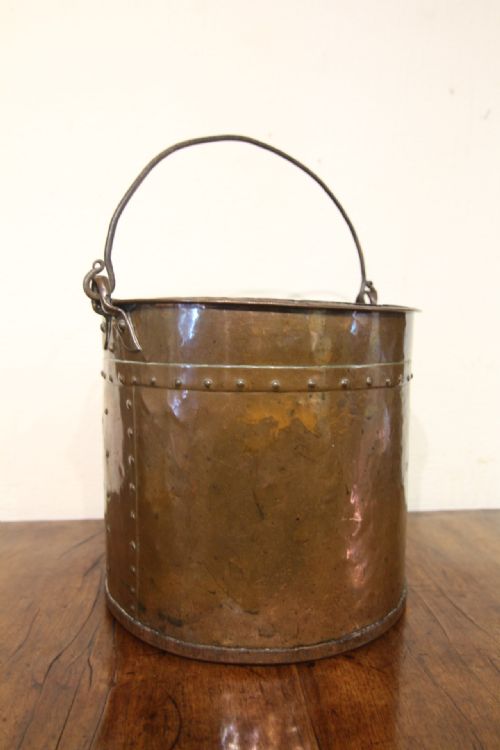


Rustic Copper Planter Pot
A rustic copper planter pot brings honest texture and warmth to a room, functioning equally well for greenery or logs.
Rustic Copper Planter Pot
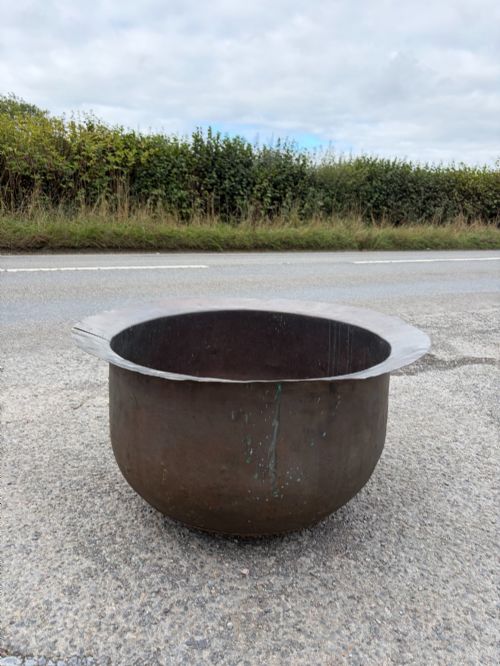
A rustic copper planter pot encompasses heavy metal vessels originally formed for domestic cooking, washing, or fuel storage, now repurposed for horticulture and interior display. These pieces range from large cauldrons and boiling pots to dedicated log bins and jardiniere vessels.
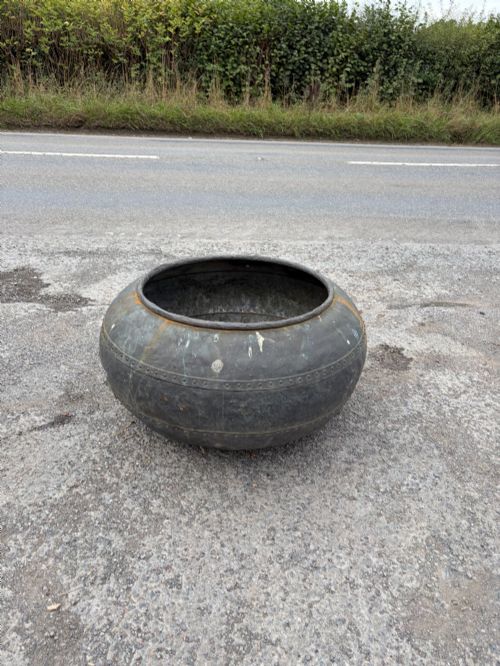
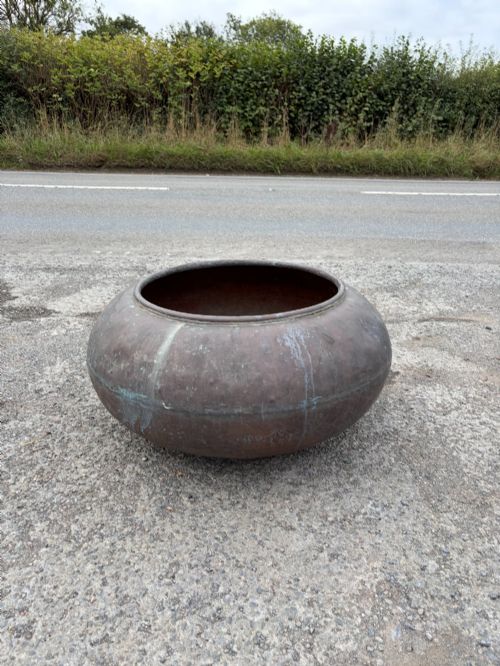
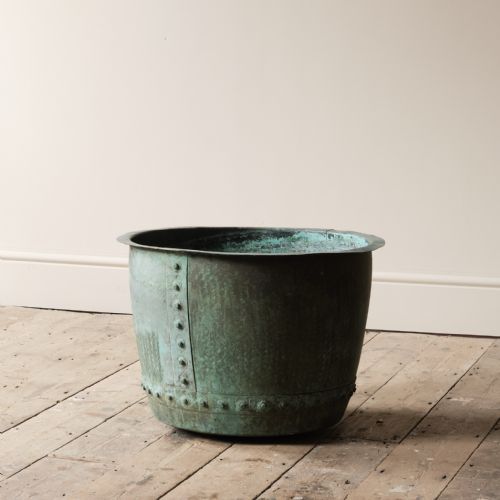
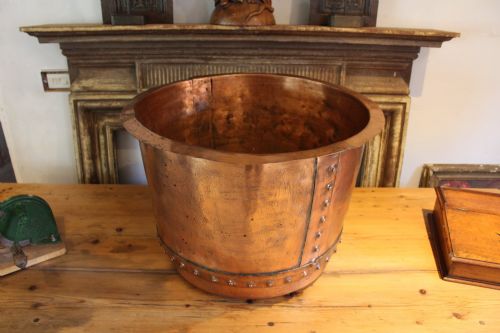
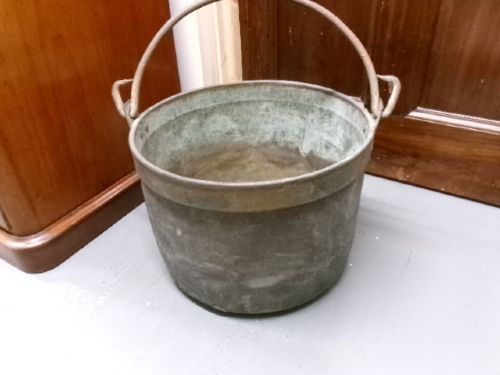
The version most commonly met on this page is a large nineteenth century copper pot featuring riveted seams, often fitted with a wrought iron swing handle or brass mounts. Many examples show dual utility as both garden planters and fireside log baskets.
Origins stretch across Victorian British utilitarian workshops and French country kitchens, spanning styles from Arts and Crafts to rustic farmhouse and industrial. The forms remain robust and functional, shaped by their original demanding household roles.
How they were made
Makers formed these vessels predominantly from hammered sheet copper, joining seams with durable metal rivets to withstand heavy loads of water, fuel, or earth. Iron and brass provided sturdy handles, rims, and swing Bails, while occasional examples incorporated oak or wood elements.
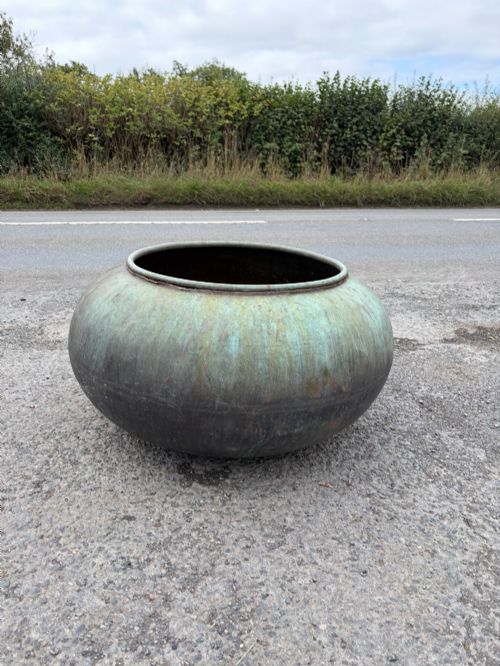
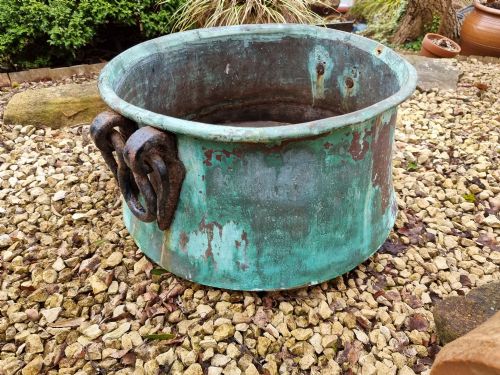
Surfaces developed natural patinas, verdigris finishes, and signs of fire exposure through decades of utilitarian use. Some later Arts and Crafts or Art Nouveau iterations display intentional surface embossing and decorative detailing.
Listings feature items spanning the nineteenth and early twentieth centuries, incorporating copper, iron, brass, wood, and oak.
What varies in quality
Quality rests in the integrity of the metalwork, the weight of the copper gauge, and the strength of the riveted joints. Thicker metal and robust iron handles indicate vessels built for heavy utility rather than light decorative work.
The character of the original patina and surface finish distinguishes standard examples from exceptional ones. Unpolished surfaces retaining authentic verdigris and historical wear hold greater visual depth than over-cleaned metal.
The Rustic Copper Planter Pot Glossary
- Cauldron
- A large metal pot with a rounded base, typically fitted with an iron swing handle for hanging over fires or resting on hearths. These deep vessels frequently serve as generous planters or log bins today.
- Verdigris
- The green patina that forms naturally on copper and brass through prolonged exposure to moisture and atmospheric elements. This chemical weathering provides distinct visual depth and age.
- Jardiniere
- An ornamental pot or stand designed to hold growing plants or flowers, often elevated or shaped for interior display. They appear in materials ranging from pure copper to oak-banded metal.
- Riveted
- Joined together using metal bolts hammered flat at the ends, creating secure, visible overlapping seams. This technique ensured vessels could hold heavy weights without splitting.
- Swing Handle
- A movable arched metal handle attached to opposite sides of a pot or bucket, allowing the vessel to be lifted or tipped easily. They are commonly forged from wrought iron or brass.
Rustic Copper Planter Pot: Frequently Asked Questions
Can I use these pots outdoors?
These metal vessels handle outdoor garden environments effectively, given copper's natural durability against weather. Over time, exterior placement deepens the surface patina and encourages natural verdigris development.
Drainage should be considered when planting directly, or the vessel can simply act as a decorative cachepot for potted plants.
How do I clean a copper pot?
Gentle washing with warm soapy water removes surface dust without disturbing the historical patina. Abrasive cleaners strip away the aged character that collectors value.
Leaving the surface untouched preserves the genuine marks of nineteenth-century utility and weathering.
What is the difference between a log bin and a planter?
These terms often describe the same large vessels, as their robust proportions suit both fireside fuel storage and horticulture. Original cooking pots and cauldrons transitioned easily into these roles once retired from the kitchen.
Dimensions and handle placement determine how each piece sits in a modern room.
How do I date a copper vessel?
Dating relies on construction methods, particularly the style of riveted seams, handle attachments, and overall weight. Nineteenth-century examples often display hand-behammered surfaces and heavy wrought iron fittings.
Later Arts and Crafts or Art Nouveau pieces introduce more decorative embossing and refined finishes.