




Rustic Circular Table
A rustic circular table brings a grounded, utilitarian presence to a room, offering practical surface space rooted in traditional domestic forms.
Rustic Circular Table
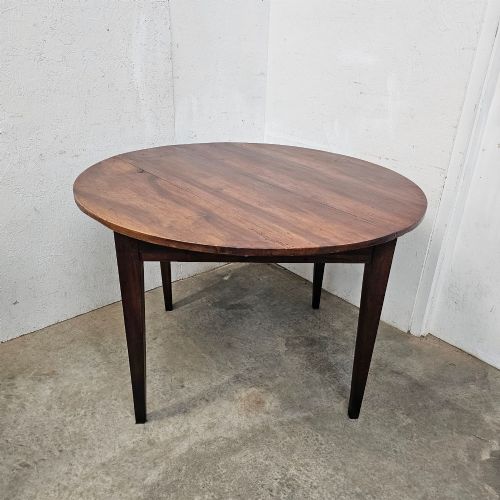
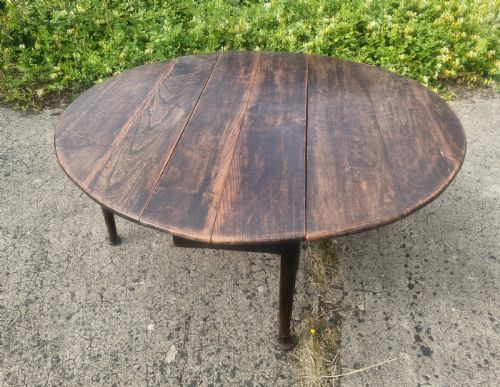
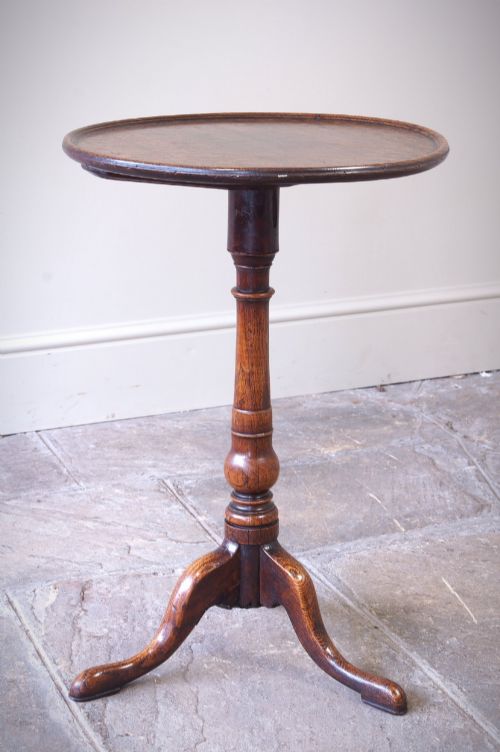
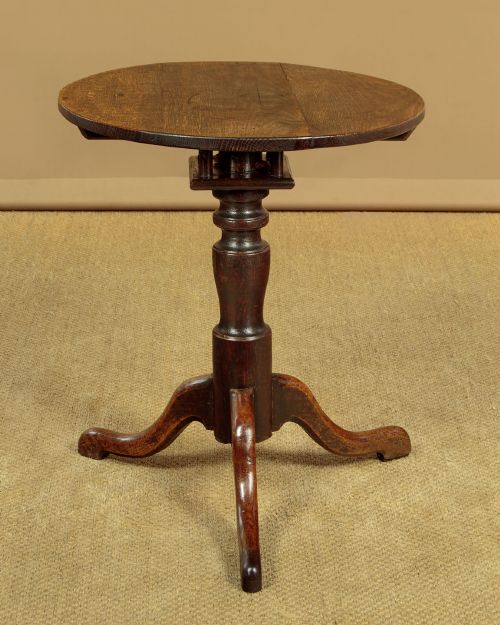
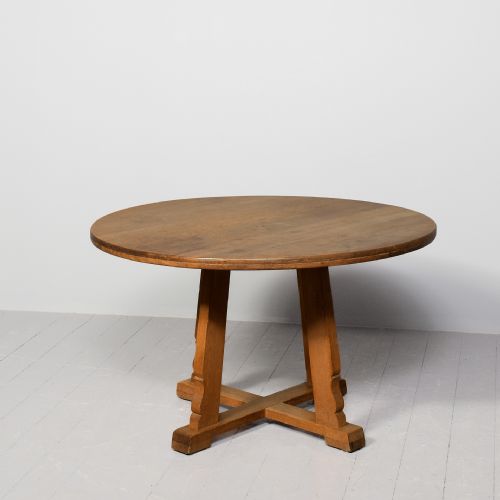
A rustic circular table encompasses domestic forms designed for dining, resting beside seating, or serving specific tasks around the home. The selection spans compact tripod wine tables and occasional pieces alongside larger folding vineyard tables and spacious country dining tables.
Examples appear across multiple periods, drawing on Georgian vernacular traditions, 19th-century French country workshops, and Victorian utility. These pieces rely on honest timber construction and simple circular tops intended for daily use rather than formal display.
Materials and construction
Makers utilised solid native timbers such as oak, elm, pine, cherry, and fruitwood, often joining thick planks to form stable circular tops. Tripod designs employ central pedestals with three legs, while folding versions incorporate hinged iron or timber mechanisms for portability.
Surfaces show varying finishes, from bare scrubbed grain and clear wax to historical painted layers and iron bracing. The structure prioritises utility, using straightforward pegged joints, turned pedestals, and sturdy aprons to bear weight.
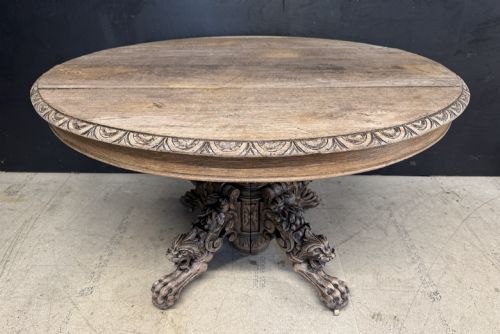
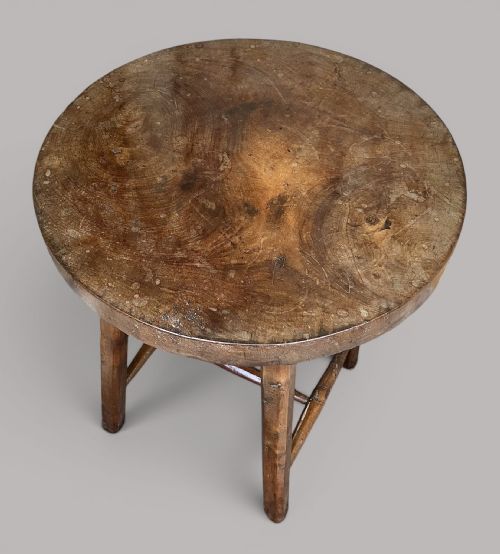
A Hungarian butcher block stands ready for heavy chopping, while a Black Forest linden wood table sports a base carved in the likeness of nature.
Judging quality and integrity
Quality rests in the integrity of the timber selection and the retention of original surfaces. Tables fashioned from dense hardwoods like oak or fruitwood with patinated, untouched finishes hold greater substance than those altered or stripped down harshly.
Proportion and stability dictate the merit of the piece. Well-balanced tripod bases, cleanly functioning folding mechanisms, and solid jointing distinguish superior provincial examples from simpler utilitarian items.
The Rustic Circular Table Glossary
- Tripod table
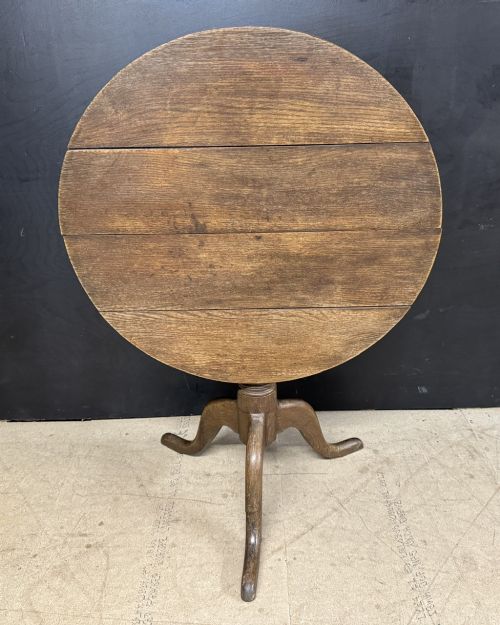
- A small occasional table supported by a central pillar and three legs. These tables appeared frequently in Georgian and Victorian interiors for tea or reading.
- Vendange table
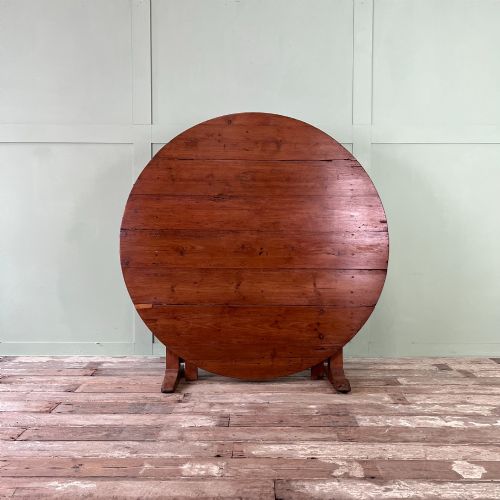
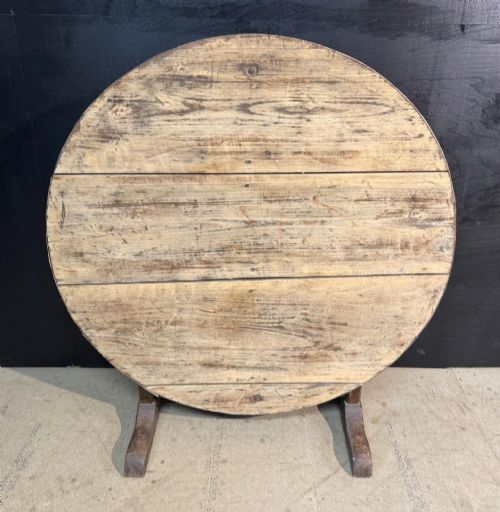
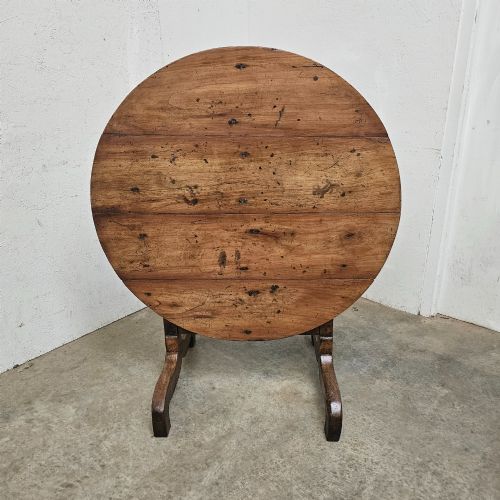
- A French folding table traditionally utilised during the grape harvest. They feature circular wooden tops and collapsible bases designed for easy storage.
- Cricket table
- A small, light table with three legs and a circular top, originating from British vernacular traditions. The three-legged design remained stable on uneven flagstone floors.
- Tilt-top table
- A table equipped with a mechanism that allows the circular top to pivot vertically when not in use. This clever design saved valuable floor space in smaller rooms.
- Vernacular furniture
- Domestic pieces made by local craftspeople using regional materials without grand stylistic pretensions. These objects reflect the practical needs of rural households.
Rustic Circular Table: Frequently Asked Questions
How do I style a rustic round table?
Pair the piece with mismatched chairs or bench seating to maintain an informal, collected interior scheme. The circular top softens straight architectural lines in a dining space or sitting room.
Keep surface decoration simple with earthenware or ceramic vessels. Allow the natural grain and aged texture of the timber to remain the primary focus.
Were folding vineyard tables made outdoors?
French folding tables were designed for agricultural work and seasonal use during grape harvests. Their collapsible frames allowed workers to transport and store them efficiently between fields and barns.
Today, these versatile folding tables function equally well inside kitchens or on sheltered patios. Their portable nature makes them practical for flexible living spaces.
What is a cricket table used for?
Traditional cricket tables served as light, movable stands for holding candles, mugs, or books within reach. Their three-legged construction prevented wobbling on uneven historic floors.
In a modern home, they function effectively as compact bedside stands or side tables. Their modest footprint suits corners and tight spaces where larger furniture does not fit.
How can I tell an older pine table apart?
Examine the timber closely for hand-sawn board marks, pegged joints, and the characteristic mellowness of aged pine. Older tables often display surface wear, dings, and painted layers accumulated through decades of domestic service.
Inspect the underside of the top and the joints to understand how the maker secured the frame. Hand-forged iron nails or wooden pins typically indicate traditional construction methods.