
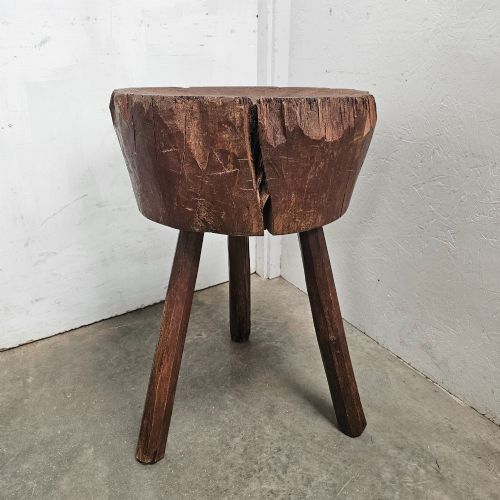

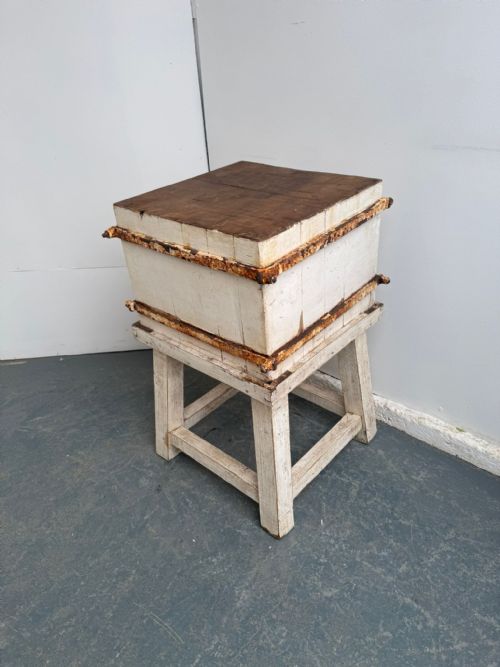
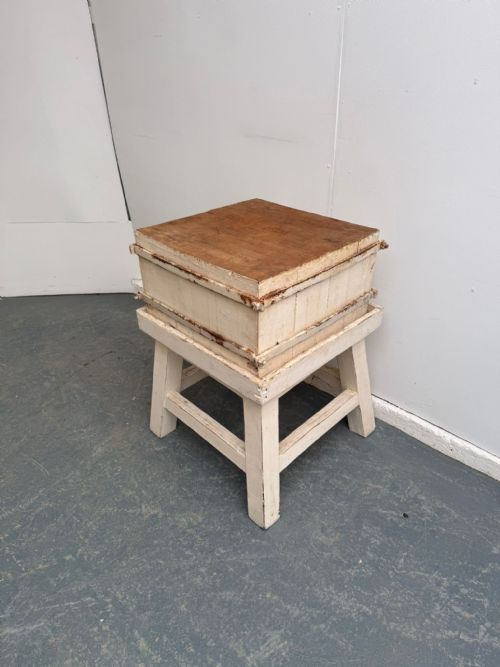


Rustic Chopping Block
A rustic chopping block brings sturdy utility and deep timber grain to a room, serving as a functional work surface with centuries of domestic history.
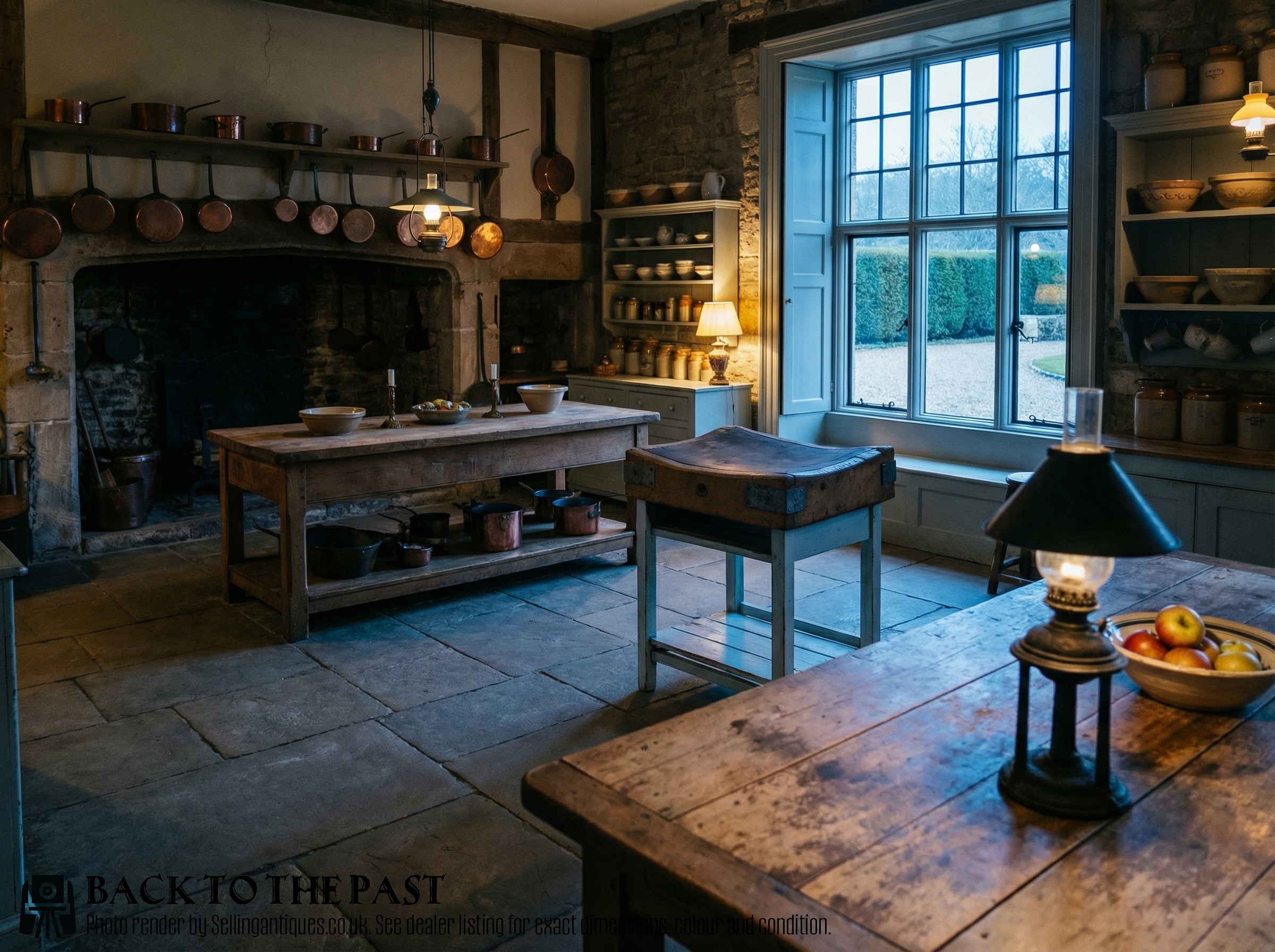
Rustic Chopping Block
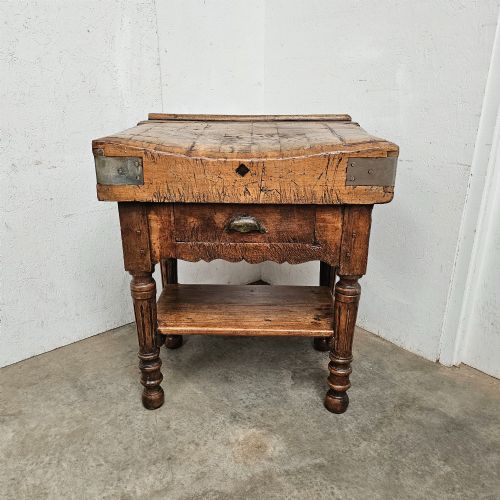
A rustic chopping block comprises heavy timber work surfaces designed originally for food preparation, butcher work, and kitchen tasks. Buyers examining this page will frequently encounter French provincial and Victorian examples shaped as kitchen islands, side tables, or game blocks.
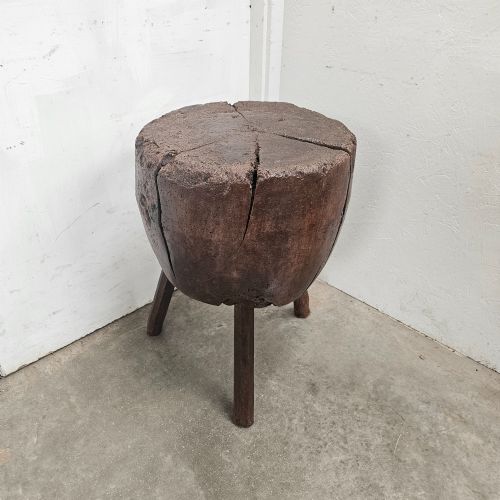
The objects span periods from the nineteenth century through to the mid twentieth century, utilising vernacular rural and industrial styles. Many pieces retain their original stands, bases, gnarled legs, or tripod supports.
Materials and construction
Construction relies upon dense hardwoods such as beech, oak, and elm, often shaped from solid tree trunks or thick timbers. Softwood and metal components appear occasionally in stands, legs, and structural reinforcements.
Makers fashioned these blocks to endure heavy daily use, employing robust joinery and solid timber blocks that absorbed the impact of cleavers and heavy knives over decades of service.
Listings feature timber varieties including beech, oak, elm, and softwood alongside iron and metal components.
Judging quality and character
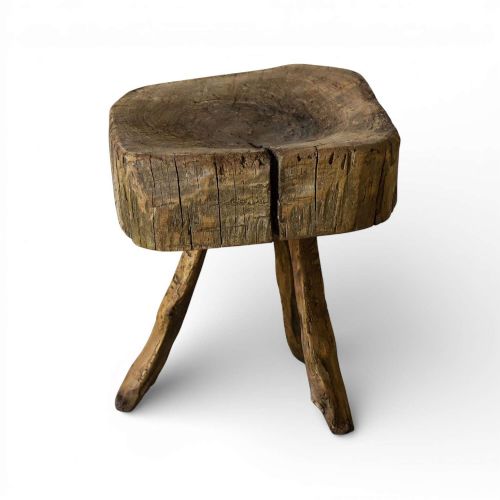
Quality rests in the depth and integrity of the timber block, the originality of the base or stand, and the honesty of the surface wear. Pieces retaining original gnarled legs or decorative painted surfaces command particular interest.
The distinction between ordinary utility items and superior examples lies in the sculptural presence of the wood grain and the harmony between the chopping surface and its support.
The Rustic Chopping Block Glossary
- Game block
- A specialised chopping block utilised historically for dressing game birds and small animals. These often feature thick end-grain timber tops.
- Butchers block
- A heavy utilitarian table with a thick wooden top designed for cutting meat. They form the primary category within these listings.
- Vernacular rural
- A style reflecting local building traditions and practical needs rather than academic architectural design. It defines the unpretentious character of many blocks.
- Tripod support
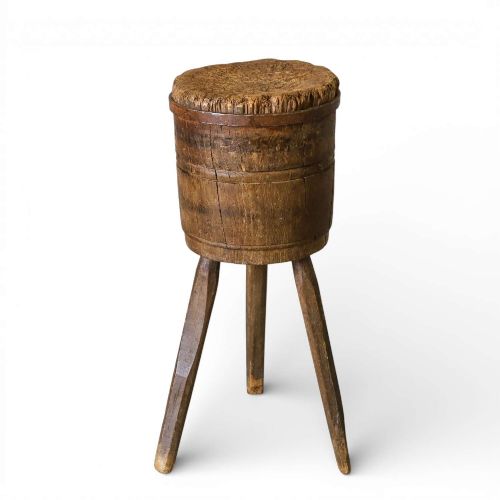
- A three-legged base providing stable footing on uneven floors. This configuration appears on several circular hardwood blocks.
- French provincial
- A regional style characterised by simple lines and practical construction found across French rural districts. It frequently informs the design of these kitchen tables.
Rustic Chopping Block: Frequently Asked Questions
How do I clean a vintage chopping block?
Maintain the wood by scraping away surface residue and wiping with a damp cloth and mild soap. Avoid soaking the timber in water to prevent splitting.
Regularly nourish the dry wood grain with food-safe mineral oil or beeswax to preserve the historical surface without sealing it permanently.
Can I use these blocks for food preparation?
Many buyers choose to utilise these solid timber surfaces for cooking and food preparation just as they were originally intended. The dense hardwoods provide a durable chopping area.
Ensure the surface is thoroughly cleaned and treated with food-safe oils before preparing fresh ingredients on older timber.
What is the difference between a game block and a standard block?
Game blocks were traditionally designated for dressing game and fowl, often retaining distinctive tree trunk sections or specialised proportions. Standard blocks tended to serve general kitchen and butchery tasks.
Both types share the same heavy timber construction and practical utility.
How do I date a nineteenth century block?
Dating relies upon examining tool marks, timber species, wear patterns, and the construction methods used on the base and legs. Nineteenth-century examples often display hand-hewn surfaces and period fixings.
Comparing the piece to documented examples from the same era helps establish an approximate period.