




Rustic Baker Table
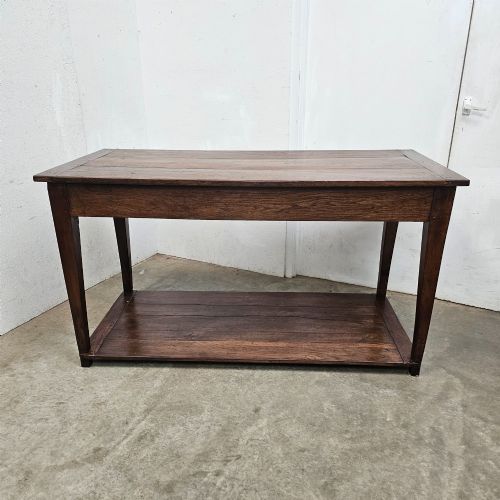
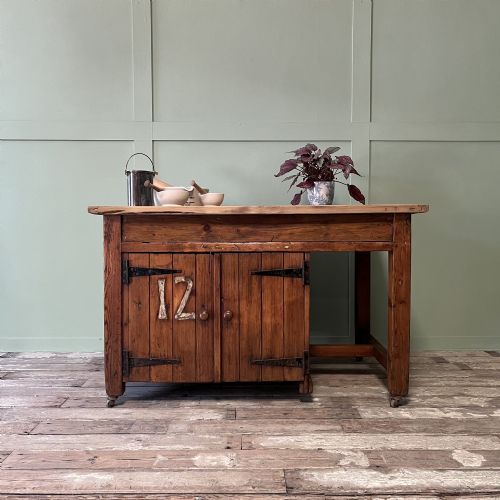
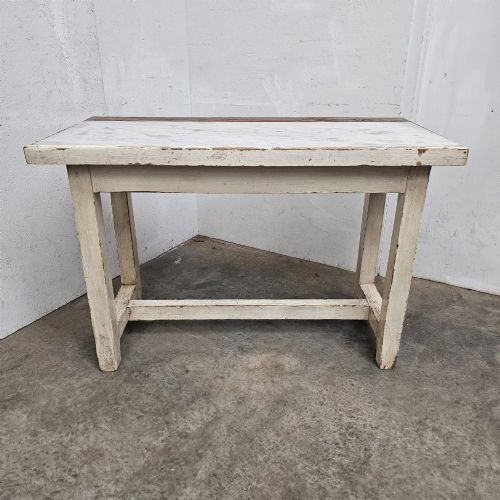
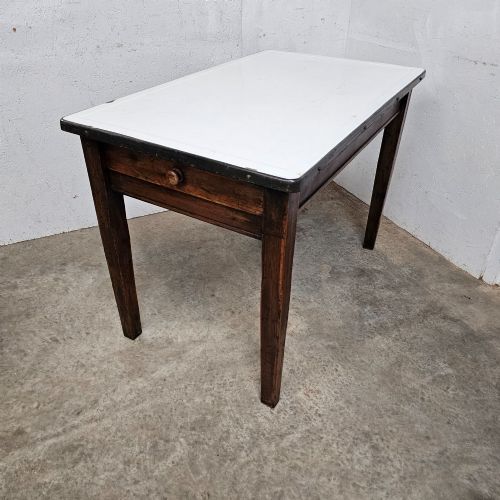
These rustic baker table examples bring honest utility to a kitchen, offering generous working surfaces shaped by generations of daily use.
Rustic Baker Table
A rustic baker table serves as a sturdy work surface designed for heavy culinary preparation, pastry making, and daily kitchen tasks. These practical pieces trace back to the nineteenth century and early twentieth century, spanning periods from the Victorian era to roughly nineteen hundred. You will frequently encounter forms categorized as prep tables, work tables, or kitchen tables that double as dining surfaces.
The aesthetic leans heavily into country house traditions, drawing on French provincial, Scandinavian country, and Victorian country styles. Examples on offer range from plain pine utility pieces to more finished French and English designs featuring practical drawers or lower tiers. Buyers select them to anchor a kitchen with authentic period character and functional workspace.
Materials and construction
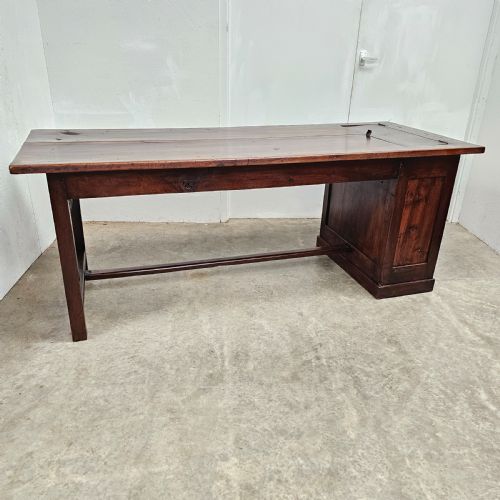
Makers relied on durable native timbers, constructing tops and frames predominantly from solid pine, oak, walnut, and cherry wood. Many nineteenth century examples utilise thick wood boards, occasionally configured as two-board tops to withstand heavy kneading and food preparation. Structural iron and brass fittings appear on select hardware, while sturdy legs provide necessary stability for vigorous daily work.
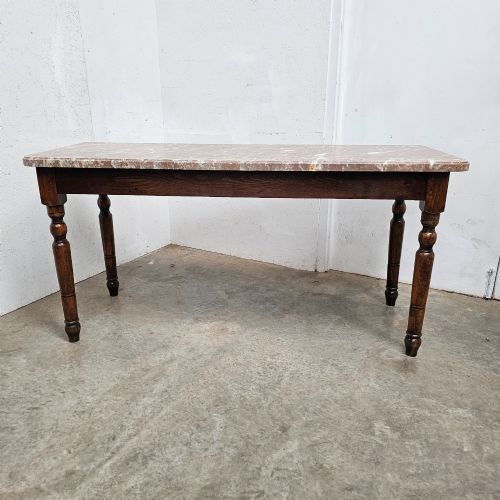
Surfaces frequently display the honest wear of past labour, sometimes finished with traditional paint such as Swedish Falu red or retaining scrubbed bare timber. Specialised variants incorporate inset marble surfaces, vitreous enamel panels, or lower open shelves designed to hold baking equipment and ingredients.
Bread prep tables occasionally retain flour dust settled deep within nineteenth-century oak grain.
Factors of quality
Quality rests upon the integrity of the timber, the thickness of the top boards, and the original proportion of the base. Superior examples exhibit sound joinery and retain their original painted or scrubbed surfaces rather than modern alterations. The inclusion of functional additions like deep drawers, lower tiers, or specialised marble and enamel inserts elevates a piece above standard utility items.
The Rustic Baker Table Glossary
- Prep table
- A utilitarian work table designed specifically for food preparation and culinary tasks rather than formal dining. These pieces usually feature unpretentious wooden or stone tops suited to heavy use.
- Two-board top
- A wide tabletop constructed from just two principal planks of timber joined together. This method indicates substantial older trees and stable historical construction.
- Vitreous enamel
- A glass-like coating fused to a metal base, providing a hygienic, easily cleaned surface resistant to moisture and heat. It appears on select nineteenth century work tables.
- Falu paint
- A traditional deep red or dark paint originating from copper mining waste in Sweden, frequently used to protect exterior and interior pine furniture. It yields a distinctive matte finish that ages gracefully.
Rustic Baker Table: Frequently Asked Questions
What is a rustic baker table used for?
These tables were originally built for heavy kitchen labour, specifically rolling dough, prepping bread, and general culinary assembly. Their robust construction and generous surfaces made them the central workstation in domestic and commercial kitchens.
Today, buyers utilise them as kitchen islands, prep counters, or everyday dining tables. They add both practical workspace and historical character to modern interior layouts.
How do I date a baker table?
Dating relies on examining the timber species, construction techniques, tool marks, and overall wear patterns visible on the structure. Nineteenth century pieces often show hand-planed surfaces, pegged joinery, and heavy structural timbers.
Stylistic clues such as turned legs, original paint finishes, or the presence of specific materials like vitreous enamel help narrow the period down to specific decades or eras like the Victorian period.
Are these tables suitable for daily kitchen use?
These pieces were originally constructed for heavy daily work, making them exceptionally durable for modern kitchens. Solid wood and stone tops handle regular domestic activity with ease.
Maintenance involves treating wooden surfaces with appropriate oils or waxes to protect against moisture. Embracing the existing patina ensures the historical character remains intact through daily use.
What is the difference between a prep table and a dining table?
Prep tables were designed strictly for utility and food preparation, often featuring lower shelf tiers, drawers, or specialised stone tops. Their proportions prioritize working height and stability over seated legroom.
Dining tables focus primarily on comfortable seating for meals, usually lacking the integrated storage drawers or inset marble surfaces common on dedicated work tables.