




Rust Red Carpet
A rust red carpet brings deep, earthy warmth to a room through traditional Persian and Turkmen weaves.
Rust Red Carpet
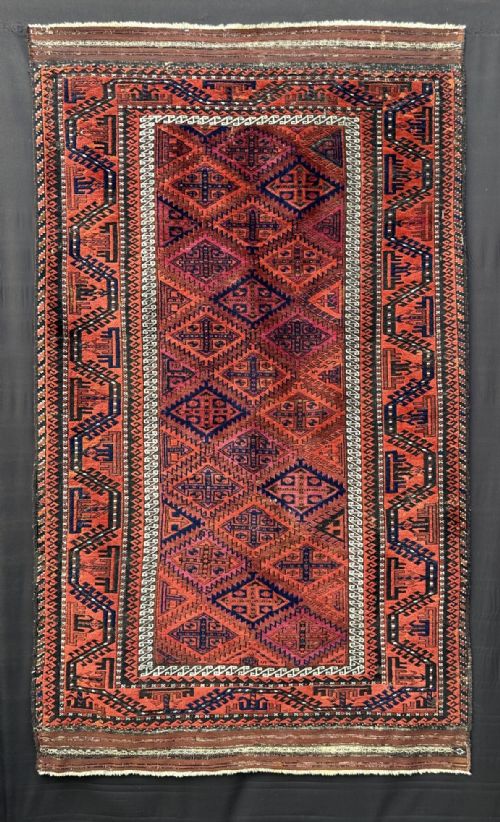
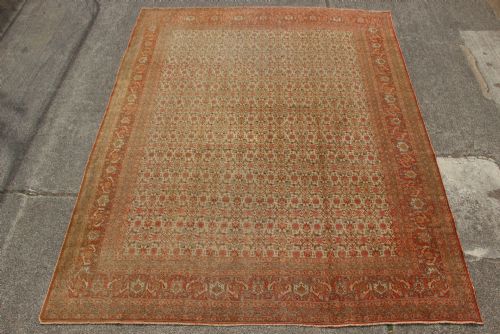
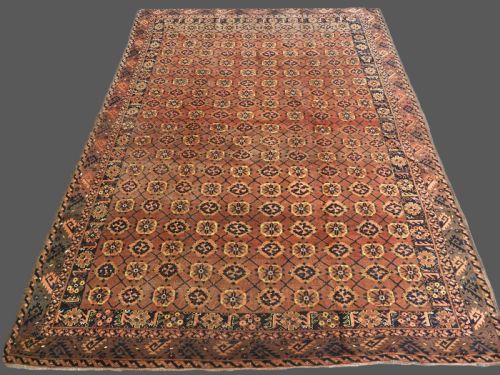
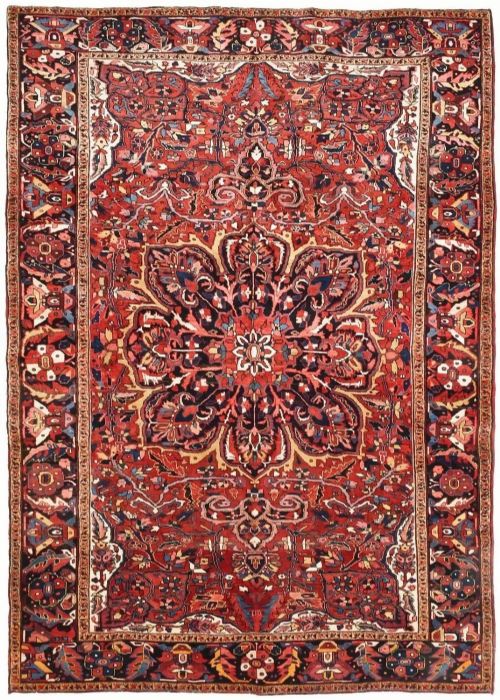
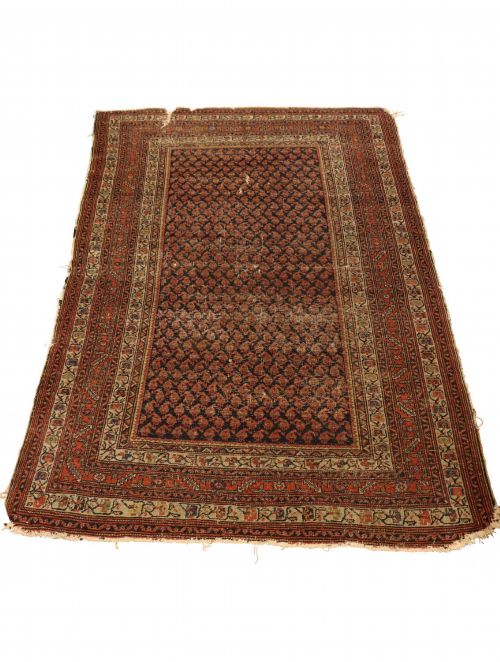
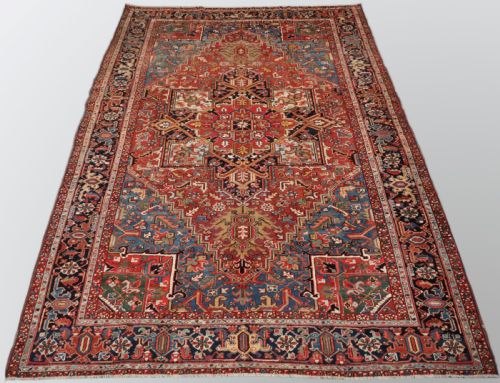
A rust red carpet search delivers hand-knotted textiles originating predominantly from Persian and Turkmen weaving traditions, spanning from the mid-nineteenth century to the early twentieth century. Buyers encounter large country house formats alongside smaller village rugs, runners, and smaller bag faces.
Heriz, Tabriz, and Mahal carpets form a significant portion of these listings, often displaying geometric medallions or all-over boteh and lattice motifs. Alongside these Persian pieces, tribal formats from Baluch, Ersari, and Tekke makers bring distinct regional patterns to the selection.
How they were made
Weavers utilised natural wool pile knotted onto cotton or wool foundations, occasionally incorporating goat hair for added durability along the edges. These materials provide the dense, resilient structure characteristic of traditional village and workshop production.
The characteristic red tones derive from traditional dyestuffs applied to hand-spun wool, yielding deep rust and terracotta shades that mature with age. Detailed patterns are executed through careful knotting, creating robust floor coverings and decorative wall panels.
Rust Red Carpet Retail Price Guide 2026
Typical asking prices for rust red carpet among the pieces listed under this phrase on Sellingantiques today, from the lower quarter to the upper quarter. They describe what is for sale here now, not the wider market.
The documented periods span from the mid-nineteenth century through the nineteen-thirties.
What varies in quality
Knot density and structural integrity distinguish finer city workshop productions from sturdier village and tribal weaves. Precision in drawing and the complexity of regional geometric or floral motifs separate standard pieces from exceptional examples.
The depth and nuance of the rust red wool pile influence the visual impact, as well-preserved natural dyes retain richer tonal variation across the surface. Completeness of original borders and the condition of the selvedges contribute to the overall standing of each carpet.
The Rust Red Carpet Glossary
- Boteh
- A stylised almond or paisley motif found across Persian and Turkmen weaving. This ancient symbol often repeats across the field of village rugs.
- Chuval
- A large storage bag face produced by Turkmen tribes. These square panels feature repeated gul medallions.
- Gul
- An octagonal or medallion-like design element used repeatedly in Turkmen carpet design. Each tribal group utilises distinct variations.
- Heriz
- A style of carpet originating from north-west Persia known for bold geometric medallions and robust construction. These large formats utilise durable wool on cotton foundations.
- Torba
- A small wall-hanging bag or storage sack made by Turkmen weavers. They frequently display intricate geometric lattice or ikat designs.
Rust Red Carpet: Frequently Asked Questions
How do I style a large rust red carpet?
A large rust red carpet anchors neutral or wood-heavy rooms by introducing deep earthy tones and rich geometric patterns. Position the piece centrally in a living area or dining space to let the border details remain visible.
Pair these carpets with simple furnishings that do not compete with the traditional motifs. The saturated red wool complements leather seating and natural timber floors.
What is the difference between Heriz and Tabriz carpets?
Heriz carpets typically feature bold geometric medallions and heavy, durable wool suited for heavy use. Their designs lean toward architectural structure and tribal influence.
Tabriz carpets generally showcase finer knotting with curvilinear floral patterns and intricate central medallions. These workshop pieces reflect urban Persian design traditions.
How do I care for an antique wool carpet?
Vacuum the carpet gently using a suction-only attachment without the beater bar to protect the wool pile. Avoid running the vacuum across exposed fringe ends.
Rotate the piece periodically to ensure even wear across high-traffic areas. Professional cleaning is recommended for antique textiles to preserve natural dyes.
Where were Baluch rugs made?
Baluch rugs were woven by nomadic and semi-nomadic tribes inhabiting the borderlands of Persia, Afghanistan, and Balochistan. These smaller formats often feature dark indigo and rust red wool palettes.
Weavers utilised portable looms to create prayer rugs and small tribal mats. Their distinctive designs incorporate traditional calyx lattice and geometric motifs.