






Rust Iron Planters
These rust iron planters bring heavy 19th-century garden urns and troughs to outdoor spaces, offering enduring form and weathered texture.
Rust Iron Planters
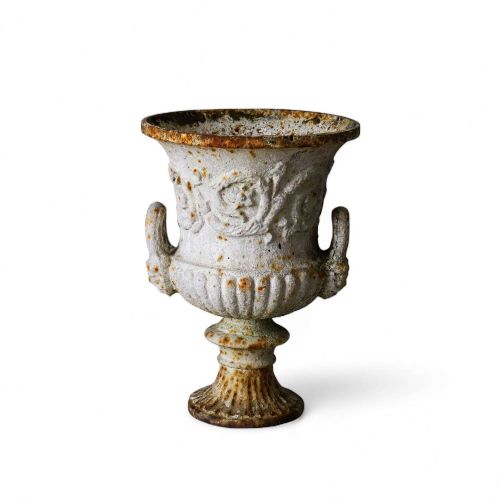
When buyers search for rust iron planters, they encounter robust outdoor vessels designed for gardens and terraces. These pieces encompass garden urns, campana forms, troughs, and occasional jardiniere vessels.
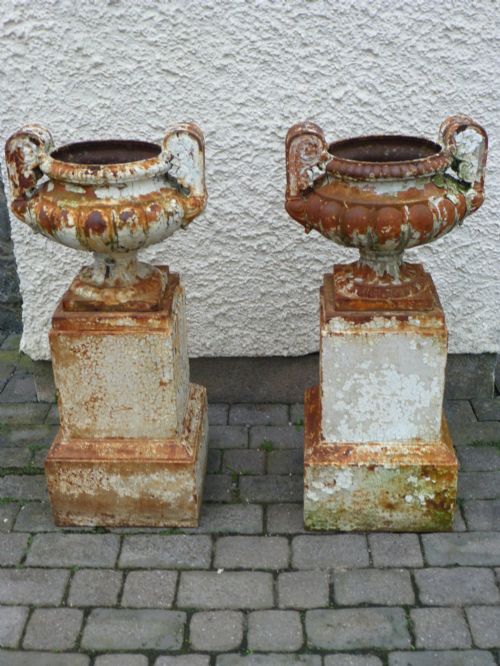
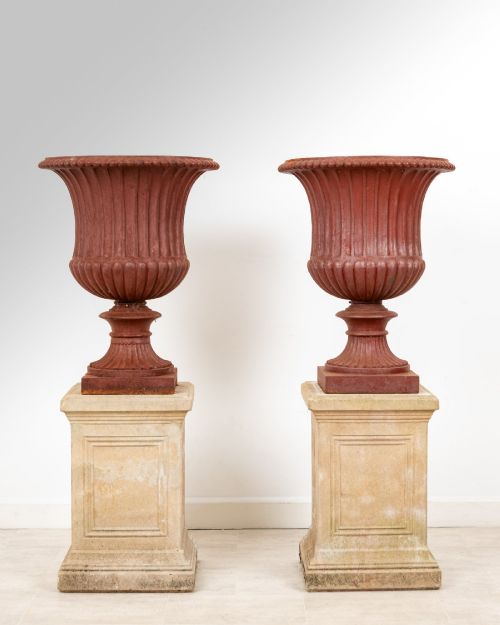
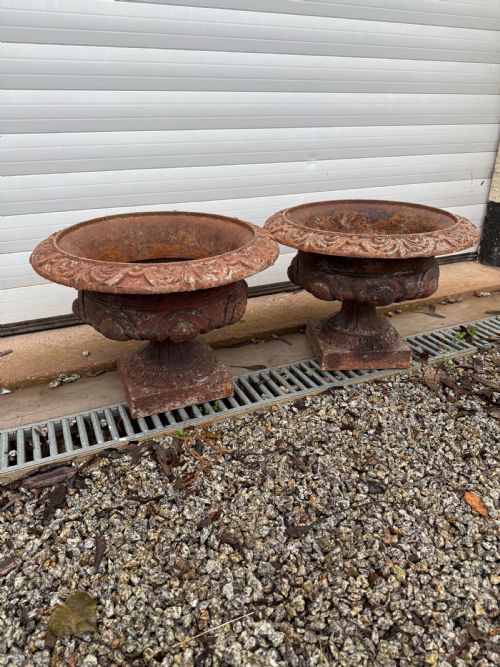
The versions most frequently met on this page span the 19th century, including Regency, Victorian, and Edwardian periods. Pieces often appear in pairs, standing independently or upon matching stone pedestals and original plinths.
Makers and foundries such as Falkirk Carron and Andrew Handyside emerge within these selections, alongside items originating from diverse stylistic eras like Qing Dynasty cast iron.
Materials and construction
Construction relies heavily upon cast iron and steel, shaped into classical garden urns and shallow campana forms. Foundries poured molten metal into moulds to achieve decorative Neoclassical and Victorian Classical revival details.
Surfaces frequently exhibit paint alongside natural oxidation, creating the weathered finish characteristic of rusted steel and iron exposed to the elements. Some selections incorporate stone elements for pedestals and plinths.
Rust Iron Planters Retail Price Guide 2026
Typical asking prices for rust iron planters among the pieces listed under this phrase on Sellingantiques today, from the lower quarter to the upper quarter. They describe what is for sale here now, not the wider market.
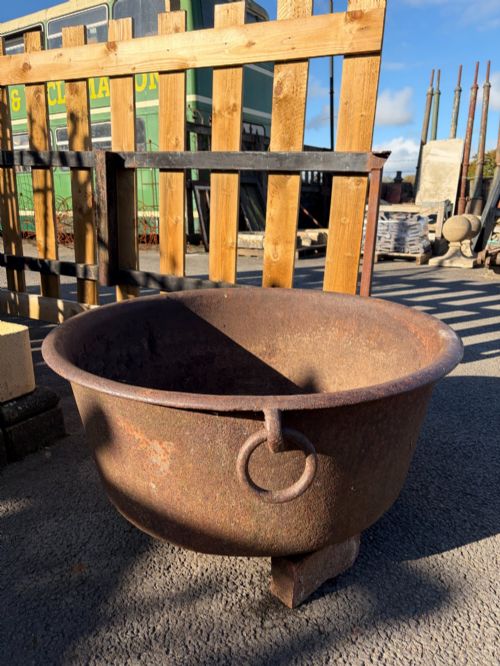
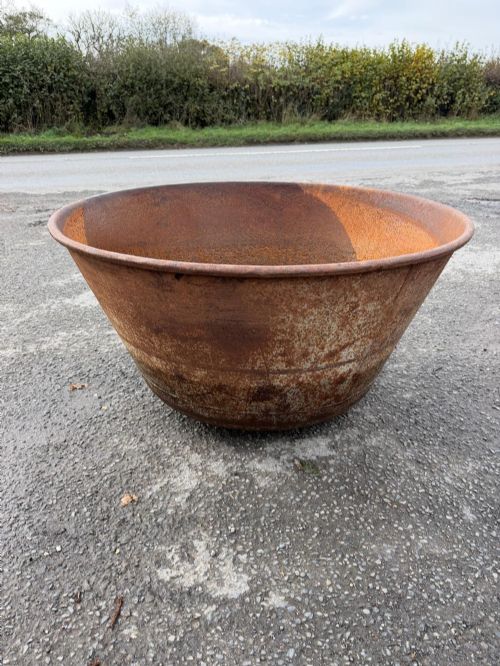
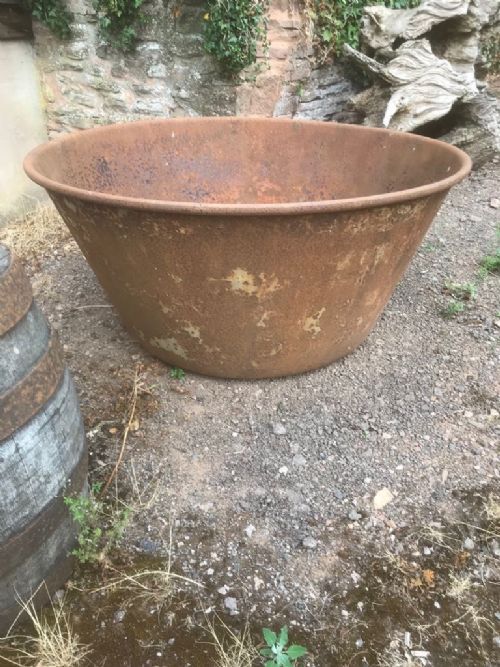
One remarkably heavy item listed is a Chinese antique iron bath.
Assessing quality
Quality differentiates by the crispness of the casting detail on campana urns and the presence of original matching plinths or stone pedestals. Foundry attribution, such as documented Falkirk Carron or Andrew Handyside works, elevates a piece.
The depth of the natural weathering and the structural integrity of the heavy iron body determine the overall character of each garden urn.
Falkirk Carron·Andrew Handyside
The Rust Iron Planters Glossary
- Campana urn
- A bell-shaped garden vessel with a flared rim, widely produced in cast iron during the 19th century. This classical form often sits upon a square foot and plinth.
- Plinth
- A heavy base supporting a garden urn or planter. Original plinths enhance the proportion and historical integrity of the ensemble.
- Jardiniere
- An ornamental pot or receptacle for plants. These decorative garden pieces accommodate floral displays on terraces and patios.
- Terrace urn
- A heavy iron vessel designed for placement on garden terraces. These pieces endure outdoor conditions while displaying Victorian or Regency styles.
Rust Iron Planters: Frequently Asked Questions
How old are these iron planters?
The pieces span the 19th century into the Edwardian era, encompassing specific dates like 1860 and 1890 alongside Regency and Victorian periods.
Manufacturing methods and foundry origins help establish this timeline for garden vessels.
Are these planters sold in pairs?
Many listings feature matching pairs of campana urns and garden planters intended for symmetrical placement on terraces and steps.
Single large garden urns and troughs also appear independently within the selection.
What styles are common in these pieces?
Styles include Regency, Victorian, Neoclassical, and Victorian Classical Revival, reflecting the decorative tastes of the 19th century.
Industrial and Qing Dynasty influences also appear among the iron baths and garden containers.
Do these planters come with pedestals?
Certain urns are mounted on original plinths or stone pedestals that elevate the vessel and complement its classical proportions.
Other planters stand directly on their own integrated iron bases.