

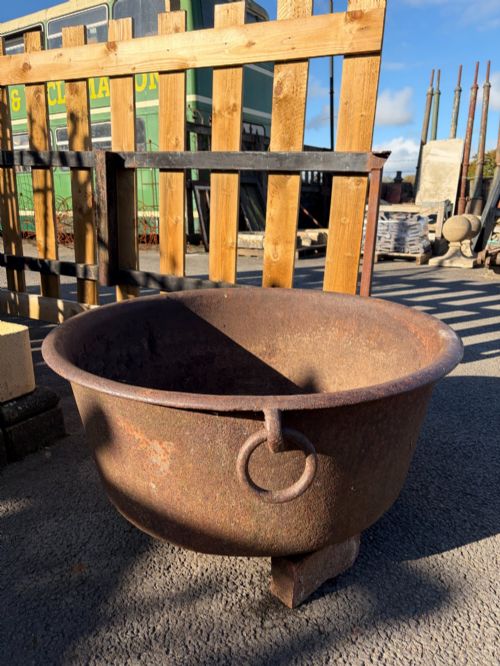
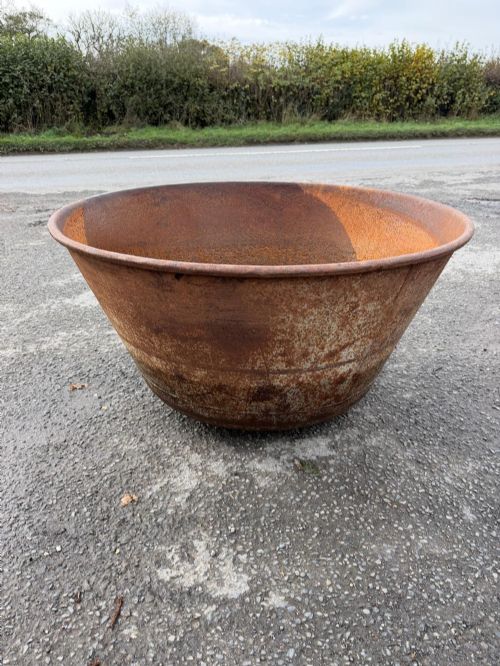
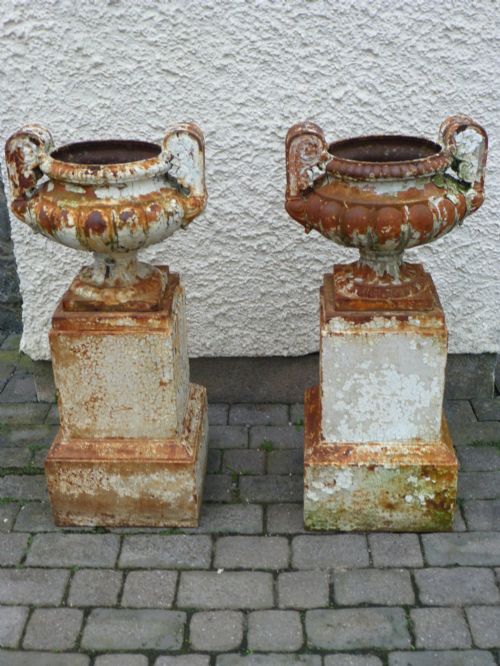
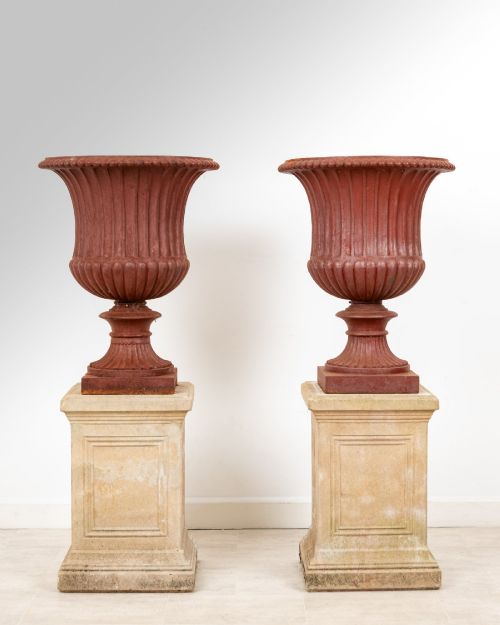



Rust Garden Planter
These rust garden planter pieces bring architectural weight to lawns and terraces, cast from durable metals through the nineteenth century and into the Edwardian era.
Rust Garden Planter
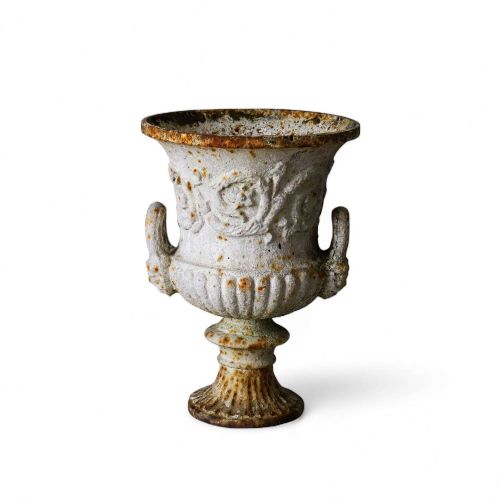
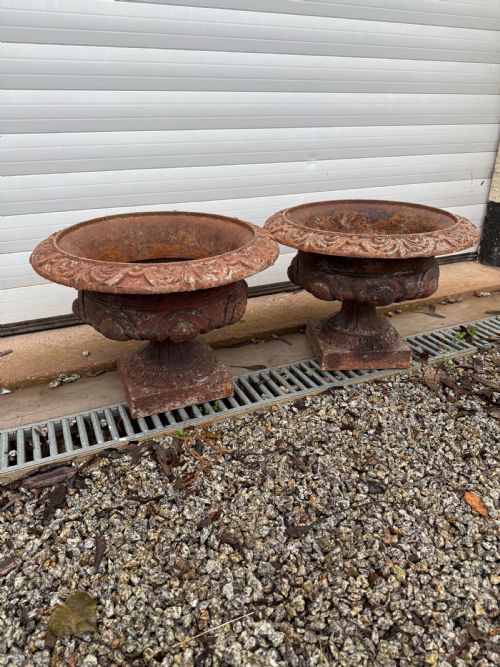
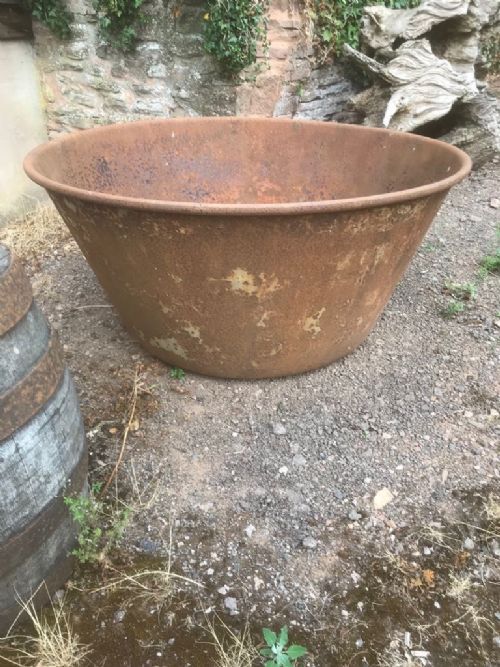
A rust garden planter selection on this page consists principally of nineteenth century cast iron garden urns, campana forms, and troughs created for grounds and terraces. Buyers searching for a rust garden planter encounter heavy metal vessels from Victorian, Regency, and Edwardian periods designed to weather naturally outdoors.
The assortment here relies heavily on cast iron campana urns paired with stone pedestals or original plinths. Pieces span from shallow campana shapes to large jardinieres and steel planters reflecting classical and industrial revival styles.
Makers such as Falkirk Carron foundry and Andrew Handyside produced robust ironware that developed distinct oxidation over decades of exposure. These heavy vessels form the backbone of traditional British garden ornamentation.
How they were made
Foundries utilised traditional sand casting techniques to pour molten iron into heavy moulds, creating thick walls capable of withstanding frost and weight. Artisans shaped these vessels in neoclassical, Regency, and Victorian styles, sometimes incorporating separate stone pedestals or plinths for elevation.
Steel was also utilised for large planters, offering alternative fabrication methods for industrial forms. Surfaces were initially painted or left raw, allowing natural weathering processes to create the characteristic rusted patination seen today.
Rust Garden Planter Retail Price Guide 2026
Typical asking prices for rust garden planter among the pieces listed under this phrase on Sellingantiques today, from the lower quarter to the upper quarter. They describe what is for sale here now, not the wider market.
Listings feature cast iron and steel materials across nineteenth century, Regency, Victorian, and Edwardian periods.
What varies in quality
Quality rests upon the crispness of the casting detail and the architectural proportion of the vessel. Early nineteenth century examples from noted foundries exhibit sharper relief in their classical motifs and superior metal density compared to later utility wares.
The integrity of the original structure and the depth of the weathered surface define the aesthetic standing of each piece. Surviving on matching plinths or pedestals elevates a pair's architectural coherence within a garden setting.
Falkirk Carron foundry·Andrew Handyside
The Rust Garden Planter Glossary
- Campana urn
- A bell-shaped garden vessel with an everted rim, widely produced in cast iron during the nineteenth century for formal landscape placement.
- Plinth
- A heavy base or pedestal supporting an urn or planter, often cast in iron or carved from stone to elevate the vessel.
- Jardiniere
- A large ornamental pot or trough designed to hold growing plants, frequently executed in heavy metal or stone.
- Neoclassical
- A decorative style reviving classical Greek and Roman motifs, common on Victorian and Regency garden ironwork.
- Patination
- The surface coloration and oxidation developed on cast iron and steel through age and exposure to the elements.
Rust Garden Planter: Frequently Asked Questions
Are these iron planters frost proof?
Cast iron vessels possess the mass and strength to endure winter temperatures, provided drainage holes remain clear of debris.
Heavier nineteenth century pieces handle seasonal freezing reliably without cracking.
How do I clean a rusted urn?
Light brushing removes loose flakes while preserving the protective oxidation layer that forms the character of old iron.
Aggressive scrubbing or painting strips away the historic patination valued by collectors.
Can these heavy pieces sit directly on soil?
Placing planters on stone pedestals or gravel prevents moisture transfer from damp earth into the metal base.
Elevating the vessel protects both the ironwork and the underlying terrace surface.
How do I date a cast iron planter?
Stylistic clues such as Regency campana proportions or Victorian classical revival ornament point toward specific decades.
Foundry marks and the method of casting offer further confirmation of nineteenth century origins.