

Rush Seating Chairs
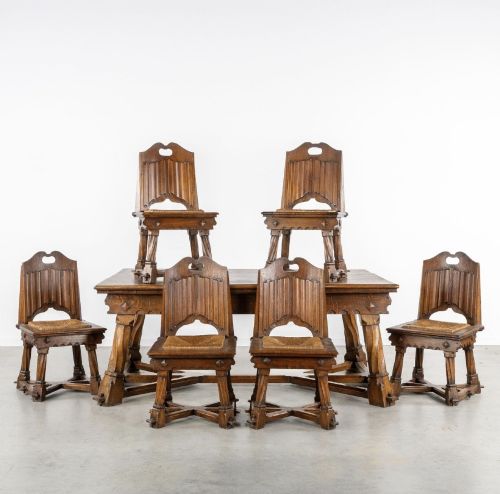
These rush seating chairs bring honest country craft and woven texture into a room, spanning plain vernacular forms to designed Arts and Crafts seating.
Rush Seating Chairs
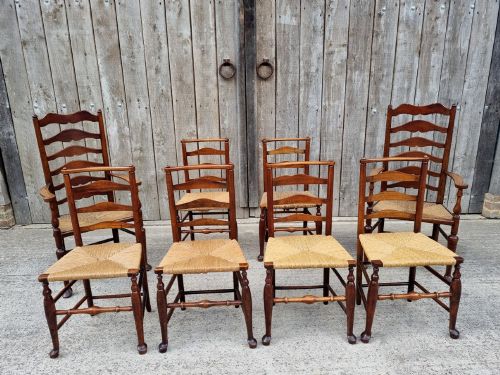
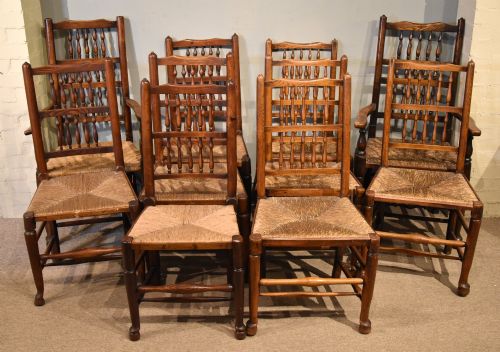
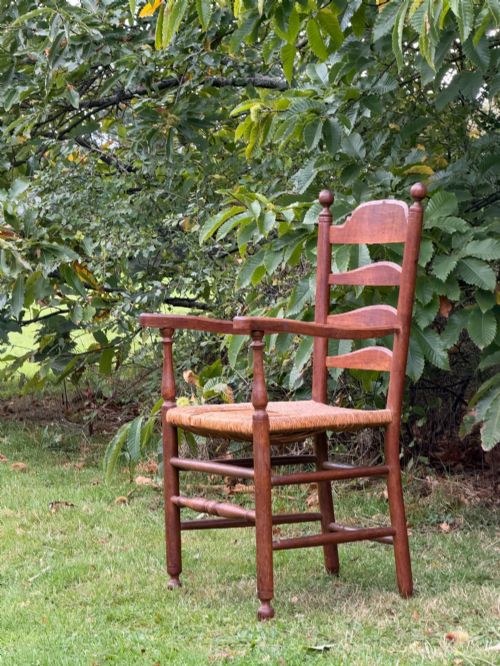
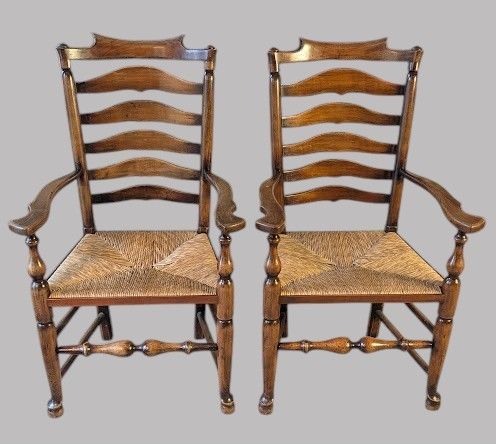
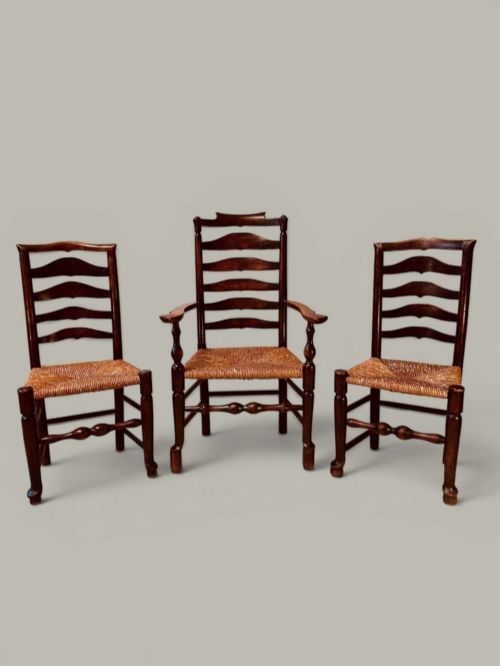
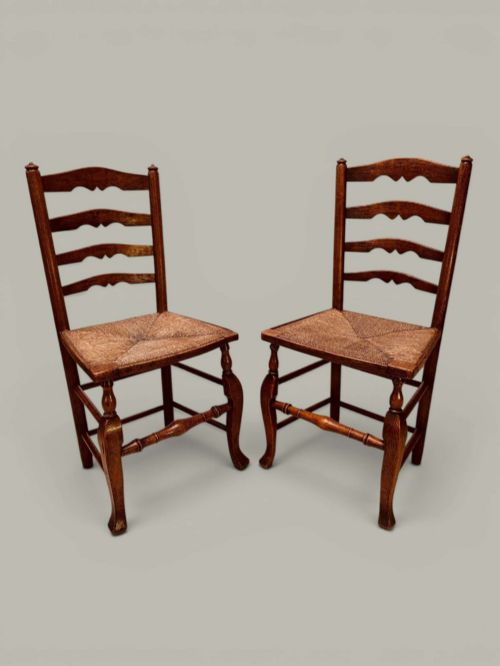
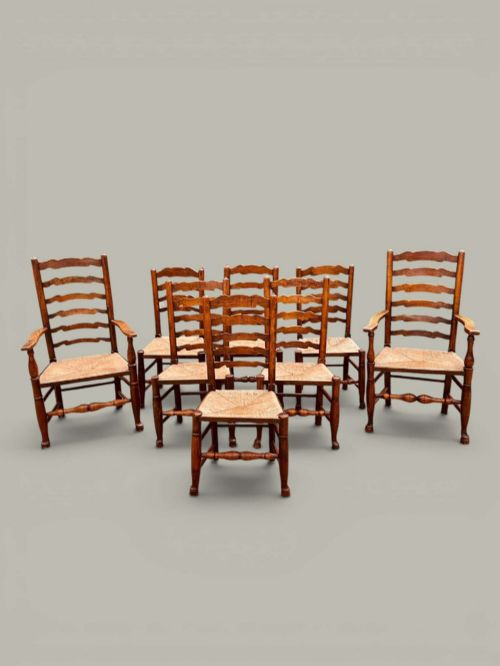
Rush seating chairs encompass dining chairs, armchairs, side chairs, rocking chairs, corner chairs, and benches created across the eighteenth, nineteenth, and early twentieth centuries. You will frequently encounter ladderback and spindle back forms rooted in English country, French provincial, and Arts and Crafts traditions.
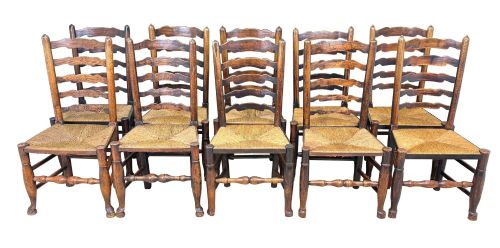
Makers ranged from rural vernacular joiners working in local fruitwood, ash, elm, and beech to urban design firms producing ebonised wood seating. Regional types such as Lancashire ladderbacks and Orkney chairs appear alongside matched sets and individual library or kitchen seating.
How they were made
Constructed from native hardwoods like oak, ash, elm, beech, and fruitwood, these frames utilise traditional turning, steam-bending, and joinery methods suited to domestic use. Timber sections are often left unpainted or stained to show the natural grain of the wood.
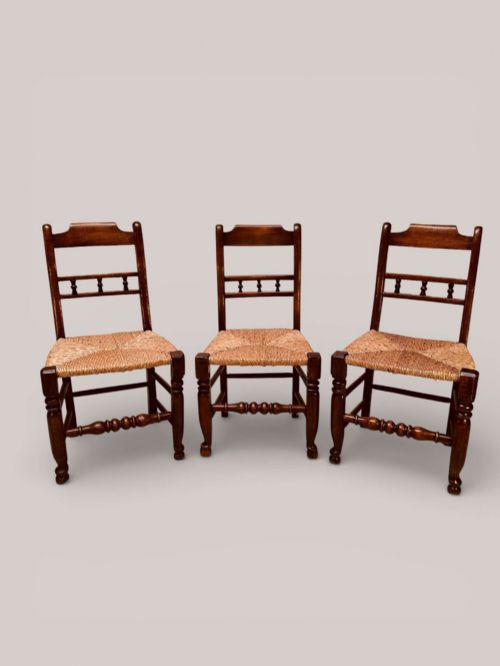
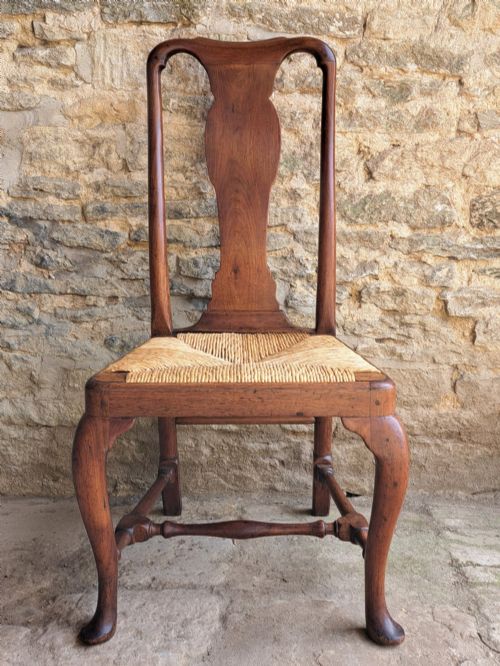
Seats are woven by hand from dried marsh rush, wound tightly around the chair rails in a square pattern that meets at the centre of the seat. This natural cordage provides a resilient, supportive surface that yields slightly to the sitter.
Rush Seating Chairs Retail Price Guide 2026
Typical asking prices for rush seating chairs among the pieces listed under this phrase on Sellingantiques today, from the lower quarter to the upper quarter. They describe what is for sale here now, not the wider market.
Regional English styles span Lancashire ladderbacks, Windsor armchairs, and Arts and Crafts Sussex seating.
What varies in quality
The standard of a piece rests upon the crispness of the timber turning, the integrity of the frame construction, and the tightness of the rush weaving. Better examples retain their original surface finish, whether polished walnut, ebonised wood, or aged fruitwood.
Proportion and balance define the superior chairs, where ladder backs graduate evenly in rake and spindle arrangements align precisely. The uniformity and density of the hand-woven rush grid further distinguish workshop standards.
William Morris·Rossetti·Philip Webb·Philip Clissett·Morris and Co
The Rush Seating Chairs Glossary
- Rush
- The dried stems of marsh plants used to weave chair seats. It provides a durable and slightly elastic surface that develops a mellow golden tone with age.
- Ladderback
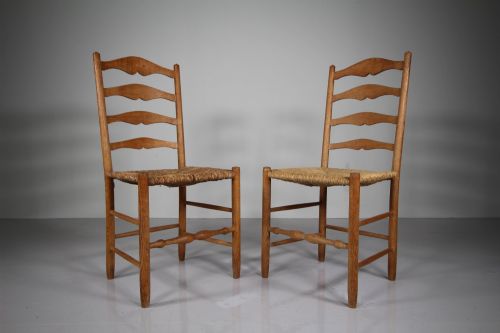
- A chair back featuring multiple horizontal arched slats between the upright posts. This regional vernacular form is common in Lancashire and French country workshops.
- Spindle back
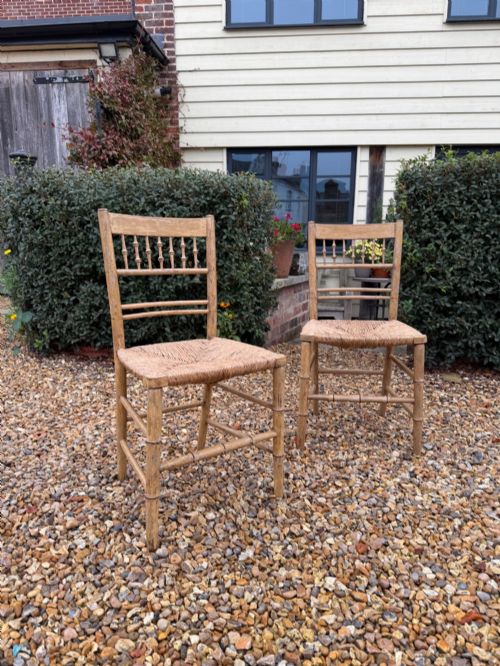
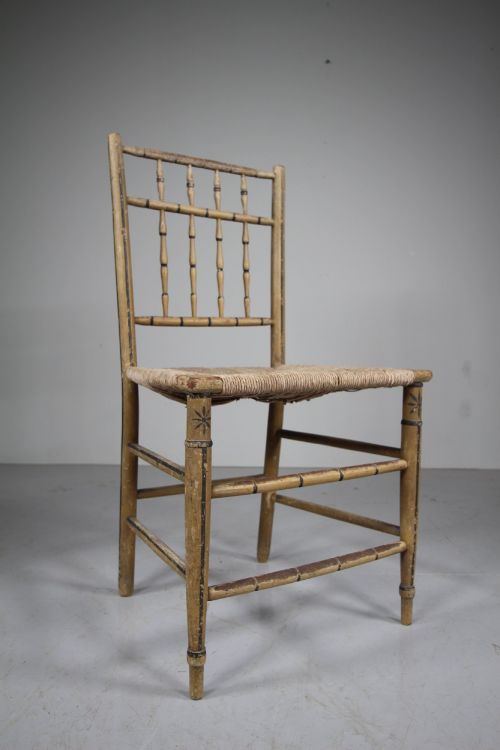
- A chair back filled with thin, turned wooden rods rather than solid slats. This construction lightens the visual weight of ash and elm dining chairs.
- Ebonised wood
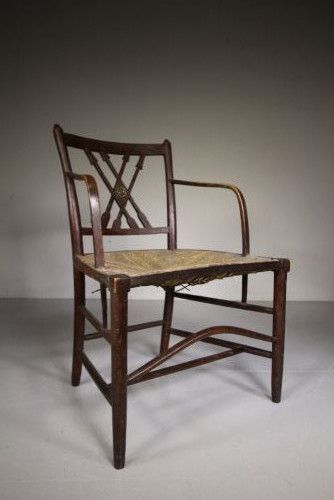
- Timber treated with chemical stains or black finish to imitate expensive ebony. This treatment appears frequently on nineteenth-century aesthetic movement and Sussex chairs.
- Vernacular
- Everyday domestic furniture made by local regional joiners for rural use rather than following high-style metropolitan court designs.
Rush Seating Chairs: Frequently Asked Questions
How do I care for a rush seat?
Keep woven rush seats dry and away from direct heat sources to prevent the natural fibres from becoming brittle. Clean them gently with a dry brush and avoid applying liquid polishes directly to the cord.
Place protective felt pads under furniture legs if positioning them on hard floors to prevent unnecessary movement stress. Occasional light airing helps maintain the condition of the historic plant material.
Are these chairs suitable for daily dining?
Many nineteenth and twentieth-century ladderback and spindle back designs remain sturdy enough for regular use around a dining table. Their resilient woven seats offer natural comfort during meals.
Check that the wooden joints remain tight and stable before seating guests regularly. Lighter vernacular chairs benefit from careful handling rather than heavy leaning.
How do I identify an Arts and Crafts chair?
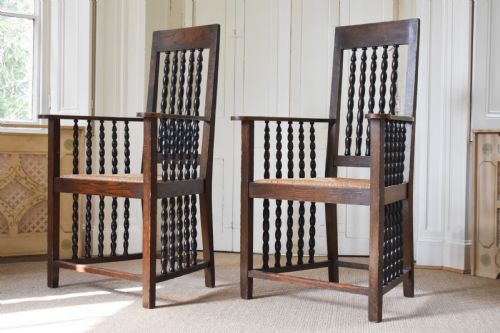
Arts and Crafts rush seating chairs display exposed structural joinery, plain turned wooden members, and honest material finishes like ebonised beech or English oak. They often reference simpler historical vernacular traditions rather than ornate revival styles.
Look for maker attributions or workshop stamps associated with designers who prioritized hand-craftsmanship over factory mass production.
What is a Sussex chair?
The Sussex chair is a lightweight vernacular-inspired design popularised by nineteenth-century craft workshops featuring turned wooden posts and rush seats. They were produced in standard and armchair formats for fireside and dining use.
These pieces typically utilise ebonised or stained beech frames with multi-tier spindle backs designed for simple elegance and domestic utility.