

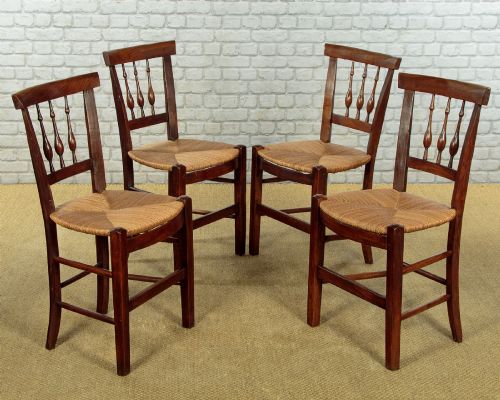
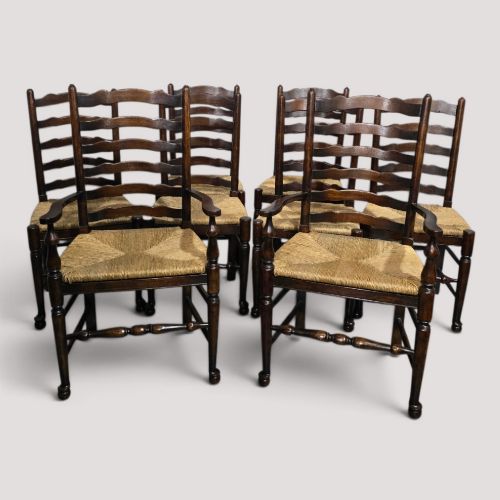
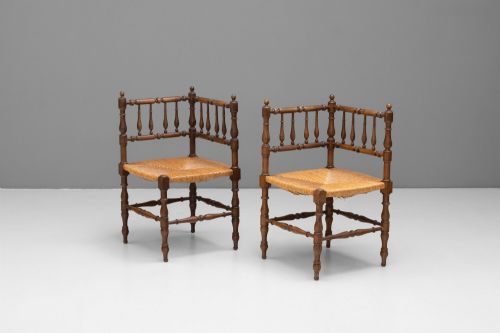
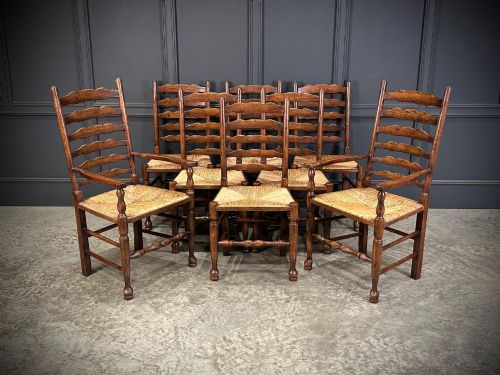
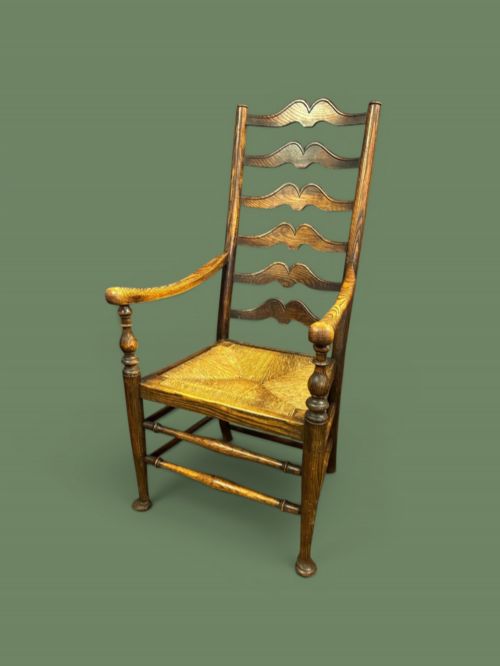
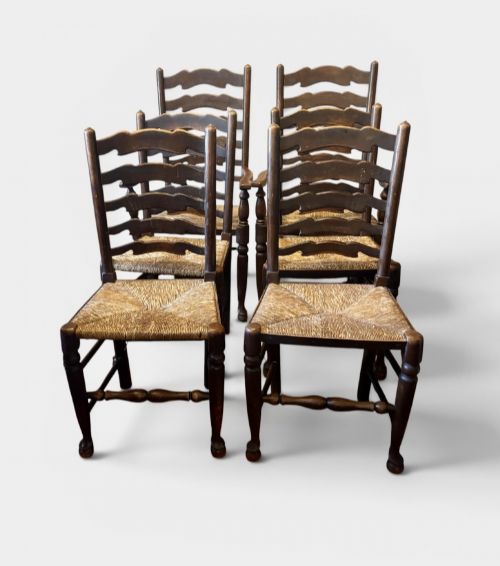

Rush Seated Oak Chairs
Rush seated oak chairs combine sturdy regional frames with traditional woven corded seats made for long hours at farmhouse and dining tables.
Rush Seated Oak Chairs
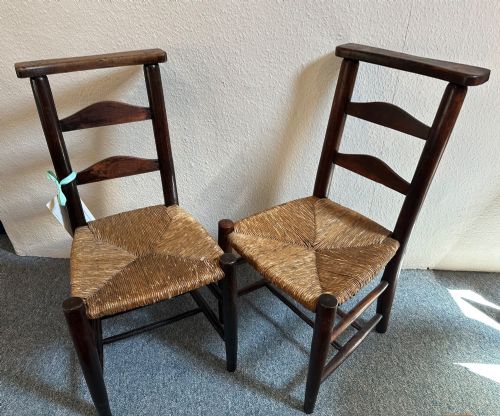
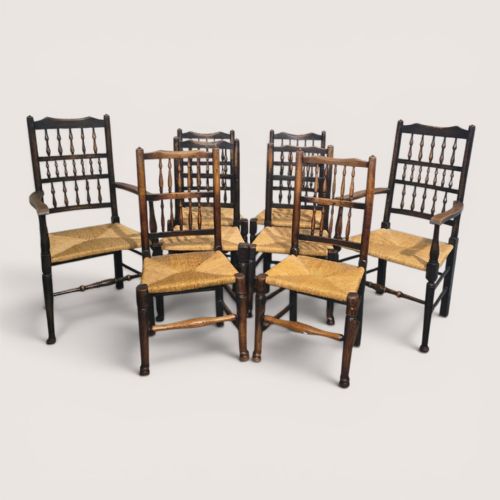
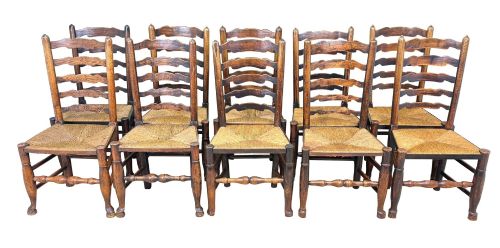
Rush seated oak chairs span centuries of domestic utility, appearing in forms from single side chairs to large dining sets of eight or ten. Buyers searching this phrase meet robust oak frameworks paired with woven rush, alongside related regional timbers such as ash, elm, and cherrywood.
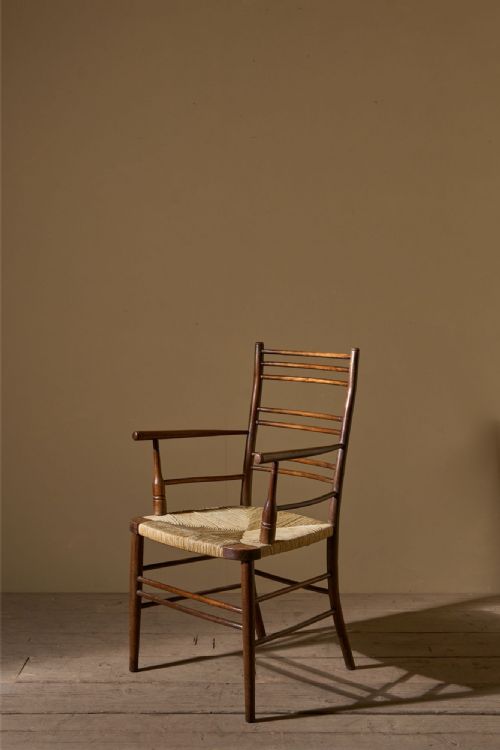
The selection ranges from simple country ladder backs and corner chairs to refined Arts and Crafts models and French provincial seating. Makers working in English country traditions created these chairs for everyday use in kitchens, halls, and dining rooms.
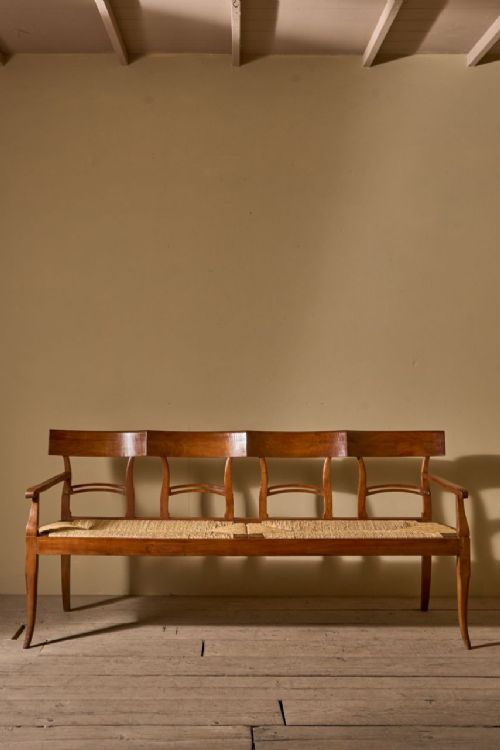
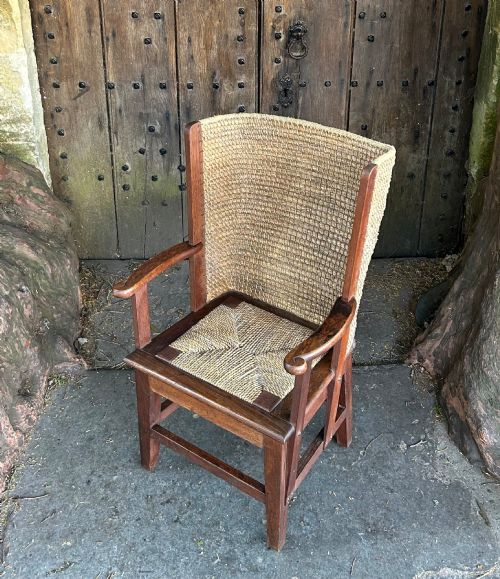
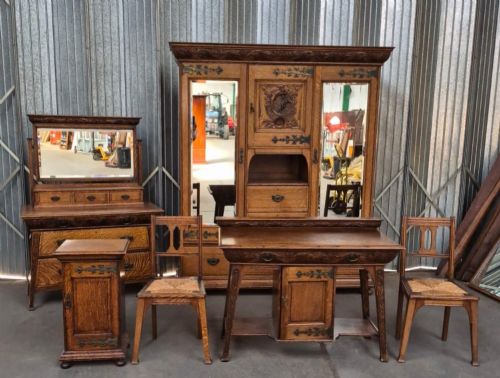
Formats extend beyond standard dining chairs to include armchairs, rocking chairs, benches, high chairs, and complete bedroom suites. Many pieces reflect specific regional designs, including Lancashire, Cheshire, and Dales variations, as well as distinct studio workshops.
How They Were Made
Joiners and country craftsmen built the foundational frames using solid timber like oak, elm, and ash, often shaping ladder backs, spindle backs, and corner posts by hand. These structural elements rely on traditional mortise and tenon joints to withstand heavy daily use.
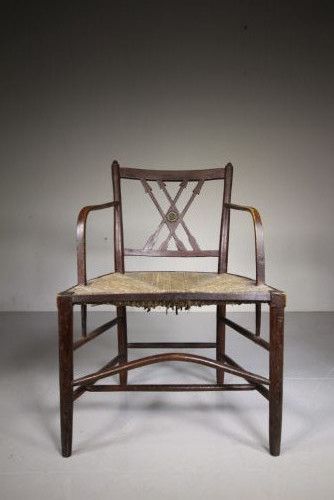
The characteristic seats are formed by twisting natural rush or straw tightly around frame rails in a deliberate diagonal pattern. Selected chairs also incorporate painted wood surfaces or decorative elements executed during the Georgian and later periods.
Listings feature oak, ash, elm, and cherrywood construction across side chairs, armchairs, benches, and complete bedroom suites.
What Varies in Quality
Quality rests on the integrity of the timber frame and the tightness of the rush weaving, which determines how well the seat holds tension under weight. Original frames showing honest patination and minimal structural replacement command greater interest than heavily altered examples.
The refinement of the turning on the uprights and ladder rails separates standard utilitarian seating from superior workshop productions, such as those associated with the Arts and Crafts movement or named makers.
Morris & Co·Liberty & Co·Titchmarsh & Goodwin·Dicon Nance·Lawrence Neal·Edward Gardener·Neville Neal
The Rush Seated Oak Chairs Glossary
- Rush
- Dried marsh grass used to weave flexible, durable seat pads. It offers a comfortable seating surface that tightens as it dries.
- Ladder back
- A chair back featuring multiple horizontal wooden slats between the upright posts. This traditional form provides strong lumbar support.
- Carver
- An armchair designed to match a set of dining side chairs, usually placed at the head of a table. These pieces feature integrated armrests.
- Arts and Crafts
- A design movement emphasising handcraftsmanship and vernacular styles over industrial mass production. Furniture from this tradition often highlights honest materials and simple structural forms.
- Corner chair
- A seating form designed to fit into room angles, featuring a diagonal seat plan and a curved back rail supported by turned columns.
Rush Seated Oak Chairs: Frequently Asked Questions
How do I clean a rush seat?
Gently brush away dust using a soft bristle attachment on a vacuum cleaner or a dry brush. Avoid applying excess water or liquid cleaners, as moisture causes dried marsh grass to rot and weaken.
Keep the seating area in a stable environment away from excessive humidity and direct heat sources. Regular gentle dusting preserves the natural fibres without disturbing the tight weave.
Are these chairs suitable for daily dining?
Solid hardwood frames and woven rush seats were originally constructed for heavy kitchen and dining room use. Their traditional joinery handles regular sitting when placed on level flooring.
Adding felt pads to the feet prevents undue wear on wooden legs when moved across hard floors. Distribute weight evenly and avoid tilting backward on two legs to protect the structural joints.
What is a harlequin set?
A harlequin set consists of individual chairs that share similar periods, materials, or ladder back designs rather than being manufactured together as a single batch. These groupings were assembled over time to match general proportions and aesthetic styles.
Such collections offer practical seating solutions for larger dining tables while retaining a cohesive historic appearance. Variations in turning and patina tell the individual history of each chair within the group.
How can I tell regional styles apart?
Regional variations appear in the shaping of the ladder slats, the steepness of the rake, and the turning profiles of the legs and armposts. Country makers in areas like Lancashire, Cheshire, and the Dales utilised local turning patterns and wood selections.
Comparing the height of the back rails and the thickness of the stretchers helps identify specific vernacular traditions. Documentary evidence or historical stamps occasionally confirm a chair's exact geographic origin.