
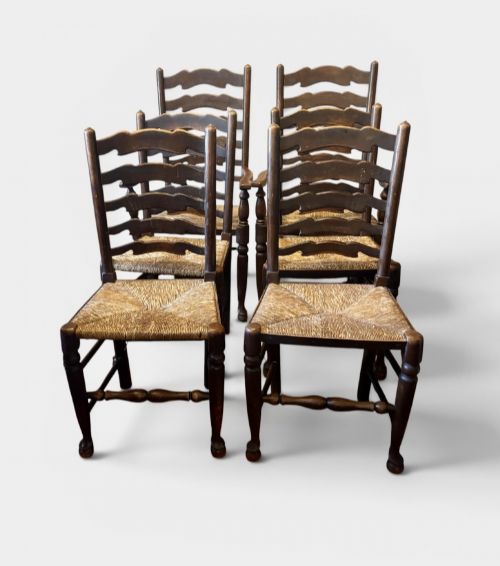

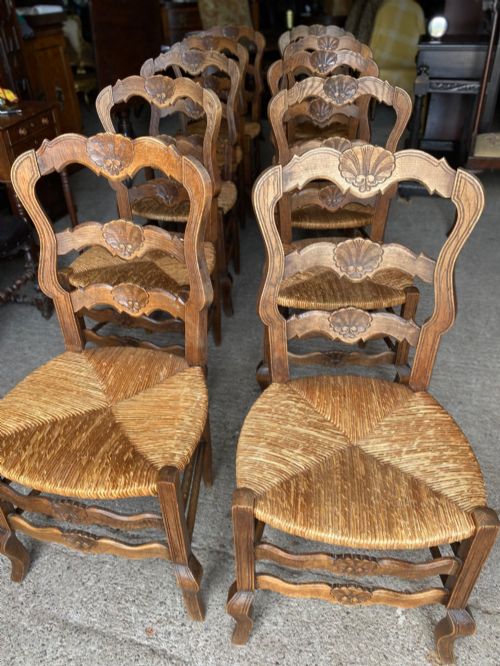

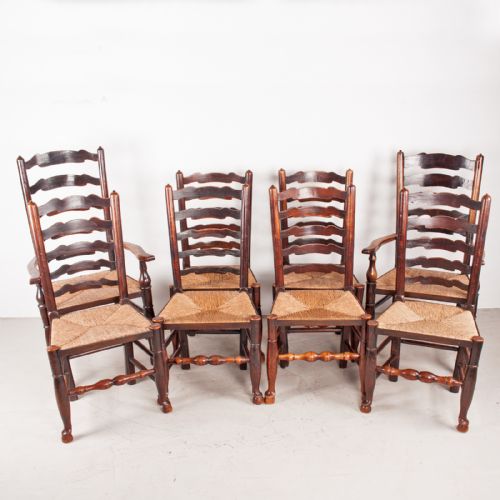


Rush Kitchen Chairs
These rush kitchen chairs bridge centuries of domestic utility, offering sturdy vernacular seating shaped by generations of rural craftsmanship.
Rush Kitchen Chairs
Rush kitchen chairs encompass traditional domestic seating designed for everyday utility in farmhouses and country homes across Britain and Europe. These pieces emerge from vernacular traditions spanning the eighteenth, nineteenth, and early twentieth centuries, reflecting regional styles from English counties to French provinces.
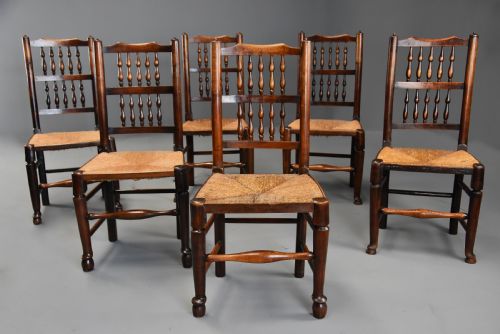
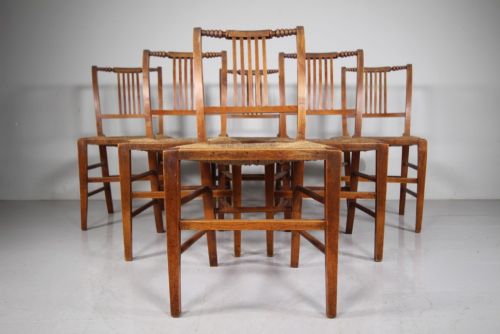
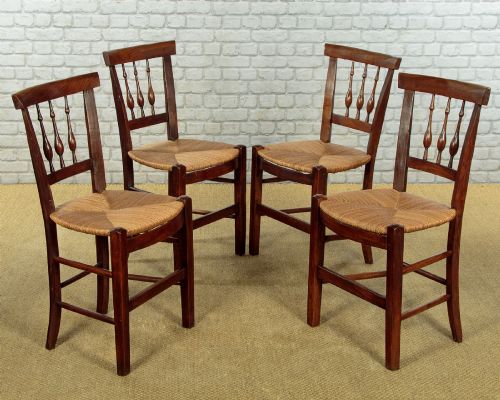
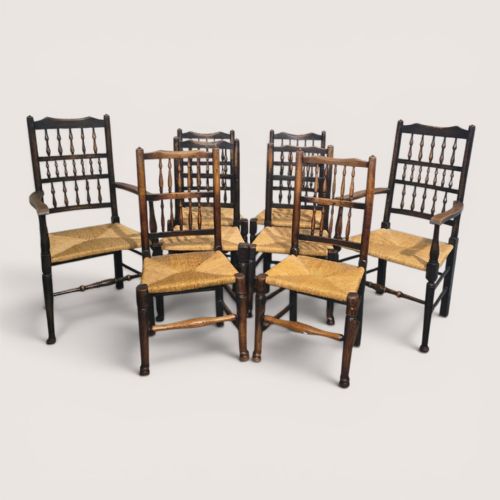
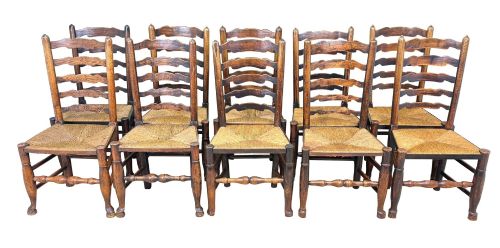
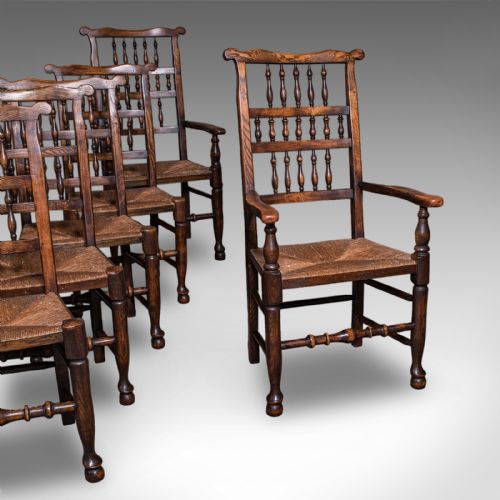
Buyers most frequently encounter ladderback and spindleback forms constructed in sets or smaller groupings. Oak, elm, ash, and fruitwood frequently form the structural frames, while woven river rush provides the supportive seating surface.
The aesthetic leans towards rustic farmhouse and provincial styles rather than formal court furniture. Such seating accommodates heavy daily use while retaining the honest proportions characteristic of country workshops.
Materials and construction methods
Makers utilised native hardwoods such as oak, elm, ash, beech, and fruitwood for the structural frames, turning spindles on lathes and bending wood for backs. These timbers provided the necessary tensile strength to endure the rigours of farm kitchens and dining spaces.
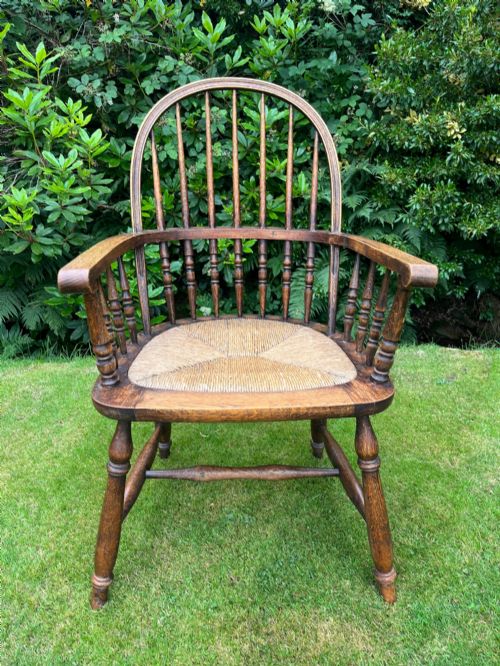
Seats were hand-woven using dried marsh or river rush, twisted tightly around the seat rails in concentric squares. This natural cordage creates a resilient, textured surface that yields slightly to the sitter while maintaining structural integrity.
Joinery typically relied on traditional pegged mortise and tenon joints rather than metal fasteners. Regional variations dictated specific turning patterns and backrail shapes, identifying whether a set originated in Lancashire, a French provincial workshop, or an English country vernacular setting.
Country makers occasionally carved discreet initials under the seat rails, leaving secret signatures hidden beneath the woven rush.
Distinctions in quality and execution
Quality rests heavily on the integrity of the timber frame and the tightness of the rush weaving. Tightly twisted rush strands woven with consistent tension outlast loose, brittle cords that sag under pressure.
Proportion and matching uniformity elevate sets of chairs above mismatched gatherings. Matching turnings across a set of six or eight dining chairs demonstrate coordinated workshop production rather than accidental assemblage.
Patina and surface preservation tell the history of use. Original wood surfaces showing honest wear and depth of tone command greater respect than overly stripped or heavily altered timbers.
The Rush Kitchen Chairs Glossary
- Rush
- A wetland plant material twisted into cordage and hand-woven to form resilient chair seats. This traditional seating medium offers natural flexibility and durability.
- Ladderback
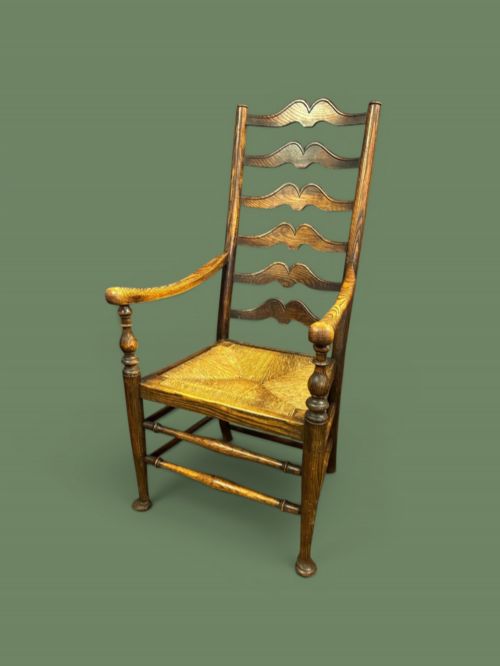
- A chair back featuring horizontal wooden slats between two upright posts. This regional form evolved in various heights and slat curvatures across English and French vernacular traditions.
- Spindleback
- A chair back constructed with multiple thin, turned vertical wooden rods. These components distribute weight evenly and lighten the visual mass of the frame.
- Vernacular
- Unpretentious furniture built by local craftsmen to satisfy regional domestic needs rather than following metropolitan fashion. These objects prioritise functional utility over decorative excess.
- Harlequin set
- A collection of seating pieces sharing general stylistic traits while varying slightly in individual details or dimensions. Such groupings often evolved as chairs were gathered over time.
Rush Kitchen Chairs: Frequently Asked Questions
How do I care for rush seats?
Keep woven rush seats dry and dust them regularly using a soft brush attachment. Avoid excessive moisture, which can cause the natural river reeds to rot or snap.
Maintain indoor humidity levels to prevent the dried plant fibres from becoming brittle. Placing the seating away from direct heat sources helps preserve the natural oils in the rush.
Are these chairs suitable for daily dining?
Solid hardwood frames and woven rush seating were originally engineered for heavy farmhouse use. They provide durable support for regular dining when structurally sound.
Verify that the leg joints and rungs remain firm before daily deployment. Periodic checks of the wooden pegs ensure the frame stays stable during long meals.
What defines a harlequin set?
A harlequin set consists of chairs sharing common design characteristics, such as ladderback frames or wood types, but with minor variations in turning or height. These groupings formed organically as replacements or additions were gathered locally over decades.
Such sets offer a less uniform aesthetic than matched factory-made suites. They celebrate the individual hand of the country craftsman while maintaining visual harmony around a table.
How can I distinguish regional styles?
Regional styles reveal themselves through turning patterns on the posts, the arch of the ladder slats, and the choice of native timber. English country chairs often utilise ash and elm, whereas French provincial pieces frequently display fruitwood or oak with carved details.
Comparing the pitch of the back posts and the joinery methods points toward specific geographic traditions. Local wood availability heavily dictated the final silhouette of each workshop output.