
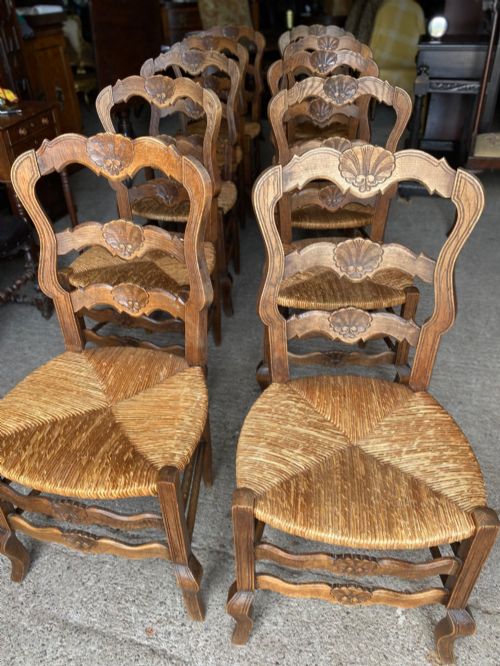

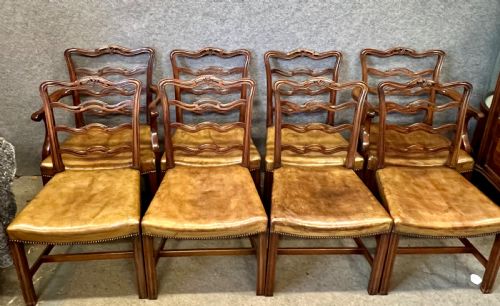


Carved Ladderback Chairs
These carved ladderback chairs combine traditional joinery with sculpted wooden slats, offering both sturdy dining support and distinct period character.
Carved Ladderback Chairs
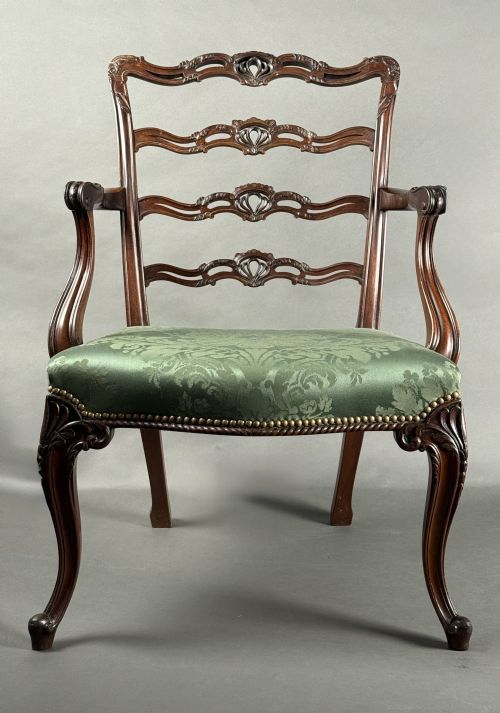
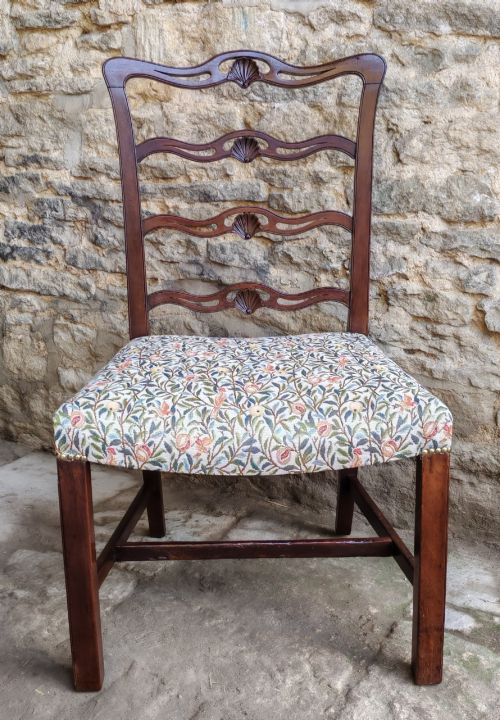
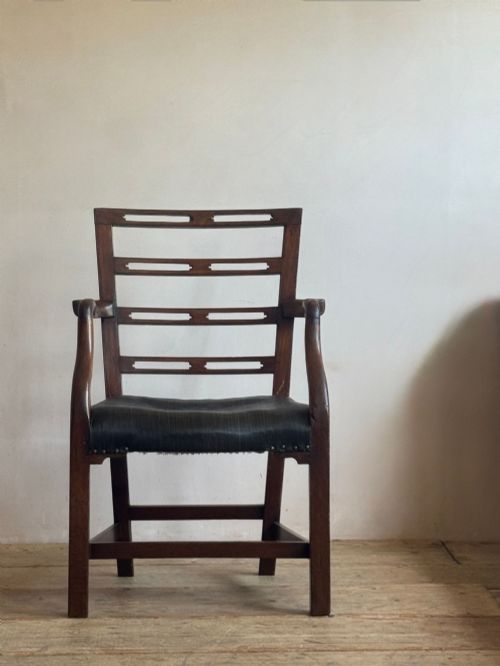
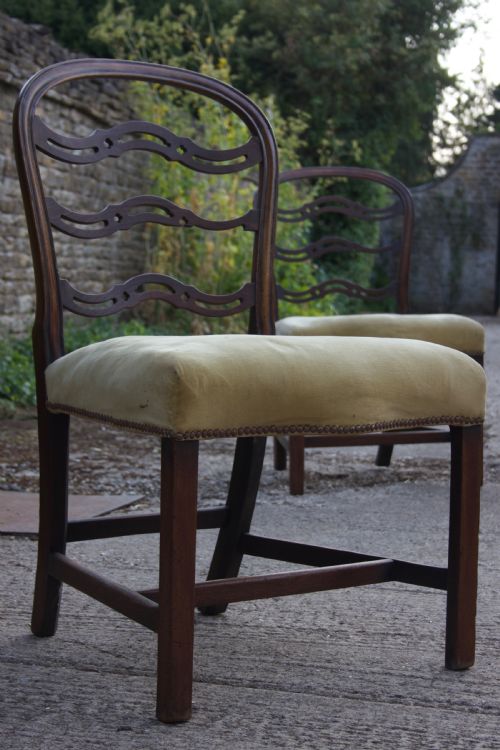
When you search for carved ladderback chairs, you encounter seating built with horizontal wooden back rails, often shaped or pierced, spanning between vertical rear posts. The examples on this page span several eras, originating from the 18th Century, 19th Century, Edwardian period, and around 1900.
The selection ranges across various forms suited for different domestic rooms, including dining chairs, armchairs, desk chairs, rocking chairs, side chairs, and settees. Many appear individually, in pairs, or as matched sets of varying sizes.
Geographic origins recorded in the inventory stretch across British, Irish, Scottish, and French workshops. Regional variations appear in the choice of primary timber and the specific profile given to the horizontal slats.
What varies in quality
The calibre of a piece depends heavily on the crispness of the carving along the ladder rails and the selection of the timber grain. Finer examples display balanced proportions and harmonious integration between the upright stiles and horizontal slats.
The integrity of the original construction and the preservation of period surfaces dictate the standing of individual items. Consistency across larger sets adds distinction, particularly when matching multiple dining seats or armchairs.
Listings feature mahogany, oak, and rush alongside upholstered elements in leather, velvet, and tapestry across the 18th and 19th Century periods.
The Carved Ladderback Chairs Glossary
- Ladderback
- A chair design featuring multiple horizontal wooden slats rising up the backrest between two vertical rear posts. This regional form appears frequently in country and vernacular furniture traditions.
- Stile
- The upright vertical side post of a chair back that supports the horizontal rails. These structural members often connect directly to the rear legs.
- Rush
- Woven marsh grass utilised to create traditional woven seating surfaces. This organic material provides a resilient and slightly flexible seat.
- Chippendale Style
- A decorative aesthetic drawing upon the 18th-century designs associated with Thomas Chippendale. Pieces in this manner frequently incorporate elaborate carved details and cabriole or straight legs.
- Armchair
- A seating form constructed with side supports or arms integrated into the upper frame. These often accompany larger sets of dining chairs for use at the head of a table.
Carved Ladderback Chairs: Frequently Asked Questions
What periods do these chairs come from?
The listings encompass items originating from the 18th Century, Georgian era, 19th Century, Regency period, Victorian era, Edwardian period, and around 1900. These span various regional interpretations.
Makers across different decades adapted the basic ladderback form using prevailing stylistic influences, resulting in both formal dining variants and rustic country seating.
How were these chairs used historically?
Such seating served primary functions around dining tables, at desks, or as general household chairs in parlours and kitchens. Rocking chairs and armchairs provided specialised seating for relaxation.
Larger matching sets accommodated formal dining gatherings, while individual pieces often functioned as desk chairs or occasional seating in bedrooms and hallways.
What materials make up these chairs?
Primary construction materials recorded in the inventory consist of solid mahogany and oak. Seating areas frequently utilise woven rush or pads covered in fabric, leather, velvet, or tapestry.
Additional structural or decorative components occasionally incorporate brass elements, matching the stylistic conventions of their respective periods.
How do I distinguish regional styles?
French regional pieces often display Louis XV or provincial characteristics in their curved frameworks and oak construction. British and Irish examples tend to utilise mahogany or oak within Georgian and country vernacular idioms.
Examining the specific shaping of the ladder slats and the choice of primary timber helps identify the likely origin and period of manufacture.