





Rural Scenery Oil Painting
These rural scenery oil painting works capture pastoral landscapes, farmsteads and river banks across the nineteenth and twentieth centuries.
Rural Scenery Oil Painting
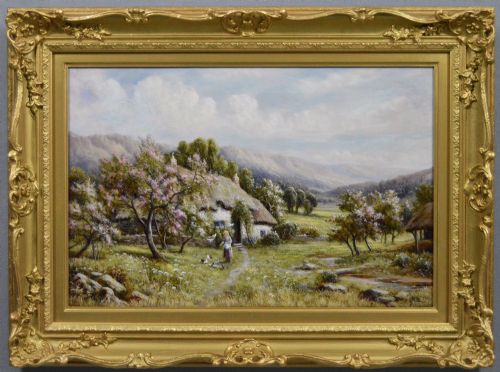
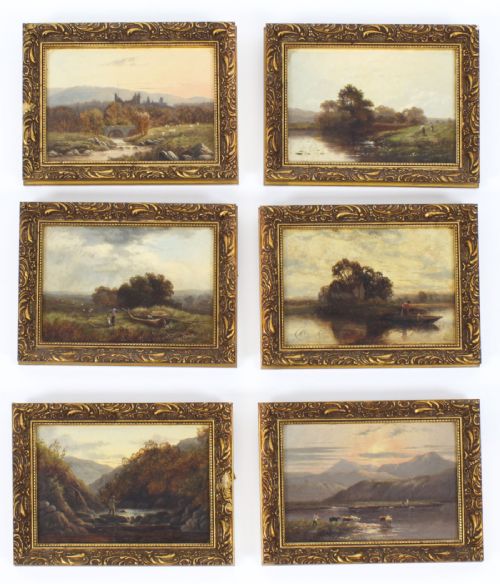
A rural scenery oil painting brings nineteenth-century and twentieth-century pastoral views, from British school landscapes to mid-century modern country scenes, directly into a room. You will frequently encounter works depicting figures near cottages, cornfields, river banks, farmsteads, and windmills.
The selection spans Victorian landscape realism and British impressionism alongside mid-century traditional compositions. Artists utilise oil paint on canvas and board to record traditional country life, often framed in wood or gilt wood.
Materials and construction
These works are painted using oil paint applied to canvas or wood board substrates. Artists of the period built up textures and pigments to capture natural light across fields and rivers.
Many of these paintings retain their period framing, utilising wood or gesso and gilt wood to finish the piece. The combination of oil on canvas or board with traditional frames defines the physical nature of these works.
The documented periods span the nineteenth century, 1880, 1900, 1950, and 1960.
Assessing quality and execution
Quality rests in the handling of light and atmosphere across the landscape, distinguishing fluid brushwork from rigid application. Works by recorded painters display finer control over figures, animals, and architectural elements within the pastoral setting.
The integration of the composition, from the distant hills down to the texture of a cottage wall or river bank, separates standard decorative pieces from accomplished artistic achievements.
Robert John Hammond·Harry Pennell·John Falconar Slater·Arthur Walker Redgate·John B. MacDoanld·Alastair Flatterly·Daniel Sherrin
The Rural Scenery Oil Painting Glossary
- Canvas
- A heavy woven fabric used as a surface for oil painting. It provides the primary support for many nineteenth and twentieth-century works.
- Gesso
- A plaster-like material applied to wood frames before gilding or painting. It creates a smooth base for decorative mouldings.
- British Impressionism
- A painting style focusing on light and everyday subjects in a loose brush style. It emerged in the late nineteenth century.
- Oil on Board
- A painting technique where oil paint is applied to a rigid wooden panel rather than stretched fabric. This format appears frequently in mid-century works.
Rural Scenery Oil Painting: Frequently Asked Questions
What periods do these paintings come from?
The available works span the nineteenth century, including specific dates around 1880 and 1900, alongside mid-century pieces from the 1950s and 1960s.
These dates reflect both Victorian landscape realism and mid-century traditional or modern approaches to country scenery.
How should I hang an oil painting?
Hang these works away from direct sunlight and fluctuating heat sources to protect the canvas and oil pigments over time.
Ensure the wall fixings match the weight of the wood or gilt wood frames that accompany many of these pieces.
What subjects appear in these landscapes?
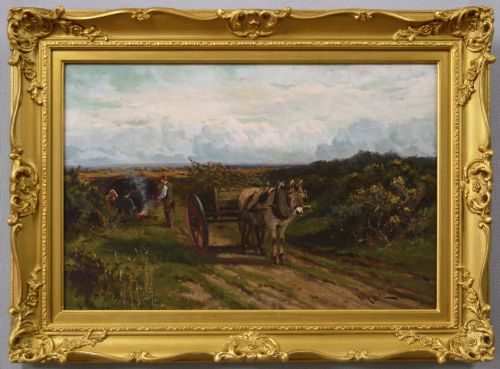
Common subjects include farmsteads, cornfields, river banks with figures, cottages, and Dutch windmills. Donkeys, carts, and people picking flowers also populate the scenes.
These rural motifs reflect the Victorian and mid-century interest in pastoral and agricultural life.
Are these works painted on canvas or board?
The paintings utilise both canvas and wood board as the primary support for the oil paint.
Artists selected these traditional supports depending on the scale and period of the work.