
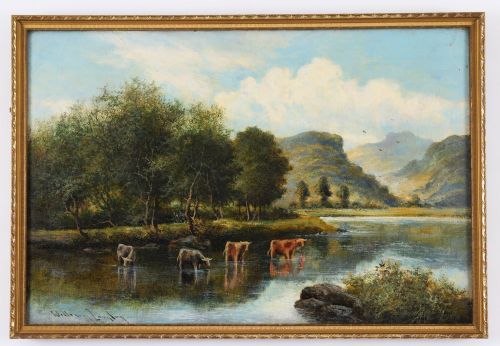
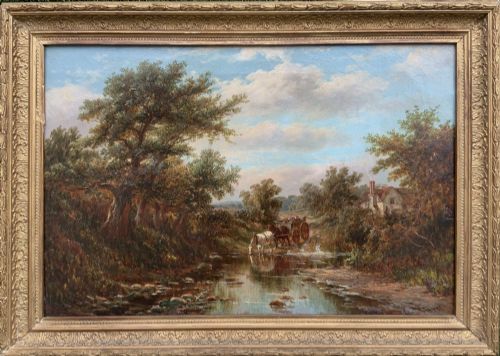

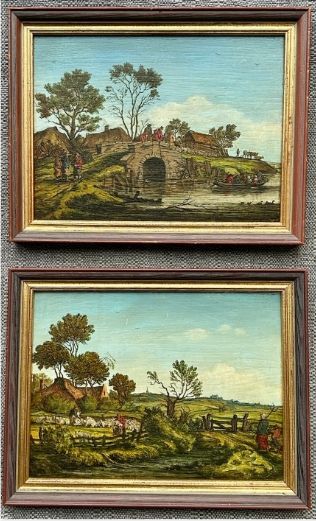
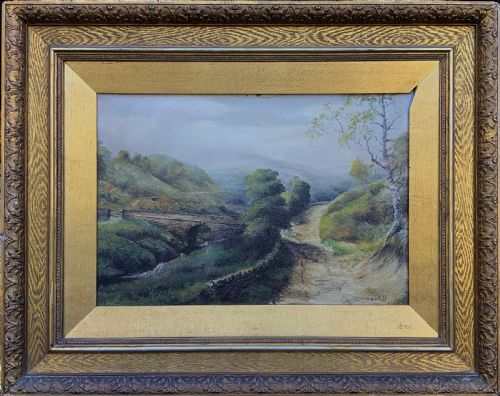
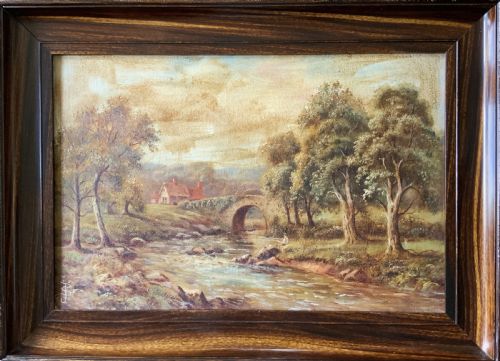


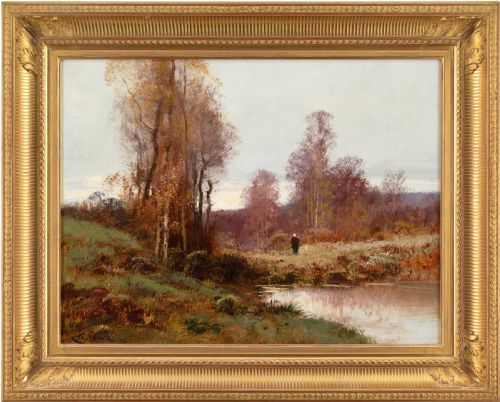


Rural River Oil Painting
A rural river oil painting captures tranquil waterways and pastoral life, offering a quiet window into nineteenth and twentieth-century countryside scenes.
Rural River Oil Painting
When you search for a rural river oil painting, you encounter canvases and wood panels depicting pastoral waterways, streams, and riverbanks populated by figures, cattle, or cottages.
The selections span the Victorian, Edwardian, and twentieth-century periods, capturing British and continental landscapes through academic, impressionist, and revival lenses.
These works range from intimate framed panels to large canvases, reflecting diverse regional settings from Welsh valleys to French river views.
How They Were Made
Artists applied oil paint using brushes and palette knives onto prepared stretched canvas or wooden panels.
Framing typically involved carved and moulded gilt wood or giltwood frames that complemented the tonal depth of the pigments.
Several canvases record local washerwomen and fishermen pausing by rivers.
What Varies in Quality
The skill in handling light, atmosphere, and naturalistic detail distinguishes accomplished compositions from more formulaic pastoral scenes.
The handling of perspective in water reflections and the integration of human figures or livestock into the broader landscape determine the visual success of the piece.
George Graham·W Klombeck·Sydney Yates Johnson·John Horace Hooper·Charles Clair·William Langley·William Manners·Gudrun Sibbons·Abraham Hulk Junior·Harry Pennell·William Sidney Cooper·Alois Arnegger·George Turner·Henry H Parker·Antoine Bouvard·Robert John Hammond·John B MacDoanld·Robert Gallon·Thomas Thomas·Charles McAuley·Maud Raphael Jones·Thomas James Soper
The Rural River Oil Painting Glossary
- Oil paint
- A slow-drying paint made of pigment particles suspended in a drying oil, commonly linseed oil. This medium allows artists to blend tones and build rich textures.
- Canvas
- A heavy woven fabric stretched across a wooden stretcher frame to serve as a sturdy painting surface. It provides the characteristic tooth and flexibility found in most historic fine art.
- Wood panel
- A rigid wooden support used by artists instead of fabric. Panels offer a smooth, stable ground that often preserves fine brushwork exceptionally well over centuries.
- Giltwood
- Wood carved and coated with a thin layer of gold leaf or metallic gilt. This traditional framing material adds warmth and contrast to the painted image.
- Barbizon style
- A nineteenth-century French landscape movement focusing on direct observation of nature, tone, and atmospheric rural environments. Practitioners emphasised quiet realism over dramatic narrative.
Rural River Oil Painting: Frequently Asked Questions
What periods do these river paintings come from?
The works originate primarily from the nineteenth and early twentieth centuries, encompassing Victorian and Edwardian aesthetics. Mid-century examples also appear.
Creators utilised traditional painting techniques typical of these historical eras, reflecting changing landscape traditions across Britain and Europe.
Are these paintings on canvas or wood?
Artists utilised both stretched canvas and solid wood panels depending on their regional school and personal preference. Canvas provides flexible texture, while panels offer a rigid support.
Both substrates hold historical oil paint layers that capture light and atmospheric depth in rural scenes.
How should I hang an oil painting?
Hang the artwork away from direct sunlight and fluctuating heat sources to protect both the canvas and the historic wooden frame. Secure picture hooks into wall studs or use appropriate masonry fixings.
Ensure the frame sits level against the wall to display the composition correctly within its surrounding interior space.
How do I identify different landscape styles?
British Impressionism and French Barbizon styles reveal looser brushwork and a focus on natural light compared to rigid nineteenth-century academic landscapes. Subject matter also offers clues.
Figures engaged in washing laundry, fishing, or herding cattle often place a work within specific rural traditions.