
Rural Pastoral Landscape Artwork
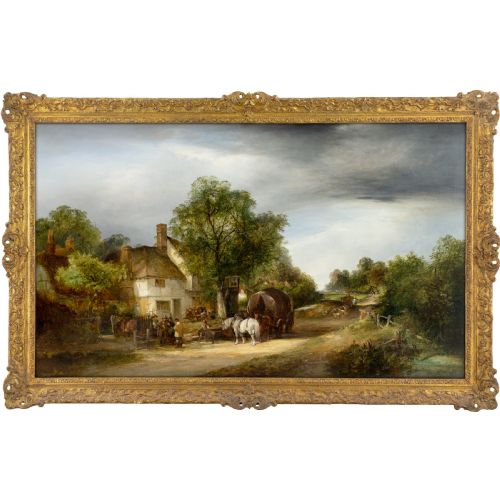
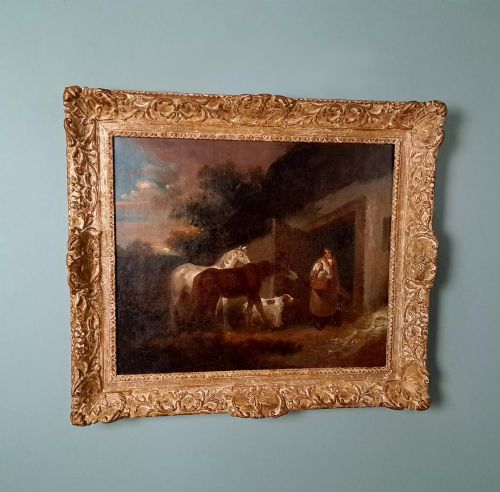
Rural pastoral landscape artwork captures the quiet rhythm of the countryside through scenes of farmyards, harvesting, and grazing animals.
Rural Pastoral Landscape Artwork
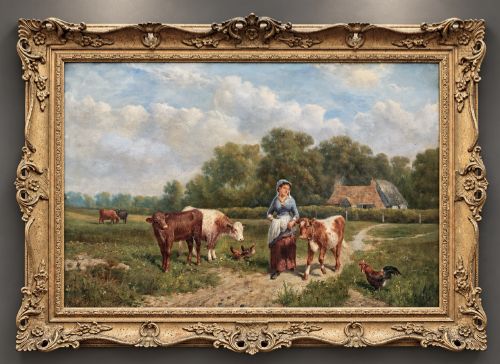
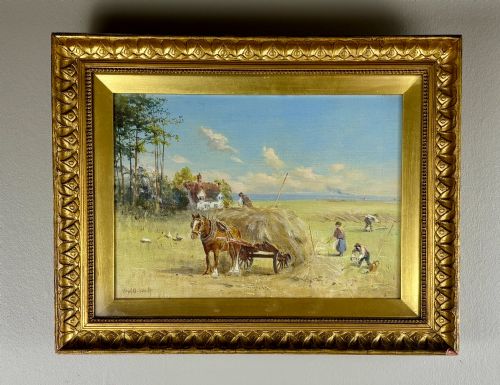
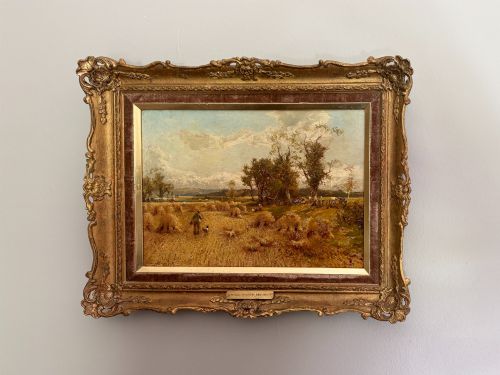
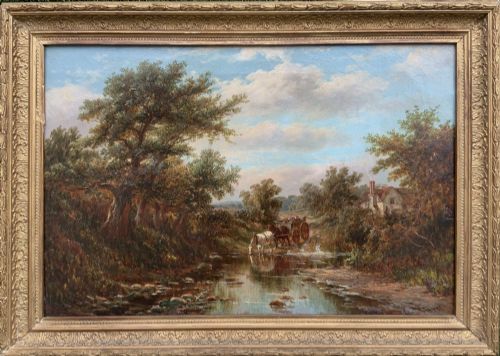
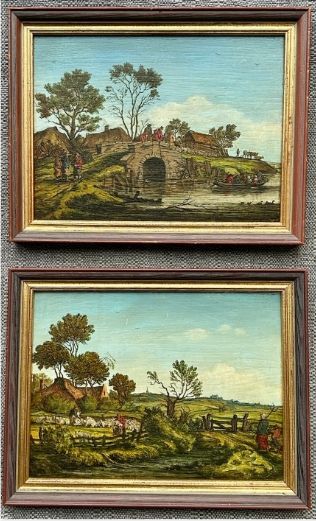
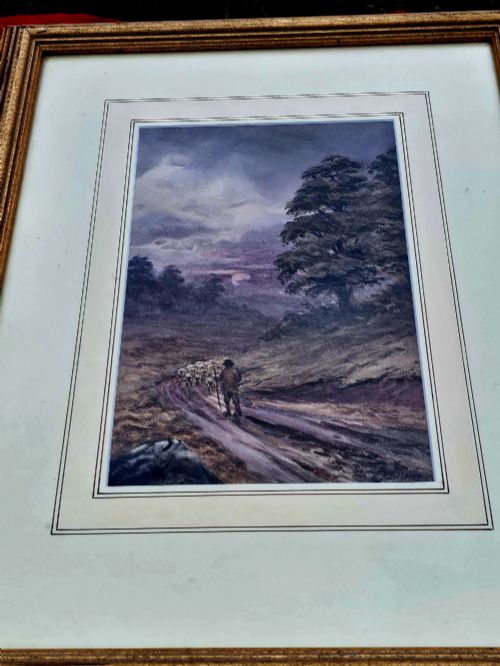
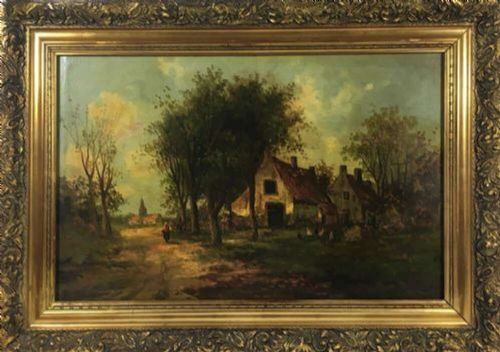
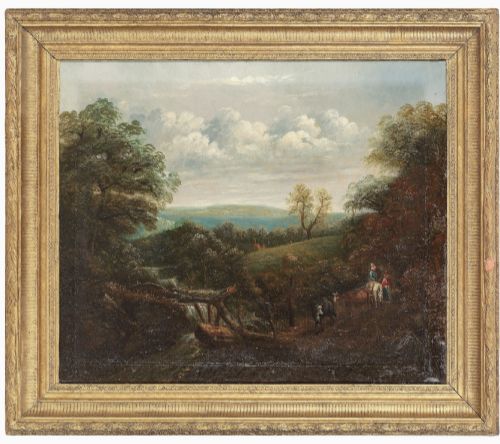
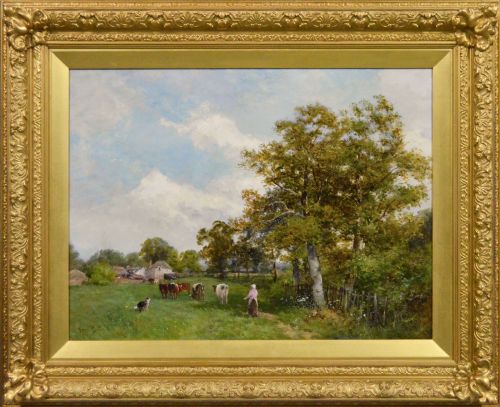
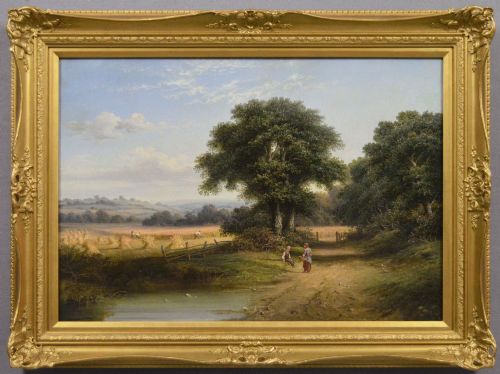
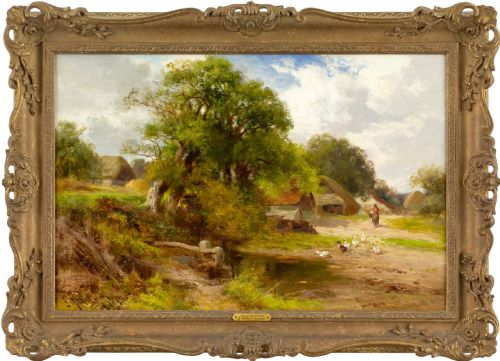
Rural pastoral landscape artwork depicts traditional agrarian scenes, featuring cottages, fields, rivers, and livestock tended by figures. These compositions capture the nineteenth-century and early twentieth-century fascination with rural life, bridging Victorian sentiment with British Impressionism and the influence of the Barbizon school.
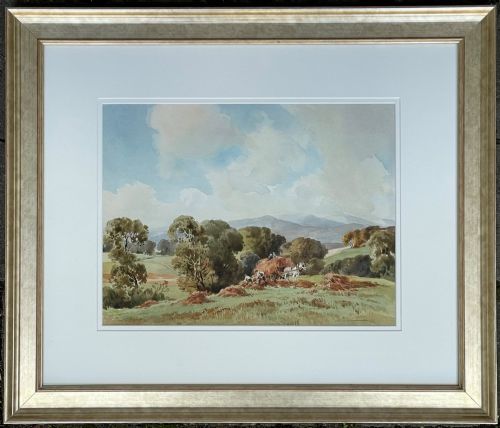
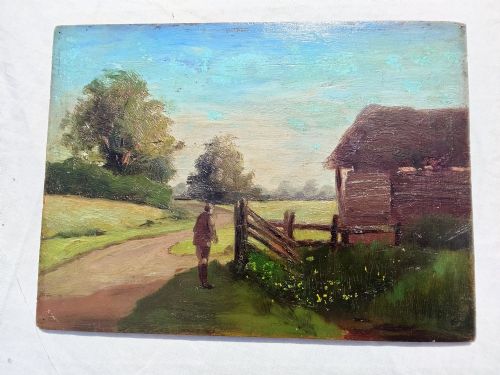
The pieces appearing most frequently on this page are oil paintings on canvas, wood panels, or boards, alongside delicate watercolours on paper. Artists recorded specific locales across Britain and Europe, ranging from Sussex and Dorset to Flemish countryside views.
Subjects frequently centre on everyday agricultural tasks, including herding sheep, driving cattle, ploughing, and gathering the harvest. Such works reflect an era when industrialisation quickened, prompting a sustained artistic focus on enduring rural routines.
Materials and methods of construction
Painters relied principally on oil paint applied to canvas, wooden boards, or wooden panels, utilising the rich texture of the medium to build depth in skies and foliage. Watercolours on paper offer a lighter, translucent approach, capturing the subtle atmospheric conditions of river valleys and harvest fields.
Canvases and panels frequently show the hand of academic training, where brushwork balances fine detail in figures and animals with looser, impressionistic handling in the surrounding landscape. Frames of the period, often wood with gilt detailing, complete the construction of these works.
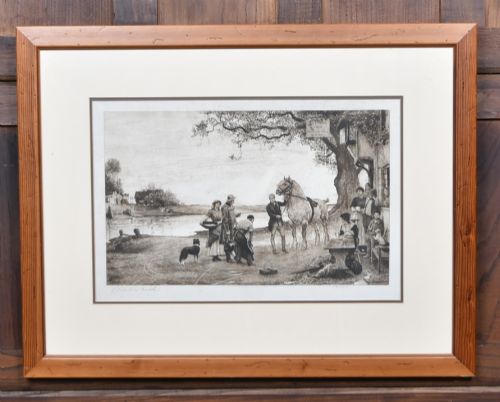
The listings span the nineteenth and twentieth centuries, incorporating oil paintings, watercolours, and etchings on canvas, wood, and paper.
Distinctions in execution and atmosphere
Quality rests upon the artist's command of light, shadow, and anatomical precision in rendering animals and human figures within the landscape. Stronger examples display confident, varied brushwork that animates foliage and water, rather than stiffly repeating formulaic foliage.
Compositional balance separates standard decorative pieces from works with genuine atmosphere. The finest paintings integrate the workers and livestock naturally into the topography, creating a coherent sense of space and seasonal mood.
W Klombeck·Percy Lancaster·William Joseph Shayer Senior·EJ Letheren·David Bates·Walter Heath Williams·Robert W. Macbeth·John Horace Hooper·Frederick Walker·Ernest Higgins Rigg·George Oyston·Frederick James Kerr·Miles Birkett Foster·George Morland·Frederick Hines·Charles Clair·Oswald Garside·Henry Charles Fox·William Henry Mander·Thomas Sidney Cooper·James William Booth·Owen Bowen·Ernest Pile Bucknall·William Sydney Cooper·Samuel Joseph Clark
The Rural Pastoral Landscape Artwork Glossary
- Barbizon School
- A nineteenth-century French movement focused on naturalistic landscape painting en plein air. Their direct observation heavily influenced subsequent British and European rural art.
- Oil on Canvas
- Pigment bound in oil applied to stretched woven fabric. This combination allows for rich blending and textured impasto work.
- Watercolour
- Paint consisting of pigment suspended in a water-soluble vehicle, applied to paper. It yields transparent washes ideal for capturing delicate light.
- Victorian Pastoral
- A nineteenth-century artistic style romanticising rural life and agricultural labour. These works emphasise harmonious coexistence between people, animals, and the countryside.
- Wood Panel
- A rigid wooden support used instead of canvas for paintings. Panels provide a completely stable surface that often preserves fine brushwork exceptionally well.
Rural Pastoral Landscape Artwork: Frequently Asked Questions
What subjects appear in these pastoral artworks?
These artworks depict traditional rural settings, including farming fields, thatched cottages, and riverbanks. Common activities involve herding sheep, driving cattle, and gathering the harvest.
Human figures and livestock form the focal points of many compositions, placing agrarian labour at the heart of the scenic view.
How do I date a nineteenth-century landscape painting?
Dating relies on stylistic clues, clothing styles of figures, and framing materials. Signatures and exhibition labels on the reverse also offer chronological markers.
Comparison with documented works by the same painter helps narrow the decade of creation.
Where were these landscape scenes usually painted?
Artists travelled widely across British counties such as Dorset, Kent, and Yorkshire, as well as continental Europe. Many scenes record specific local topography and recognisable rural landmarks.
Painters often worked directly from nature before finishing canvases within their studios.
How should I care for an antique oil painting?
Keep paintings away from direct sunlight and dramatic fluctuations in household temperature. Stable humidity prevents the wooden panels or canvas supports from warping.
Dust surfaces gently with a soft, dry brush and avoid applying any liquid cleaning agents to the paint.