



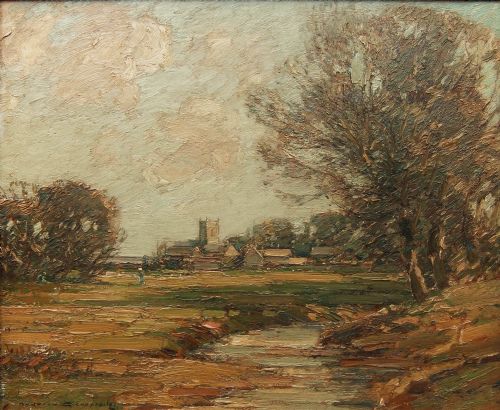
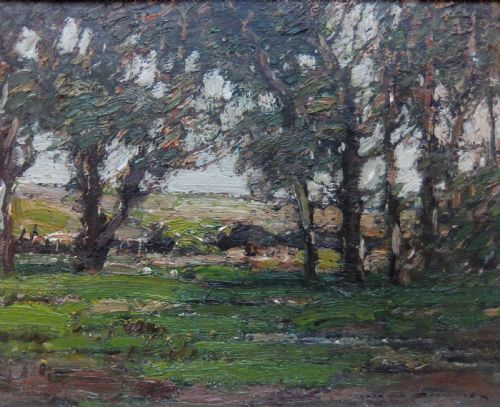


Rural Landscape Oil Panel
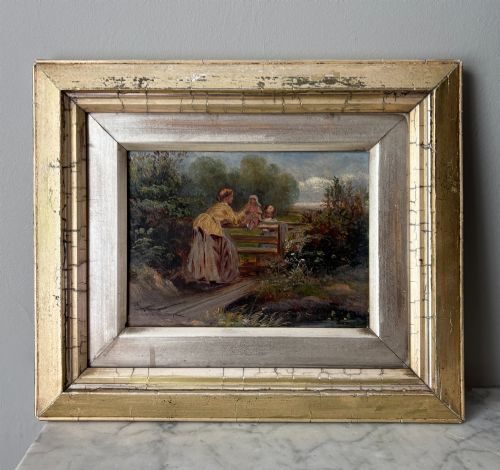
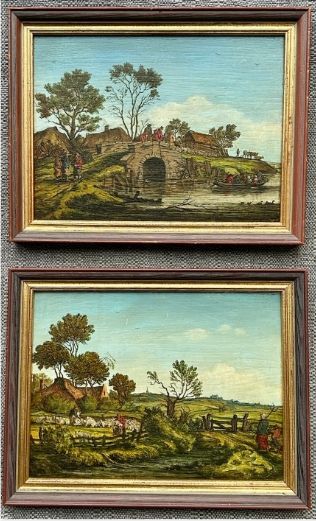
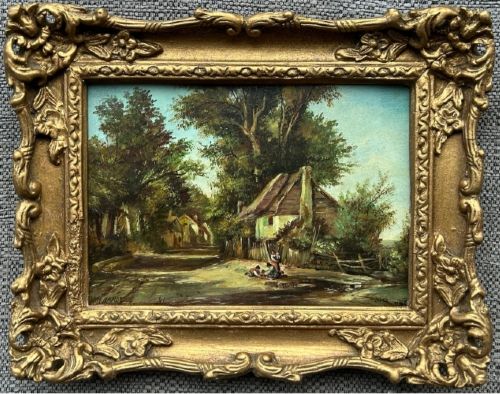
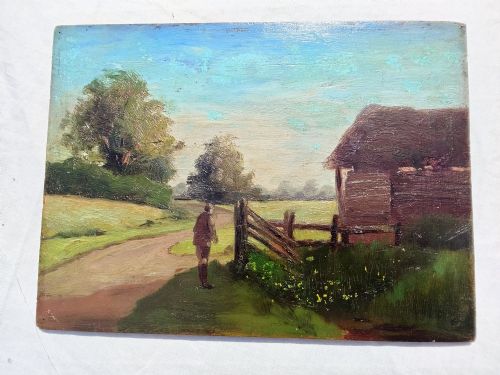
These rural landscape oil panel works offer pastoral scenes executed on firm timber supports, prized by collectors for their enduring atmospheric depth.
Rural Landscape Oil Panel
A rural landscape oil panel represents country views painted directly onto rigid supports rather than flexible fabric. These works capture agricultural fields, windmills, and rustic homesteads through the medium of oil paint.
The selections available here span from the nineteenth century into the early decades of the twentieth century. Examples encompass British Impressionism, the Norwich School, and continental European traditions.
Buyers frequently encounter pieces attributed to the English School alongside Flemish and Dutch influences. Each object provides a window into historical rural life rendered on durable wooden foundations.
Materials and construction
Artists applied oil paint directly to prepared wood panels or wooden boards to achieve a stable and smooth working surface. This rigid substrate allowed for precise brushwork and delicate blending of pigments.
Many of these paintings retain their original gilt wood frames which complement the composition and protect the edges of the panel. The combination of oil medium and timber created resilient artworks capable of surviving centuries.
Rural Landscape Oil Panel Retail Price Guide 2026
Typical asking prices for rural landscape oil panel among the pieces listed under this phrase on Sellingantiques today, from the lower quarter to the upper quarter. They describe what is for sale here now, not the wider market.
Listings feature wood panel, board, and canvas supports across nineteenth-century and early twentieth-century periods.
Distinguishing quality
Superior examples demonstrate confident brushwork and a sophisticated handling of light within the rural setting. The finesse of the artist's touch on the wooden panel dictates the visual impact of the landscape.
Condition of the paint layer and the integrity of the original wood support influence the desirability of a piece. Works retaining clear signatures and well-preserved gilt frames stand apart in overall merit.
Miles Birkett Foster·W Klombeck·William Howard Hardy·Florence Hess·John Henry Dell·Kershaw Schofield·William Greaves·Owen Bowen·E Van Drielst·Henri Joseph Harpignies
The Rural Landscape Oil Panel Glossary
- Oil paint
- A slow-drying medium consisting of pigments suspended in a drying oil, usually linseed. This formulation allows artists to manipulate colours over an extended period.
- Wood panel
- A rigid flat piece of timber used as a substitute for canvas. It provides a stable ground that resists the flexing associated with woven fabrics.
- Gilt wood frame
- A wooden surround decorated with gold leaf or metallic gilding. It enhances the visual presentation and protects the perimeter of the artwork.
- Norwich School
- A regional group of artists inspired by the Norfolk landscape during the nineteenth century. They produced notable topographical and rural paintings.
Rural Landscape Oil Panel: Frequently Asked Questions
What is a rural landscape oil panel?
A rural landscape oil panel is an artwork painted with oil colours onto a wooden board or panel, depicting countryside scenery.
These pieces typically date from the nineteenth and early twentieth centuries, showcasing various regional European schools.
How do I care for an oil on panel painting?
Keep the artwork away from direct sunlight and sources of extreme heat to protect the wooden support from warping.
Maintain a stable indoor environment and gently dust the surface and frame with a soft, dry cloth.
How can I tell the age of the panel?
Examining the type of wood, preparation grounds, and framing materials provides clues to the creation period.
Signatures, inscriptions on the reverse, and stylistic markers also help place the work within a specific historical era.
Where were these landscape paintings made?
The works originate from various artistic traditions across Britain, France, Flanders, and the Netherlands.
Artists often painted outdoors directly in the countryside or developed their rural compositions within regional studios.