



Rural Farmyard Scene Painting
A rural farmyard scene painting captures the traditional agricultural life of past centuries, offering a window into quiet rural routines that collectors prize for their nostalgic charm.
Rural Farmyard Scene Painting
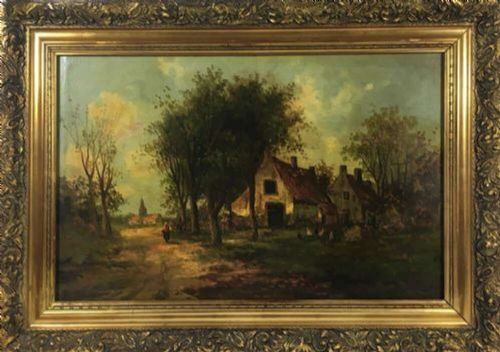
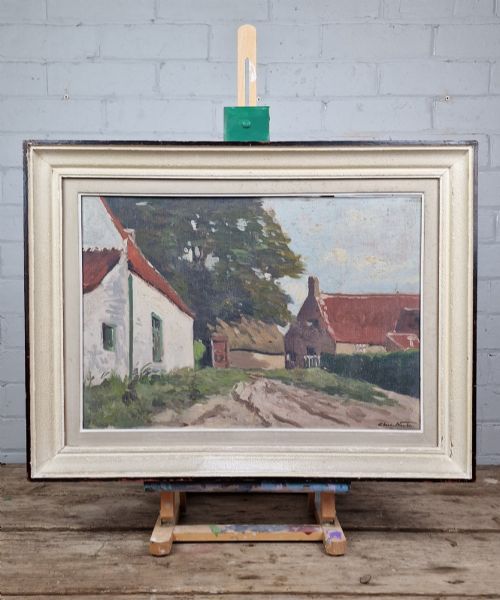
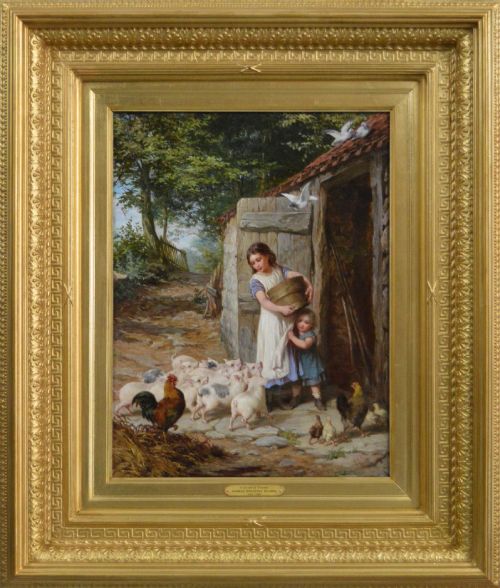
A rural farmyard scene painting typically presents pastoral life through depictions of agricultural animals, working horses, and rustic farm buildings. These works reflect domestic livestock, farm labourers, and everyday rural management across various historical periods.
The pieces available lean heavily towards nineteenth-century and early twentieth-century British and European traditions. You will encounter works spanning Victorian genre art, British pastoral styles, and early modern impressionist interpretations.
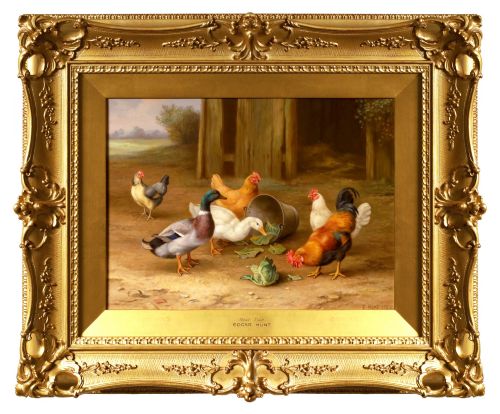
Common compositional elements include horses resting near barns, poultry pecked about stable yards, and figures tending livestock. These visual narratives offer an authentic record of agrarian history preserved on canvas or paper.
Materials and technique
Oil on canvas and oil paint on wood or board form the primary medium for these works, providing rich textures and deep pigment layers. Painters built their compositions using traditional bristle brushes to render the varied textures of livestock coats, weathered timber, and harvested straw.
Watercolour on paper also appears frequently, capturing lighter, translucent effects across rural landscapes and farmyard studies. Many of these paintings retain their original giltwood frames, which complement the traditional palettes employed by the artists.
One unusual nineteenth-century piece abandons paint entirely, utilising delicate arrangement of sand to construct its detailed farmyard scene.
Distinctions in quality
The distinction between standard works and finer pieces rests upon the artist's ability to render anatomical precision in animals and natural light across the landscape. Master painters of these subjects balance detailed focal points with harmonious atmospheric backgrounds.
Handling of brushwork and pigment density separates casual decorative pieces from accomplished artistic output. Superior examples display confident, deliberate application that brings texture and movement to the farmyard environment.
William Joseph Shayer Senior·Charles Houben·George Augustus Holmes·Edgar Hunt·Herbert Royle·John Linnell·Helena Maguire·John Frederick Herring Jnr·Julius Caesar Ibbetson·Arthur Charles Dodd·Robert Russell MacNee·Owen Bowen·Joseph Kirkpatrick·Edward Killingworth Johnson·John Percy Cooke·Arthur Walker Redgate·Ernest Higgins Rigg·Georgina Lara·Thomas Blinks·Fred Lawson·James William Booth·Kershaw Schofield·Fred Cecil Jones
The Rural Farmyard Scene Painting Glossary
- Genre art
- Depictions of scenes and events from everyday life, typically involving ordinary people engaged in common activities. These works focus on narrative storytelling within domestic or agricultural settings.
- Oil on canvas
- A painting technique where pigment suspended in drying oils is applied to a stretched fabric surface. This method allows for extensive blending and rich colour saturation.
- Watercolour
- A painting method where fine pigment is suspended in a water-based solution on paper. It produces luminous, transparent washes of colour.
- Giltwood
- Wood that has been treated with a thin layer of gold leaf or gilt paint. It is commonly found on traditional picture frames from the nineteenth and early twentieth centuries.
- Barbizon School
- A French movement toward realism in landscape painting that influenced artists to work outdoors directly from nature. The style emphasises atmospheric light and rustic simplicity.
Rural Farmyard Scene Painting: Frequently Asked Questions
What subjects appear in these paintings?
These works primarily feature agricultural animals such as shire horses, cattle, pigs, and poultry gathered around traditional farm buildings and barns. Labourers and farmers are frequently depicted tending to their daily routines.
Such compositions offer a direct reflection of rural industry and domestic farming practices from the nineteenth and early twentieth centuries.
How should I frame and hang an oil painting?
Oil paintings on canvas generally look best in traditional wooden or giltwood frames that match the period of the artwork. Ensure you hang the piece away from direct sunlight and excessive humidity to protect the canvas and paint layers.
Proper picture wire and wall fixings suited to the weight of the frame will keep the artwork secure over time.
How do I identify a nineteenth-century work?
Nineteenth-century paintings often utilise darker earth tones, heavier brushwork, and traditional canvas preparation methods typical of the Victorian and pastoral movements. Examining the stretcher bars, canvas texture, and framing style helps determine the age.
Signatures or dates inscribed by the artist provide definitive clues to the exact creation period.
What is the difference between oil and watercolour farm scenes?
Oil paintings utilise heavy pigment suspended in oil on canvas or board, resulting in textured surfaces and deep, durable colours. Watercolours employ water-based pigments on paper, creating lighter, more luminous compositions.
Watercolour pieces typically require protective glass framing, whereas oil paintings remain exposed to the room atmosphere.