


Rural Farm Oil Painting
A rural farm oil painting brings the quiet labour of the countryside and historic farmsteads directly onto the wall.
Rural Farm Oil Painting
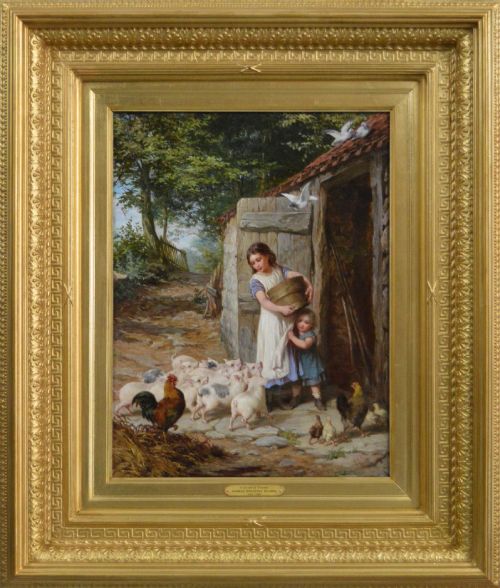
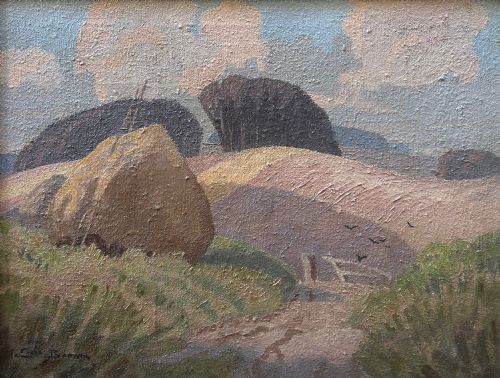
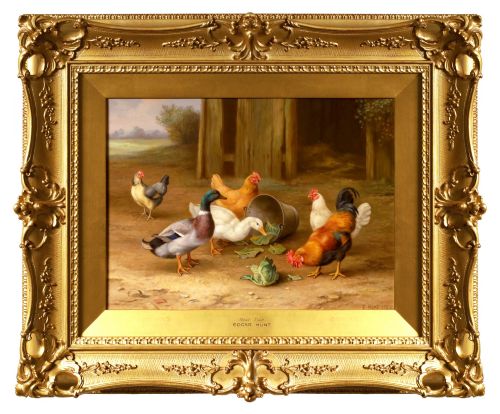
A rural farm oil painting captures agricultural landscapes, livestock, and farmyards across the nineteenth and twentieth centuries. These works reflect pastoral traditions, featuring heavy working horses, harvest scenes, and quiet rural dwellings.
The pieces on this page span British Impressionism, Victorian Pastoral, and Edwardian styles, alongside mid-century interpretations. Common subjects range from Yorkshire farmyards and Normandy troughs to detailed animalier portraits of cattle, pigs, and shire horses.
Buyers encounter works on canvas, wood panels, and board, framed in period settings such as ebonised or gilt surrounds. Whether large landscapes or smaller genre studies, these paintings record the changing textures of agrarian life.
Materials and Techniques
Painters utilised oil paint applied to canvas, wooden panels, or board, building rich textures through layered brushwork. The medium allowed artists to capture natural light across fields, farm buildings, and animal coats.
Frames frequently incorporate gilt and gold leaf or structured ebonised wood to complement the palette of the canvas. These traditional mountings complete the presentation of nineteenth and twentieth-century pastoral works.
Listings feature works spanning the nineteenth and twentieth centuries, utilising canvas, wood panels, and board.
Distinctions in Quality
Quality rests in the handling of light, atmosphere, and anatomical precision within animal and human figures. Stronger works convey authentic movement in working horses and natural depth in landscape vistas.
The strength of provenance and the reputation of the individual artist elevate certain pieces above anonymous school works. Surviving original frames in sympathetic styles also contribute to the integrity of the piece.
George Augustus Holmes·Edgar Hunt·Raimond Louis Lecourt·Herbert Royle·William JB Jenkins·Samuel Joseph Clark·Charles Vickers·Frederick W. Jackson·John Linnell·Florence Hess·Arthur Winter Shaw·Owen Bowen·John Frederic Greenwood·Robert Russell MacNee·Frederick J. Knowles·John Frederick Herring Jnr·JOHN PERCY COOKE·Ernest Higgins Rigg·George Cole·Georgina Lara·T.B.Garvie·John Falconar Slater·Nora Munro Summers·Thomas Henry Thomas
The Rural Farm Oil Painting Glossary
- Oil on Canvas
- A traditional painting method where oil pigments are applied directly to a stretched fabric support. This combination offers durability and allows artists to build rich surface textures.
- Genre Painting
- A style depicting scenes from everyday life, such as farmworkers resting or girls feeding animals. These works provide a narrative window into historical rural routines.
- Animalier
- Art focusing on the realistic portrayal of animals, including horses, cattle, and poultry. In rural scenes, these subjects highlight the central role of livestock in agricultural labour.
- Oil on Board
- A technique utilising a rigid wooden or composite board as the foundation for oil paint. This surface provides a firm base favoured by many twentieth-century plein air painters.
- Gilt
- A thin layer of gold or gold-like material applied to wooden frames. This decorative finish enhances the presentation of period oil paintings.
Rural Farm Oil Painting: Frequently Asked Questions
What subjects appear in these paintings?
These works feature farmyards, haystacks, ploughing horses, and livestock such as cattle, pigs, and poultry. Landscapes span Yorkshire dales, Cumberland, and French provincial settings.
Artists also depicted agricultural workers during harvests, resting by trees, or tending to daily farmstead duties.
How are these paintings framed?
Many works retain period surrounds, including ebonised timber frames and ornate gilt or gold leaf mouldings. These housings complement the nineteenth and twentieth-century origins of the canvases.
Original frames often reflect the aesthetic of the period in which the artist worked.
How do I identify the period of a painting?
Periods are identified through stylistic movements such as Victorian pastoral, British Impressionism, and mid-century modernism. Signatures, artist records, and canvas construction further pinpoint the date.
Subject matter and framing styles also offer clues to whether a piece originates from the nineteenth or twentieth century.
Where were these rural scenes painted?
Locations range widely across English landscapes in Yorkshire, Cumberland, and Arundel, alongside French scenes from Normandy and Lyon. Many pieces record specific named farms and rural homesteads.
Artists frequently painted plein air or utilised regional studio settings to capture authentic agricultural environments.